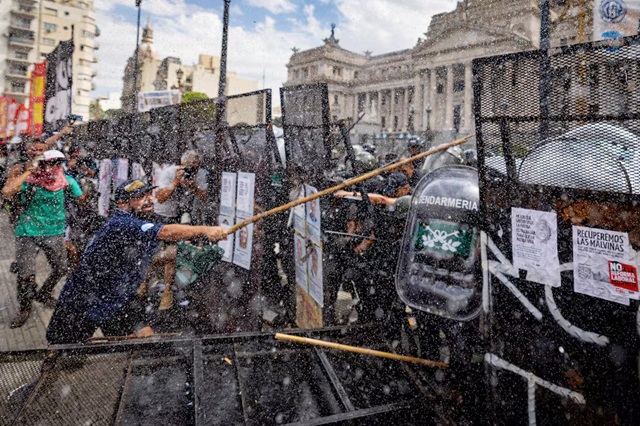
The Argentine Senate delivered a major legislative victory to President Javier Milei’s government on Thursday, approving a sweeping labor reform bill despite widespread street protests that left at least 15 people injured and nearly 30 arrested. By a vote of 42 to 30, senators endorsed a measure that would overhaul labor laws largely unchanged since 1974, making layoffs cheaper, extending permissible workdays to 12 hours, and reducing employer contributions. The bill now heads to the Chamber of Deputies for final approval.
The Milei administration, often described as far-right, defended the reforms as necessary to modernize an outdated labor system and combat Argentina’s record 43% informal employment rate. Opposition lawmakers accused the government of prioritizing corporate interests over workers’ rights, warning that the changes could worsen job conditions and weaken union power.
La Libertad Avanza, Milei’s party, secured the Senate vote with the support of the conservative Pro party, the centrist Radical Civic Union, and a coalition of provincial parties. Senate bloc leader Patricia Bullrich described Argentina’s labor laws as “obsolete” and argued that the reform is essential for creating jobs and shaping “a country of the future.”
Key elements of the legislation include the creation of a Labor Assistance Fund, financed by employer contributions of 1% to 2.5% of salaries, which critics say will divert funds from pensions to subsidize layoffs. The bill also allows companies to compensate overtime with time off rather than pay, permits salaries in any currency or in kind, and allows vacations to be taken in installments rather than exclusively in the summer.
The reform further limits union influence by prioritizing company-level agreements over sector-wide collective bargaining and imposing strict minimum service levels for strikes in essential and critical sectors, including health, education, transportation, and banking. While the government made concessions to some opposition parties to secure backing—protecting state-shared income taxes, preserving social welfare contributions, and maintaining restrictions on digital wallet payrolls—labor unions have vowed to continue their fight against the legislation.
Protests erupted across Argentina’s main cities, with thousands gathering outside Congress in Buenos Aires. Initially peaceful, demonstrations escalated after 5:00 p.m. when some protesters threw stones and Molotov cocktails at police, prompting a response with tear gas, water cannons, and rubber bullets. Medical teams treated dozens for injuries, and authorities reported four police officers were hurt. Nearly thirty protesters were detained during the unrest.
The fate of the labor reform now rests with the Chamber of Deputies, where the Kirchnerist opposition has pledged to challenge the law in court if it passes, calling it unconstitutional. The outcome will determine whether Milei’s government achieves its first major policy victory of 2026 or faces an extended legal and political battle.