On an island where revenge killings and criminal rivalries have long shaped daily life, François-Xavier Bustillo knows that speaking out can carry a deadly price. Yet the Catholic prelate, appointed bishop of Ajaccio only five years ago, has made himself one of the most visible opponents of the entrenched mafia culture that continues to haunt Corsica.
Sitting in his grey Franciscan habit before celebrating mass on the French mainland, Bustillo openly acknowledged the risks of his mission. His schedule is public, his movements predictable, and his denunciations of violence widely known. That visibility, he admits, would make him an easy target. Yet he insists that fear cannot dictate his actions, framing his stance as part of a spiritual vocation rooted in presence rather than protection.
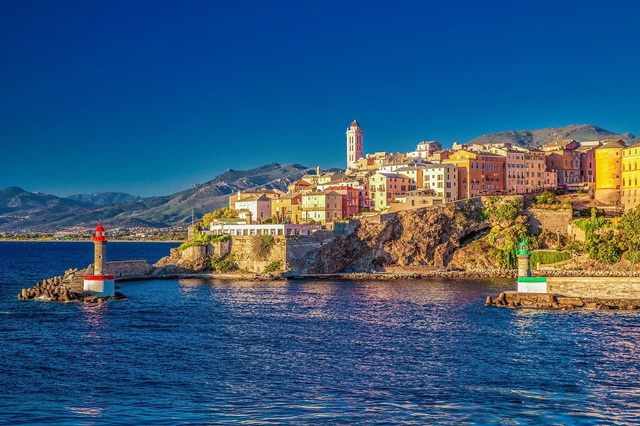
Corsica, a mountainous island famed for its beauty and fierce local identity, now records one of the highest homicide rates in Europe. Much of the violence is linked to criminal networks that evolved from nationalist militancy in the late 20th century into sophisticated mafia-style organisations. These groups compete for dominance in illicit markets ranging from narcotics and illegal gambling to lucrative public contracts and real estate investments.
The scale of the bloodshed became starkly visible again with the killing of Alain Orsoni, a veteran nationalist and former head of AC Ajaccio, who was shot dead while attending his mother’s funeral. The brazen assassination, believed to be tied to long-running clan rivalries, underscored how cycles of vengeance remain embedded in the island’s criminal landscape.
Authorities say at least two dozen murders have been recorded since 2024, most involving suspected organised crime figures. But innocent lives have also been lost, including that of a teenage student caught in what investigators believe was a gang-related attack. Public demonstrations against mafia violence have drawn growing crowds, reflecting a sense of exhaustion among residents who feel trapped between loyalty to tradition and fear of lawlessness.
Bustillo has sought to channel that frustration into moral resistance. Through sermons, public appearances, and social media messages, he has urged Corsicans not to accept what he calls an “eye-for-an-eye” mentality. His book Réparation explores the broader rise of violence in society, linking the island’s criminality to a deeper erosion of shared values and civic trust.
His activism, however, has not gone unanswered. Graffiti accusing him of hypocrisy and even associating him with criminality have appeared along Corsican roads, evidence of the hostility that can greet those challenging entrenched interests. Police investigations into the vandalism have yet to identify those responsible. Despite the threats, the cardinal continues to travel without security, deliberately greeting worshippers in public squares and parish churches.
Bustillo’s physical presence and charismatic style have helped him gain a reputation that borders on celebrity. Tall, energetic, and known to play tennis in his spare time, he draws crowds wherever he goes, prompting French commentators to nickname the phenomenon “Bustillomania.” Admirers line up for photographs after services, treating the cleric less like a distant authority and more like a community figure determined to remain accessible.
His rapid rise within the Catholic hierarchy surprised many observers. In 2023, Pope Francis elevated him to the rank of cardinal just two years after appointing him bishop, making him the first leader of Ajaccio’s diocese to receive the honour. The promotion signalled Vatican confidence in a pastor whose emphasis on humility and proximity to ordinary believers echoed Francis’s own priorities.
Corsica’s turbulent past helps explain why confronting violence is so complex. The island resisted successive foreign powers before being conquered by France in the 18th century, a struggle intertwined with the early life of Napoleon Bonaparte, whose parents fought for the nationalist cause. In the 20th century, separatist militancy resurfaced, and some factions drifted into organised crime, blending political ideology with illicit enterprise.
When mainland drug routes such as those once centred on Marseille declined, criminal groups redirected their operations back to the island, tightening their grip on local economies. Today, prosecutors say mafia networks exert influence through intimidation, corruption, and strategic investment in businesses ranging from hospitality to waste management.
Bustillo has not escaped criticism himself. Some detractors question whether a church leader can engage so directly with a society where lines between respectability and criminality can blur. The cardinal responds that his role obliges him to meet all Corsicans without prejudice, insisting that pastoral duty cannot depend on judging who is worthy of dialogue.
The island’s political future may soon reshape that environment. President Emmanuel Macron has proposed granting Corsica a special constitutional status, a measure to be debated in the French National Assembly. The plan could allow the island greater autonomy over taxation, property laws, and governance, an attempt to address long-standing grievances that have often fueled unrest.
Bustillo has previously expressed sympathy for increased local autonomy but remains cautious about entering partisan debate. His stated goal is neither nationalism nor centralisation, but reconciliation. He says he wants Corsica to become “peaceful and pacified,” a society where identity is preserved without perpetuating vendettas.
Beyond the island, the cardinal sees signs of a wider spiritual shift. He points to rising numbers of baptisms among young people in France as evidence that a generation often portrayed as secular is rediscovering religious life. To him, this renewed curiosity toward faith reflects a search for meaning in an era marked by uncertainty and social fragmentation.
Whether Bustillo’s campaign can weaken Corsica’s deeply rooted criminal networks remains uncertain. Mafia structures built over decades rarely dissolve quickly, and law enforcement alone has struggled to dismantle them. Yet the cardinal believes cultural change must accompany judicial action, replacing silence and resignation with moral resistance.
For now, he continues to preach, travel, and speak out, fully aware of the dangers. On an island where violence has long dictated reputation and power, a cleric choosing visibility over caution has become an unlikely challenger to the old order. His message is simple but radical in a place accustomed to scores being settled in blood: fear cannot be allowed to run the engine of life.