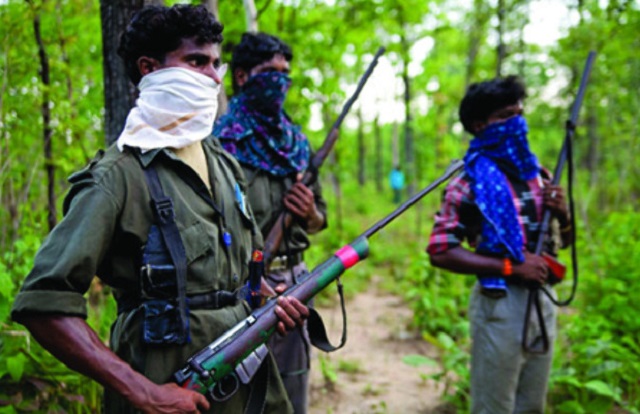
On February 6, 2026, at least 15 Communist Party of India-Maoist (CPI-Maoist) cadres, including a most-wanted Maoist couple, Niranjan Rout aka Nikhil, and his wife Ankita aka Rashmita Lenka aka Indu, both ‘State Committee Members (SCMs)’, the second-highest tier in the hierarchy after the Central Committee (CC) of the CPI-Maoist, carrying a cumulative reward of INR 11 million on their heads, surrendered along with 13 other cadres in Rayagada District of Odisha. The group belonged to the ‘Bansadhara-Ghumusar-Nagabali (BGN) division’ of the banned outfit. The Maoist cadres also laid down 14 weapons including two AK-47, five Self-Loading Rifles (SLRs), one Sten gun, INSAS (Indian Small Arms System) assault rifle and .303 rifle each, along with four single shot guns. The Maoist couple had a cash reward of INR 5.5 million each. Nikhil, active in the bordering areas of Rayagada, Gajapati and Kandhamal Districts for the last two decades, had reportedly come in contact with some Naxalite sympathisers after the 1999 Super Cyclone and joined the banned outfit then. After the top three in Odisha’s CPI-Maoist ranks – Ramachandra Reddy aka Chalapathi, Modem Balakrishna and Ganesh Uikey – were killed by the Security Forces (SFs) in 2025, Nikhil had taken over command but was compelled to surrender as the Naxalite outfit had become rudderless in recent months.
Over just the past year, at least 15 Central Committee Members (CCMs) have been killed and another six have surrendered across different states. The Naxalites (Left Wing Extremists, LWEs) are now facing a leadership vacuum, with only four CCMs reportedly operating in Chhattisgarh and Jharkhand.
On the same day, February 6, four CPI-Maoist cadres surrendered and laid down one SLR, two .303 rifles and a gun before Police in Odisha’s Kandhamal District. The four cadres were all party members, active in Kandhamal and Boudh Districts and carried a total cash reward of INR 1.06 million.
On February 5, 2026, a senior female CPI-Maoist cadre, Mamata Podiami aka Mamita aka Soni (26), surrendered to the Police at Jeypore in Koraput District. Mamata, an ‘Area Committee Member (ACM)’ from Bijapur, Chhattisgarh, was involved in several violent activities along the Odisha-Chhattisgarh border. She handed over one 7.62 mm SLR with 10 live rounds and was carrying a bounty of INR 550,000 on her head at the time of her surrender.
On February 4, 2026, a CPI-Maoist ‘ACM’ surrendered before the Police in Malkangiri District. The surrendered cadre was identified as Sukhram Markam aka Suresh aka Yogesh (32), a ‘commander’ of the Kangerghati Area Committee, with a bounty of INR 2.1 million on his head. He also surrendered one SLR rifle, ammunition, Improvised Explosive Devices (IEDs) and other Maoist materials. A native of Sukma District in Chhattisgarh, Sukhram joined the CPI-Maoist in 2010 and rose through the hierarchy after training in ideology, weapons handling and guerrilla tactics. He was allegedly involved in several violent incidents across Odisha and Chhattisgarh.
On February 3, 2026, a Local Guerrilla Squad (LGS) member of the CPI-Maoist surrendered before the Rourkela Police in Sundargarh District. The surrendered Maoist was identified as Umblen Honhaga aka Prabhu (18), a native of Halamuli village under Chhotanagra Police limits in the West Singhbhum District of Jharkhand. He was active in Saranda Forest, a Maoist-hub, and was associated with the CPI-Maoist’s South Chhotanagra division, an LGS member.
The surrenders in the opening weeks of 2026 reflect the success of sustained counter-insurgency pressure, targeted rehabilitation incentives, and strengthened security governance, along with the psychological impact on cadres, who are now increasingly weighing the costs of continued insurgency against viable alternatives in mainstream society.
At least 22 Naxalites have surrendered in the State since the beginning of the current year, thus far (data till February 15, 2026). According to partial data compiled by the South Asia Terrorism Portal (SATP), 29 Naxalites had surrendered in Odisha in 2025, in addition to 21 in 2024 and five in 2023. The total number of surrendered Naxalites in the state since March 6, 2000, when SATP began documenting LWE-related violence, stands at 7,365.
Meanwhile, SFs in the state arrested 13 Naxalites in 2025, in addition to the seven in 2024 and five in 2023. The total number of arrested Naxalites in the state since March 6, 2000, is 1,608.
One security trooper was killed in 2025, while SFs eliminated eight Maoists in the state. No fatality was recorded in 2024 in the SF category, as well as in 2023; however, SFs eliminated seven Maoists in 2024 and six in 2023. A low of one SF fatality was recorded in 2005, 2014, 2018, 2019 and 2025; on the other hand, a low of one Maoist fatality was recorded in 2002. At peak, 77 fatalities were recorded in the SF category in 2008, while 42 Maoist fatalities were recorded in 2016. 228 SF fatalities and 334 Maoist fatalities have been recorded in Odisha since March 6, 2000.
The SF:Maoist kill ratio remained in favour of the SFs, at 1:8 in 2025. Without losing any of their troopers, the SFs eliminated seven Maoists in 2024 and six in 2023. The kill ratio was 1:2.33 in 2022. The overall kill ratio since March 6, 2000, favoured the SFs at 1:1.50. The most favourable ratio was recorded in 2018, at 1:18.
One civilian was killed through 2025 in Odisha, as compared to three such killings each in 2024 and 2023. The 2025 fatality was the lowest in this category since March 6, 2000. A high of 62 civilian fatalities was recorded in 2010. A total of 379 such killings have been recorded since March 6, 2000.
Odisha witnessed a marked reduction in insurgent sabotage and disruptive activities such as arson, large-scale explosions and bandhs (shut down strikes). No major incidents involving three or more fatalities have been reported in the last two years, and incidents of grenade or IED usage have become less frequent and more isolated – often pre-empted by security interception.
SFs recovered arms and ammunition on 27 occasions in 2025, in addition to 29 such recoveries in 2024 and 31 in 2023. The total number of recoveries since June 2, 2014, stands at 679. In the current year, five incidents of arms recovery have already been recorded (data till February 15, 2026).
Significantly, overall Maoist-linked incidents decreased to 39 in 2025, from 50 in 2024. 48 such incidents were recorded in 2023.
Fatalities in 2025 were recorded in two Districts – Kandhamal (eight) and Sundargarh (two). In 2024, four Districts registered fatalities – Kandhamal (six), Boudh (two), and Malkangiri and Nabarangpur (one each).
According to SATP data for 2025, based on assessments of underground and over-ground activities of the Maoists, of Odisha’s 30 districts, one district – Kandhamal – remained in the moderately affected category; and Sundargarh in the marginally affected. By comparison, in 2024, one district, Kandhamal, fell in the ‘moderately affected’ category, while four districts, Bargarh, Boudh, Malkangiri and Nabarangpur, were ‘marginally affected’.
In 2026, the waning influence of the CPI-Maoist in Odisha was dealt a serious operational and symbolic blow due to the intensification of the surrender and rehabilitation momentum that had been building since late 2025.
On February 6, 2026, during a press conference held in Kandhamal, Southern Range Inspector General of Police (IGP) Niti Shekhar announced that Boudh District had been officially declared 100 per cent CPI-Maoist-free. Boudh had remained a Maoist-affected district for over 15 years. Although it was earlier declared Maoist-free in 2015-16, renewed Maoist activities led to the district once again being categorized as Maoist-prone. IGP Shekhar further asserted that sustained security operations and coordinated efforts had succeeded in breaking the backbone of Maoist groups in Odisha, leading to the complete elimination of Maoist influence in Boudh district.
On February 5, 2026, Deputy Inspector General (DIG) of Police Kanwar Vishal Singh confirmed that Koraput had followed Malkangiri District, which was declared Naxalite-free a day earlier. In a significant development, Mamata Podiami’s surrender marked Koraput District, once a major hotbed of LWE, as officially Naxal-free.
Following the surrender of Sukhram Markam in Malkangiri, Additional Director General (ADG) of Police, anti-Naxal operations, Sanjeeb Panda claimed, on February 4, 2026,
With sustained security operations and development activities reaching deep into remote areas, Maoist activities have now been contained and we declare the district free from Maoist influence. However, there is no room for complacency. Forces will remain on high alert and intelligence-based area dominance exercises will continue.
Malkangiri became the third district under the south-western range, after Nuapada and Nabarangpur, to be declared ‘Maoist-free’. It is useful to note that, on January 20, 2026, the Odisha Police claimed Nuapada had become a Naxal-free district, following the surrender of nine CPI-Maoist cadres, including two ‘Divisional Committee Members (DVCMs)’, who carried a combined bounty of INR 4.7 million, in the Gariabandh District of Chhattisgarh on January 19, 2026. Their surrender assumed particular significance as all of them were operating in the Nuapada District of Odisha, which shares a border with Chhattisgarh.
Further, days after declaring Nuapada District free from Maoist influence, Odisha Police extended the same status to Nabarangpur on January 23, 2026, following the surrender of the last nine active Maoist cadres of the region in neighbouring Chhattisgarh. For decades, Nabarangpur had been plagued by LWE activities, recording several violent incidents. These included the assassination of former Biju Janata Dal (BJD) Member of Legislative Assembly (MLA) Jagabandhu Majhi and his Personal Security Officer (PSO) P.K. Patro, on September 24, 2011, and the attack on the Kundei Police Station in Raigarh Block, on July 16, 2010. On January 23, 2026, ADG Sanjeeb Panda thus declared,
They had been active in Nabarangpur district of Odisha and Dhamtari in Chhattisgarh under the Odisha state committee of CPI (Maoist). With their surrender, we believe Nabarangpur is now free of Maoist presence. However, we will continue to remain vigilant.
These developments marks a significant achievement for Odisha Police, aligning with the Centre’s target of eliminating LWE nationwide by March 31, 2026. According to official and media reports in early 2026, of Odisha’s 30 districts, Kandhamal remained the alone among the recently classified as Maoist-affected under the Centre’s Security Related Expenditure scheme. This compares with a peak, when around 23 districts reported Maoist influence in 2010. Even as recently as 2025, two districts still had some degree of activity. By early 2026, this geographical reach contracted sharply, marking a substantial strategic shift.
The National Investigation Agency (NIA) took action against the Maoists in the State on two occasions. In the most recent development, on December 11, 2025, NIA submitted a chargesheet naming 11-armed CPI-Maoist cadres who were involved in looting around 4,000 kilograms of explosives during its transportation to a stone quarry in a forested area under K. Balang Police Station limits in Sundargarh District on May 27, 2025. According to a statement issued by NIA, all 11 cadres of the banned organisation were charged under various sections of Unlawful Activities Prevention Act (UAPA), the Arms Act and the Explosive Substances Act. During investigations, NIA had found the accused to have been actively involved in a criminal conspiracy, planning and execution of the loot of around 200 explosive packets, each containing 20 kilograms of explosives. The agency, which took over the case from the local Police in June, found that the looting was part of a CPI-Maoist conspiracy to disturb the nation’s security and stability. The CPI-Maoist cadres who were arrested included Jarja Munda aka Kulu Munda, Anmol aka Sushant aka Lalchand Hembram, Ramesh aka Pritam Manjhi aka Anal Da.
Despite dramatic gains, structural vulnerabilities continue to characterise several interior districts. The overlap of development deficits, tribal marginalisation, and difficult terrain, particularly in districts such as Kandhamal, create conditions that Maoist remnants could exploit. For instance, Kandhamal’s dispersed tribal habitations, poor road connectivity, and limited access to health, education, and banking services have historically reduced the visibility of the state in remote pockets.
On January 31, 2026, a report revealed that development works in Kandhamal had come to a standstill due to the non-functioning of the District Planning Committee (DPC), resulting in a complete halt in project approvals and the utilisation of funds under a key infrastructure scheme. The prolonged suspension of the scheme raised concerns among residents, particularly in interior areas, where urgent needs for basic infrastructure such as roads, bridges, and safe drinking water, remain unfulfilled. District BJD president Padmanabha Behera demanded the immediate constitution of the DPC and the release of pending grants. He also warned that if the state government failed to address the issue at the earliest, the BJD would launch a mass agitation. Such governance gaps, if prolonged, could create vulnerabilities that extremist groups have historically attempted to exploit, particularly in previously LWE-affected regions. The state government has not publicly announced any action on Behera’s demand for the immediate constitution of the DPC and the release of pending grants. Conspicuously, on February 3, 2026, Union Minister of State for Home Affairs Nityanand Rai informed Parliament that Kandhamal was the only remaining Maoist-affected district in Odisha.
However, cross-state mobility remains a persistent operational risk. Odisha shares porous forested borders with Chhattisgarh (Sukma-Bijapur-Bastar belt) and Andhra Pradesh (Alluri Sitarama Raju region), long recognised as Maoist strongholds. While kinetic operations have significantly reduced Maoist capabilities, development consolidation and sustained inter-state security coordination are essential to prevent the re-emergence of insurgent influence in vulnerable pockets.
Media reports dated February 11, 2026, quoted ADG Panda as stating that fewer than 50 Maoists remain active in the state. Among them was CPI-Maoist ‘SCM’ Sukru aka Krishna (49), a native of Malkangiri, presently active in Kandhamal.
Despite the perceptible decline in insurgent violence, enduring deficits in police strength and area coverage persist, underscoring the need for sustained and carefully calibrated policy intervention. According to the latest Bureau of Police Research and Development (BPR&D) data, as on January 1, 2024, Odisha had 126.50 Police personnel per 100,000 population, significantly below the inadequate national average of 154.96. The Police/Area Ratio (number of policemen per 100 square kilometers) is just 37.73, as against the national average of 65.78. Both the State and national averages on the Police/Area ratio are below the sanctioned strength, at 44.81 and 83.81, respectively. The sanctioned strength for the States’ Police is 69,780, but 58,752 personnel were in position, a deficit of 15.80 per cent. In addition, the sanctioned strength of the apex Indian Police Service (IPS) Officers in the State is 195, but just 132 officers were in position, a deficit of 32.30 per cent, which considerably weakens the executive supervision of the Force. Moreover, out of 684 Police Stations in the State, at least three had no vehicles and three had no telephones.
The Maoist insurgency in Odisha continues to contract across nearly all measurable dimensions: fatalities have remained low, the geographical spread has shrunk, surrenders have increased at crucial moments, and coordinated operations by the SFs have targeted leadership and logistical nodes. The strategic goal articulated by central and state agencies to declare Odisha Naxal-free by March 2026 now appears increasingly attainable, as evidenced by recent declarations that districts such as Boudh, Koraput, Malkangiri, Nabarangpur, and Nuapada have been cleared of insurgent presence.
Nonetheless, caution is warranted. The persistence of a small cadre of external insurgents, periodic intelligence alerts, and the continued need to maintain security infrastructure even after major surrenders, indicate that declaring total victory would be premature.
As 2026 unfolds, sustained Company Operating Bases (COBs) expansions, NIA-financial disruptions, and rehabilitation will likely seal the insurgency’s fate, provided capacity gaps in policing and development are bridged. The impending collapse is near, provided that the current strategic momentum is sustained.