Editorial
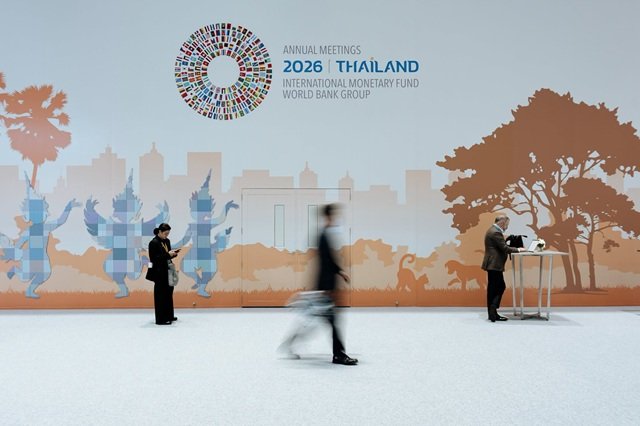
Sri Lanka’s economic recovery is entering a more demanding phase, with growth expected to moderate over the next two years as geopolitical conflicts, energy-market disruptions and restrictive global financing conditions threaten to limit the benefits of stabilisation. The International Monetary Fund’s World Economic Outlook 2026, titled Resilience Under Strain, Urgent Choices and issued in Bangkok, projects real gross domestic product growth of 4% in 2026 and 3.7% in 2027. The forecasts indicate continued expansion, but they also point to the difficulty of translating a recovery in economic output into durable improvements in living standards.
The projections place Sri Lanka among economies that remain particularly exposed to international shocks despite progress towards restoring domestic economic stability. Consumer price inflation is expected to average 5.3% in 2026 and 5.4% in 2027, while the current account deficit is projected to widen from 0.3% of GDP in 2026 to 0.5% in 2027. Unemployment is forecast to remain at 3.9% in both years. Taken together, the figures suggest that stabilisation will not remove the structural pressures associated with essential imports, household purchasing power and the cost of financing economic activity.
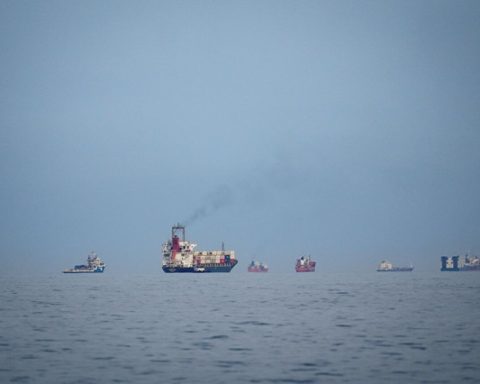
The global outlook compounds these domestic challenges. The IMF identifies geopolitical conflict, energy shocks and artificial intelligence-driven technological cycles as forces producing an uneven economic environment. For Sri Lanka, an energy-importing economy with limited direct exposure to the expanding artificial intelligence technology value chain, the consequences are especially significant. Disruptions in the Middle East and at critical energy transit routes can increase fuel import costs, intensify pressure on foreign exchange and raise domestic transport and production expenses. Higher costs for food and fertiliser can further affect household budgets and agricultural production.
Global headline inflation is projected to rise to 4.7%, driven by energy and food prices. For countries dependent on imported commodities, these increases can pass directly into domestic prices, even when local demand is not particularly strong. Sri Lanka’s projected inflation rate, therefore, must be considered alongside its exposure to international supply disruptions. Higher import bills can place pressure on the external accounts while rising prices reduce the purchasing power of households whose incomes have not kept pace.
Financing conditions present another constraint. Major advanced-economy central banks are maintaining restrictive monetary positions, while sovereign bond yields remain elevated. Developing economies consequently face expensive external borrowing, substantial debt-servicing obligations and limited fiscal room to respond to economic shocks. For Sri Lanka, which is still managing the consequences of its debt crisis, the combination restricts the resources available for public investment and social protection. Fiscal consolidation may improve the government’s financial position, but it also leaves difficult choices over how scarce public funds should be allocated.
The recovery itself has nevertheless produced measurable gains. Sri Lanka’s real GDP has returned to pre-crisis levels, supported by twelve consecutive quarters of positive growth. Output expanded by 4.7% in the first half of the year, while full-year growth estimates range between 4% and 4.4%. Industrial activity, tourism, export manufacturing and services have supported the expansion. Remittances have also increased by more than 20%, providing additional support to household disposable income.
Yet the social indicators reveal a less reassuring picture. Poverty is estimated at approximately 16.9%, remaining above pre-crisis levels despite the improvement in aggregate output. Labour-market indicators have lagged behind economic growth, while localised increases in living costs have eroded purchasing power among low- and middle-income households. The projected unemployment rate of 3.9% offers only a limited measure of labour-market conditions: the quality of newly created jobs and the persistence of underemployment remain important concerns. Economic growth alone cannot establish whether households have recovered from the losses associated with the crisis.
Fiscal performance has also improved, with revenue-administration reforms and consolidation reportedly exceeding initial expectations. However, the government continues to face rigid expenditure commitments involving public-sector wages, interest payments and social safety nets. These obligations narrow the scope for additional spending when external shocks occur. Energy-supply disruptions and extreme weather events affecting domestic production remain potential threats to the fiscal framework, while high domestic borrowing costs continue to constrain economic activity.
The policy challenge is to preserve price stability without imposing unnecessary costs on vulnerable households. The IMF’s recommended approach favours monetary vigilance, with interest rates aligned to inflation objectives, and targeted social assistance rather than broad subsidies or untargeted controls on fuel and food prices. Direct, temporary cash transfers to vulnerable households are intended to concentrate limited public resources where they are most needed, while avoiding the fiscal costs associated with universal price support.
Longer-term growth will depend on whether the recovery can move beyond consumption towards private investment, export diversification and productivity improvements. Agriculture and manufacturing are central to this transition, particularly the broader agrifood economy, which accounts for roughly one-sixth of economic output, more than 40% of employment and nearly one-third of merchandise exports. Addressing policy distortions, infrastructure deficiencies and barriers to land and finance could help the sector expand its productive and export capacity.
The IMF projections place the immediate task in measurable terms: growth of 4% in 2026, moderating to 3.7% in 2027, alongside inflation above 5% and current account deficits that widen slightly over the same period. The figures define the economic conditions under which Sri Lanka must pursue investment, employment and structural reform while remaining exposed to global energy and financing shocks.