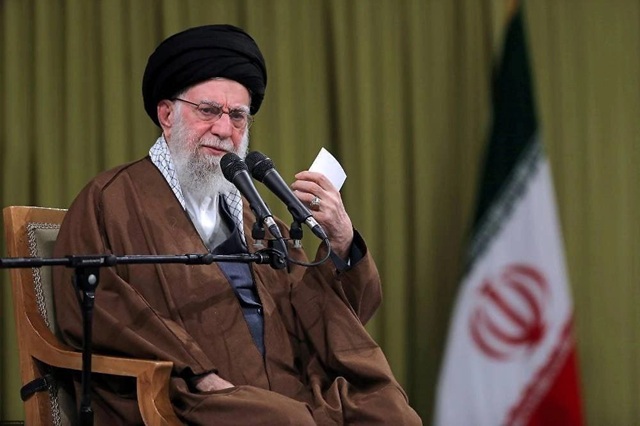
He is one of the most enduring and consequential figures in modern Middle Eastern politics. Born in the holy city of Mashhad on 19 April 1939 into a modest clerical family, Ali Hosseini Khamenei’s early life was shaped by religion and simplicity. His father, a devoted Islamic scholar, provided the foundation for his son’s education in theology, instilling values of discipline, piety and the study of jurisprudence. Life in Mashhad was humble; the family had little wealth, and Khamenei grew up observing the routines and struggles of ordinary people, experiences that would later inform his vision of society and governance.
Khamenei’s formal religious education began in the seminaries of Mashhad before he moved to the more prominent centres of learning in Qom. There he studied under senior clerics, including Ruhollah Khomeini, the future architect of the Islamic Revolution. These years exposed him not only to theology but also to the political ideas circulating among clerical networks opposed to the Shah’s regime. Khamenei became active in anti-monarchy circles, openly criticising the Shah’s modernisation policies, foreign influence and suppression of dissent. His opposition led to multiple arrests, experiences that reinforced his commitment to resistance and deepened his belief in the necessity of clerical oversight of politics.
The 1979 Islamic Revolution marked a turning point in Khamenei’s life. He became a loyal supporter of Khomeini’s vision of velāyat-e faqīh, or governance by Islamic jurists, which placed supreme political authority in the hands of senior clerics. In the early revolutionary government, he joined the Revolutionary Council, served as deputy minister of defence, and acted as Khomeini’s representative on the Supreme Defence Council. He was also involved in organising the newly formed Islamic Revolutionary Guard Corps, which would become a cornerstone of Iran’s military and political power.
In 1981, following a wave of assassinations within the revolutionary leadership, Khamenei emerged as a key political figure and was elected president of Iran. His tenure coincided with the devastating eight-year war with Iraq, during which he was deeply involved in wartime strategy and governance. These years cemented his reputation as a political survivor and a steadfast supporter of revolutionary ideals. Although his presidency often required negotiation with other factions, Khamenei displayed a consistent reluctance to compromise on matters of principle, a trait that would define his later leadership.
When Ayatollah Khomeini’s health deteriorated in 1989, questions of succession became urgent. Despite not being a grand ayatollah at the time, Khamenei was elected Supreme Leader following constitutional adjustments that relaxed formal religious requirements. These amendments consolidated power in the office and eliminated competing executive positions, enabling him to assume full control over Iran’s military, judiciary, security services, and foreign policy. As Supreme Leader, Khamenei not only commanded the state but also became the ultimate arbiter of political appointments and strategic direction.
Khamenei’s ideology combines religious authority with political centralisation. He has consistently emphasised the inseparability of religion and governance, framing Iran’s independence as both a moral and political imperative. He has frequently warned against foreign interference, portraying Western powers as seeking to undermine Iran’s sovereignty through cultural and political influence. At the same time, he has supported the development of Iran’s nuclear programme, framing it as a sovereign right while negotiating carefully with international powers when strategically advantageous.
Domestically, Khamenei’s tenure has been marked by tensions between conservative and reformist forces. He has overseen periods of strict suppression, particularly in response to protests such as the Green Movement of 2009 and more recent demonstrations over economic hardship and social grievances. At the same time, he has maintained loyalty among key military and intelligence institutions, ensuring the stability of the regime even during crises. His leadership style reflects a careful balancing of ideological rigidity and practical political calculation.
Khamenei has remained largely private about his family life. His children are not prominent in public office, although speculation occasionally circulates regarding their influence behind the scenes. This privacy has contributed to a sense of mystique around his personal life, reinforcing his image as a leader whose authority derives from position rather than personality.
Over more than three decades, Khamenei has become one of the longest-serving leaders in Iran’s history. His legacy is complex: he is seen by supporters as a guardian of revolutionary principles, a defender of national dignity, and a symbol of resistance against foreign domination. To critics, he represents an entrenched authority resistant to reform, centralising power and limiting political pluralism. His life reflects both the endurance of revolutionary ideals and the tensions inherent in sustaining an Islamic Republic in a modern, globalised world.