by Eric
An American attack submarine has sunk an Iranian warship in the Indian Ocean, yesterday early morning, marking the first known U.S. submarine attack on a surface combatant since World War II and the first such sinking anywhere since the 1982 destruction of the Argentine cruiser ARA General Belgrano by the British submarine HMS Conqueror during the Falklands War. The Pentagon confirmed that the Iranian Moudge-class frigate IRIS Dena was destroyed by a single Mk 48 heavyweight torpedo, a weapon whose origins stretch back to the height of the Cold War and whose destructive power remains central to U.S. naval supremacy.
Secretary of Defense Pete Hegseth described the strike as a “quiet death,” delivered by torpedo in international waters. At the same briefing, Chairman of the Joint Chiefs of Staff Gen. Dan “Razin” Caine identified the weapon as the Mk 48, fired from an unspecified U.S. fast attack submarine. Infrared footage later released by the Pentagon shows a massive detonation at the stern of the Iranian vessel, captured through the submarine’s photonics mast, as the frigate’s hull is violently engulfed below the waterline.
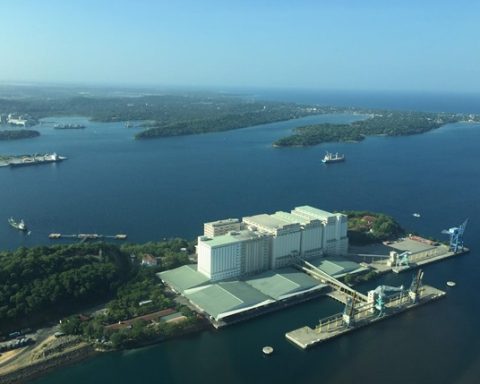
Sri Lankan authorities reported rescuing 79 Iranian sailors from the stricken vessel, with dozens more injured and over a hundred missing after the ship sank. The IRIS Dena, a Moudge-class frigate derived from the earlier Alvand-class design, was among Iran’s most capable surface combatants. Its loss comes amid an escalating U.S. campaign, dubbed Operation Epic Fury, targeting Iranian naval assets across and beyond the Middle East.
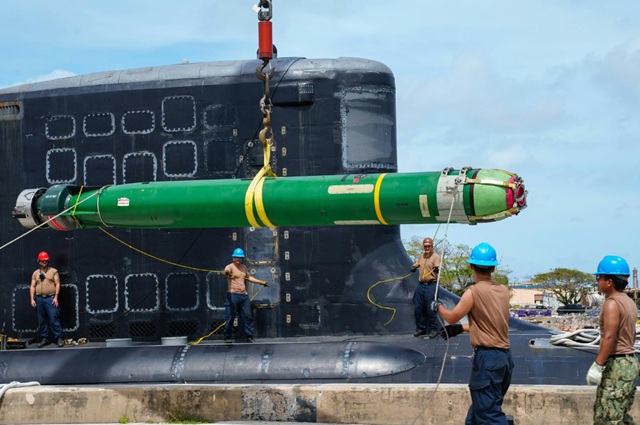
Mk 48 torpedo, officially designated the Mark 48 and developed in the 1960s to counter advanced Soviet submarines. Built originally by the company now known as Raytheon and subsequently modernized by Lockheed Martin and others, the Mk 48 was conceived as a deep-water, high-speed, long-range anti-submarine weapon. Yet over decades of upgrades, it evolved into a formidable anti-surface capability as well.
The torpedo measures approximately 19 feet in length, 21 inches in diameter, and weighs around 3,700 pounds. Its warhead carries roughly 650 pounds of high explosive, typically PBXN-103, designed not merely to puncture a hull but to break a ship’s backbone. Modern variants, including the Mk 48 ADCAP (Advanced Capability), are capable of both active and passive homing. Using onboard sonar, the torpedo can listen for a target’s acoustic signature or emit its own pings to refine its track. Guidance wires spooled behind the torpedo allow the launching submarine to update targeting data mid-course, even steering the weapon around countermeasures or toward a more vulnerable section of a ship.
Unlike many anti-ship missiles that strike above the waterline, the Mk 48 is engineered to detonate beneath a vessel’s hull. This under-keel explosion exploits a fundamental vulnerability in naval architecture. When the warhead detonates under a ship, it creates a massive gas bubble that rapidly expands and collapses. The initial expansion can lift thousands of tons of steel out of the water; the subsequent collapse removes buoyant support, causing the hull to sag and fracture under its own weight. In U.S. Navy sinking exercises, ships hit in this manner often snap in two. Even if the hull does not break outright, critical systems—propulsion shafts, bulkheads, electronic compartments—are catastrophically damaged.
The infrared footage of the IRIS Dena suggests a stern detonation, potentially targeting the engineering spaces and propulsion systems. Striking near the screws and rudder not only cripples mobility but may also increase the likelihood of structural failure, especially in frigate-sized vessels displacing around 1,500 to 2,000 tons, as is the case with the Moudge class. These ships, though modernized by Iranian standards, are not designed to withstand a heavyweight torpedo blast optimized to defeat much larger adversaries.
The Mk 48’s propulsion system reflects its Cold War lineage. It uses a piston engine powered by Otto Fuel II, a monopropellant that allows high sustained speeds exceeding 50 knots and operational depths of more than 800 feet. Its range, depending on speed settings and variant, can exceed 20 nautical miles. These characteristics make it equally lethal against submarines attempting to dive deep or surface vessels maneuvering at flank speed.
Over time, the Mk 48 has undergone multiple upgrades. The ADCAP modification introduced digital signal processing, improved target discrimination, and enhanced resistance to acoustic decoys. Later software updates further refined its ability to counter evasive maneuvers and cluttered littoral environments. The weapon remains the primary torpedo carried by U.S. Navy submarines, including the Los Angeles, Seawolf, and Virginia classes, and is also deployed by allied navies.
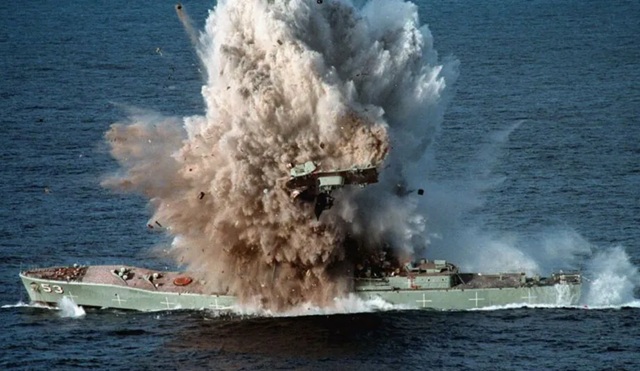
The last comparable sinking of a warship by submarine torpedo occurred in 1982, when HMS Conqueror fired Mk 8 torpedoes—an older, straight-running design—at ARA General Belgrano. That attack demonstrated the enduring vulnerability of surface ships to submarines. Yet in the decades since, anti-ship missiles have dominated public imagination, from Exocets to modern supersonic and hypersonic systems. The destruction of IRIS Dena reasserts the torpedo’s primacy as the most devastating naval weapon below the threshold of nuclear arms.
Iran’s Moudge-class frigates, including IRIS Dena, were designed as multi-role platforms with anti-ship missiles, surface-to-air systems, and limited anti-submarine capabilities. However, defending against a stealthy nuclear-powered attack submarine is an extraordinary challenge. Modern U.S. submarines operate with extremely low acoustic signatures, leveraging advanced hull coatings, pump-jet propulsion in some classes, and sophisticated sonar suites. By the time a surface ship detects a torpedo in the water—if it detects it at all—reaction windows can be measured in seconds.
The Pentagon has stated that more than 20 Iranian naval vessels have been destroyed in the ongoing campaign, effectively neutralizing Iran’s major naval presence in theater. Yet it is the method of this latest sinking that resonates globally. The use of a single torpedo, fired from an unseen platform, underscores the enduring relevance of undersea warfare in an era often defined by drones and precision-guided munitions.