Israel has entered a new era of warfare, openly aligning with the United States in a joint campaign against Iran, a move that has sparked alarm and scrutiny across the region and within the global community. For decades, Israeli military actions were framed as sovereign operations, even when heavily reliant on American funding, intelligence, and weapons. Now, according to +972 Magazine, the country has broken with tradition, presenting itself as a full partner in an explicitly imperial endeavor with objectives that extend far beyond self-defense.
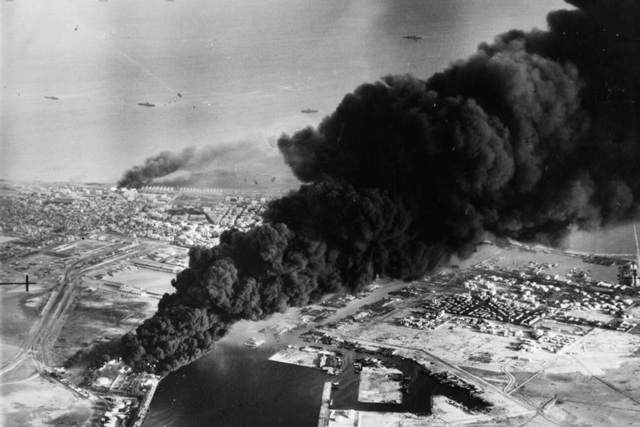
The parallels to history are striking. In 1956, Israel joined Britain and France in the Sinai War, an invasion of Egypt intended to topple President Gamal Abdel Nasser and secure Western interests. Israeli officials then falsely portrayed their operation as a response to Egyptian aggression, while the real goal was political reordering in the region. While Israel swiftly conquered the Sinai Peninsula, the political aftermath proved humiliating: international pressure forced a withdrawal, leaving Nasser stronger than before. Experts now warn that Israel could face a similar outcome in its joint campaign with the United States, despite its overwhelming military advantages.
The current conflict, officially described by the Israeli army as a “preemptive strike,” is widely viewed as a war of choice. Few observers genuinely believe Iran was on the verge of an immediate attack; instead, the campaign serves a dual purpose: neutralizing Iran’s nuclear and missile capabilities and pursuing broader regime-change ambitions. As in the Sinai War, Israel relies on a global hegemon to achieve objectives it could not secure alone. +972 Magazine notes that this unprecedented openness in military alignment removes the previous veneer of independence, leaving Israel fully identified with American imperial aims.
The stakes are high. Early strikes have already claimed the life of Supreme Leader Ali Khamenei and inflicted severe damage on Iran’s military infrastructure. Israel’s military, supported by U.S. forces, is unmatched in the region, but military superiority alone does not guarantee political success. If the Iranian regime survives or adapts, the campaign could fail to secure the strategic realignment that both Israel and the United States seek. Analysts warn that any failure may damage Israel’s regional standing and make it a lightning rod for criticism in the United States, especially if American casualties rise.
Domestic and international politics further complicate the war. U.S. public support is tepid, and some American politicians have already expressed concerns over Israel’s influence on U.S. military decisions. Gulf states, while rhetorically supporting action against Iran, may resist direct involvement and could even pressure the United States to end the campaign, potentially undermining Israeli objectives. Iran’s attacks on neighboring Gulf states, combined with the closure of the Strait of Hormuz, have created leverage that may hasten U.S. disengagement.
Israeli officials have sought to frame the campaign as a demonstration of regional power, yet the risks are evident. The country has forfeited the strategic ambiguity it maintained for seven decades, fully intertwining its fate with that of the United States. Success could grant Israel greater influence in shaping the Middle East, including its stance on Iran, Gaza, and the West Bank. Failure, however, could weaken its image as the dominant regional power, eroding both credibility and political capital.
+972 Magazine emphasizes that Israel’s choice represents more than a military gamble; it is a profound political experiment with uncertain outcomes. By aligning so closely with a global superpower, Israel has accelerated its entanglement in conflicts that are not solely its own, risking both regional stability and its historical image of sovereignty. As the war unfolds, the ultimate question remains whether this unprecedented partnership will secure Israel’s objectives or repeat the miscalculations of 1956 on a far larger scale.