Peter Thiel, the billionaire venture capitalist and early supporter of former President Donald Trump, has launched a series of closed-door lectures in Rome examining the concept of the Antichrist, raising eyebrows among Catholic commentators and religious scholars. The invitation-only conference, which runs until Wednesday, is being held at an undisclosed venue and is not open to the press. Organizers say participants include figures from academia, technology, and religious circles, reflecting Thiel’s growing interest in the intersection of philosophy, theology, and global politics.
Thiel, co-founder of Palantir Technologies, an AI software company with close ties to U.S. defense and intelligence agencies, has increasingly devoted his attention to religious and philosophical questions in recent years. Last year, he held a similar series of talks in San Francisco, exploring the potential emergence of an Antichrist on the global stage, warning of a figure who could establish a one-world government under the pretext of resolving crises such as nuclear threats, artificial intelligence risks, or climate disasters. Thiel, 58, raised in an Evangelical Christian family, has said that his faith shapes his worldview and informs his reflections on power, technology, and morality.
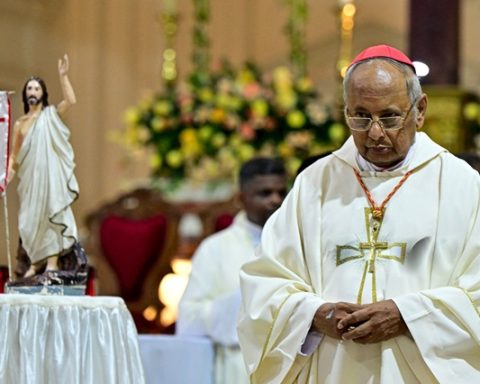
Thiel’s visit has drawn attention from the Roman Catholic Church, which under Pope Leo — the first U.S. pontiff — has publicly criticised some of Trump’s right-wing policies and cautioned against unregulated technological advances, particularly in artificial intelligence. Despite media speculation, Catholic universities in Rome denied hosting the event, and there are no scheduled meetings between Thiel and the pope, according to the pontiff’s official agenda.
The lectures have been sharply criticised by members of the clergy and religious commentators. Father Paolo Benanti, a Vatican adviser on artificial intelligence, published an essay describing Thiel as a “political theologian” operating within Silicon Valley. Benanti characterised Thiel’s work as a “prolonged act of heresy against the liberal consensus,” challenging what he views as outdated foundations of civil coexistence. The essay, published on Le Grand Continent, provocatively asked whether Thiel should be condemned for his views, underscoring the intensity of the reaction in religious circles.
Italian Catholic media have also scrutinised Thiel’s activities. L’Avvenire, a newspaper owned by the Italian bishops’ conference, published several articles warning against technology leaders defining ethical boundaries unilaterally. The commentary argued that governments must maintain democratic oversight of digital platforms and resist the spread of disinformation, implicitly framing Thiel’s discussions as part of a broader debate about the moral and political influence of Silicon Valley elites.
Thiel maintains close ties with conservative figures in Washington, including Vice President JD Vance, a Catholic convert, and his appearance in Rome follows visits by other U.S. conservative luminaries such as Steve Bannon and Elon Musk. While the lectures have stirred debate over their theological and political implications, no meetings with Italian government officials, including Prime Minister Giorgia Meloni, are scheduled, highlighting the private and exclusive nature of the event.
Observers note that Thiel’s blend of technology, theology, and geopolitics reflects a growing trend among influential tech entrepreneurs to shape moral and philosophical discourse beyond conventional corporate or political arenas. By framing his lectures around the figure of the Antichrist, Thiel is tapping into apocalyptic imagery that resonates with both historical religious thought and contemporary anxieties about global governance, artificial intelligence, and societal collapse.
Despite the secrecy surrounding the conference, the impact is already evident. Catholic commentators have framed Thiel’s actions as a challenge to institutional authority, suggesting that unregulated elites in technology may seek to influence ethical norms in ways that bypass traditional democratic structures. Analysts warn that the discussions could contribute to broader debates about the limits of private influence over public morality, particularly in areas such as AI development and digital oversight, where Thiel’s own company holds considerable sway.
As the lectures continue in Rome, the broader question remains whether Thiel’s efforts represent a serious engagement with theological concepts or a provocative exercise designed to attract attention and shape discourse within elite circles. While critics emphasize the need for governmental and religious oversight, supporters may view the sessions as a unique exploration of morality and leadership in a technologically driven world.
Whatever the outcome, Thiel’s Rome lectures illustrate the increasingly blurred boundaries between technology, religion, and politics, and highlight the tensions that arise when powerful individuals use their influence to explore contentious philosophical ideas. With Catholic authorities closely monitoring the proceedings and media speculation swirling, the private event has already ignited a public conversation about the responsibilities of tech leaders and the ethical dimensions of their intellectual pursuits.