
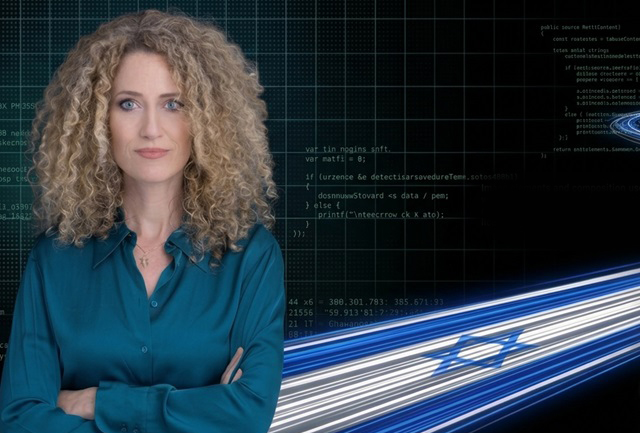
Dr Melody Sucharewicz is a former spokesperson and strategic advisor for the Israeli government, with extensive experience in public diplomacy and communications in conflict situations. Born in Germany, she moved to Israel, where she has worked on security, counter-terrorism, and international outreach. In her career, she has been directly involved in explaining Israel’s positions to international audiences, engaging with foreign governments, and advising on policy related to radicalisation, terrorism, and peacebuilding.
Yesterday evening, I sat down with Dr Sucharewicz to explore a wide range of pressing issues, from public diplomacy and the Israeli-Palestinian conflict to international security, anti-Semitism, and the broader role of civil society, in order to understand the holistic picture of her perspective. From the outset, it was clear that her experiences, shaped by her childhood in Germany and her adult life in Israel, had profoundly influenced her approach to communication, diplomacy, and conflict resolution. She described the formative impact of witnessing biased media coverage of Israel in Germany, stating, “I remember the outrage I felt as a young person in Germany seeing the very unjust coverage about Israel, the country that I knew very well because I visited a lot, and also a country that, for me, as the grandchild of Holocaust survivors, meant much more than just any country. It was, for me, the home of the Jewish people and a safe haven. Seeing how unjustly Israel was portrayed back then already in German media was something that always showed to me that something was going wrong and something really needs to change.”
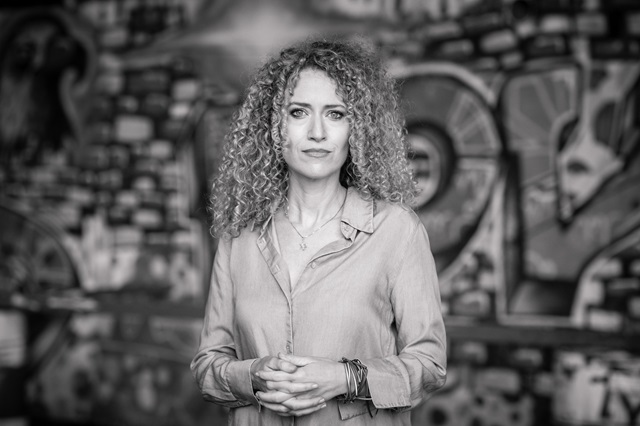
This early awareness instilled in her a deep understanding of how narratives are constructed and the power dynamics underlying them. She explained, “I realised very fast that narratives… are usually made by forces who have a lot of power and a lot of resources and who have an interest… in inciting against Israel and inciting against Jews and making the two of them an interchangeable object of hate.” Through her experiences, she witnessed the convergence of radical ideologies from both Islamist and far-right groups, noting a particular incident in 2007 where, during Israel’s Independence Day celebrations in Germany, extremists shouted anti-Jewish slogans in the presence of the public, demonstrating the persistence of antisemitic collaboration across ideological divides. She remarked, “Even in 2007, I was moderating a public event for Israel’s Independence Day, and a group of radical Islamists marched in along with a group of radical right-wing activists, shouting in German the phrase ‘Out of the Jews.’ And then in silence, after shouting, which is forbidden and criminalised in Germany, they shouted very silently ‘from Palestine.’ Back then, in perception, as long as this was against Jews in some Israel-related context, it seemed acceptable.” This experience, she emphasised, highlighted how the boundaries between hatred of Jews and hatred of Israel could be blurred, and how such narratives threaten not only Jewish communities but the democratic fabric of free societies.
Her own family history deepened her understanding of collective trauma and resilience. She described her family background in detail: “My grandparents are from Poland. My father was still born in Poland. My uncle was born in the ghetto in Warsaw… The other side of my family are survivors from Romania who originally come from Czernowitz, which used to be in the Bukovina part of the Austro-Hungarian Empire and today actually is in Ukraine. Both of my parents grew up in Munich, but I was the first generation born there, and the last generation born there as I left for Israel.” She contextualised this heritage in relation to modern security threats and public diplomacy, linking the historical consequences of antisemitism to contemporary challenges.
Reflecting on historical acts of terrorism, including the Munich massacre of the 1970s, she shared her perspective on the failures of negotiation and security protocols, stating, “The absurdity of how the situation could have been averted had Germany allowed Israeli special forces to come in and not insisted on solving the matter themselves… And afterwards negotiating with the PLO terrorists and even paying the money to ensure they are not going to conduct further terrorist attacks… giving in to the force of terrorism is something that became very visible in that terrorist attack.” For Sucharewicz, these events illustrated the necessity of preparedness, deterrence, and proactive measures to safeguard civilians while addressing extremism effectively.
Her academic work, particularly her PhD on intrinsic de-radicalization, reinforced her belief in the possibility of ideological transformation. She explained, “Through my PhD I could confirm something that several others realised before: de-radicalization is possible… I studied the processes of de-radicalization undergone by former Islamist radicals and terrorists who on their own behalf disconnected not only from the terror group and from physical violence, but also from the radical Islamist ideology.” She elaborated that de-radicalization requires careful study of both individual motivations and systemic factors, emphasising that radicalization is not spontaneous but often the result of deliberate policies or propagandist efforts. She gave historical context, noting, “Already before the establishment of the State of Israel, there were forces like the grand mufti Haji Amin al-Husseini who had an interest in radicalizing and inciting Palestinians against the Jews for his power interests, instrumentalizing the hatred against Jews to strengthen himself.” This perspective informs her approach to peacebuilding and reconstruction, particularly in Gaza, where she sees the elimination of systemic radicalization as a critical step toward sustainable development and safety.
Discussing the October 7th, 2023 attacks, Sucharewicz highlighted the extreme challenges posed by the use of civilians and children as instruments of terror, describing the complexity of distinguishing between combatants and non-combatants: “It became clear how difficult it is to disconnect between Hamas and civilians… The instrumentalization of civilians and especially of children and the atrocities we saw make this entire distinction very difficult. No one in Israel, not the government and not the IDF, would ever want to see a Palestinian child die in the conflict, but what is clear… Israeli children will no longer be sacrificed and will have to be protected in the face of the terrorist threats that we are facing, and there can be no compromise.”
Her approach to international communication emphasises context and strategic use of language. She explained, “Emotional language is a tool for persuasion; it can be a tool for mobilization. Whether or not that is effective as a tool in international diplomacy really depends on the context, it depends on the messenger, it depends on the target audience… When dealing with jihadist fundamentalists versus Western values, the only effective language is not emotional, it is not diplomatic… It is force and it is deterrence.”
On the broader issue of violence and security, she stressed the importance of precise framing and understanding the nature of threats. She stated, “We are facing a decades-long jihadist threat in many different faces with different names… If that didn’t exist, there would be no cycle and there would be no violence… We are dealing with a jihadist quest that many very effective propaganda mechanisms managed to translate into a very noble political goal, which does not exist.” She connected this to the necessity of both military and ideological responses: “Beyond the military defeat of Hamas… the very inherent culture of death teaching children that they want to die as a shaheed and that they want to learn how to kill a Jew… has to go. This is when Palestinian next generations will have a chance of growing up with some familiarity with the idea that there is an Israeli state.”
She also shared detailed observations on the post-October 7th environment, describing her work supporting hostages and their families in Germany. She recounted, “I accompanied the hostage families very closely since October 7th… I lead the entire solidarity campaign in Germany and took them on countless delegations and meetings and built up a Hostage Square in Berlin in the historical center… Some of the people who were in shock by the atrocities and the violence committed along with Hamas… They knew the Palestinians, they supported Palestinian families, and they were in shock seeing masses of civilians running along with Hamas, murdering along with Hamas, looting along with Hamas, raping along with Hamas.” These insights underscore the profound human consequences of militant strategies and the complexities faced by policymakers and diplomats in distinguishing between perpetrators and victims.
Sucharewicz also reflected on previous attempts at engagement and the consequences of political decisions. She recalled Israel’s withdrawal from Gaza in 2005, noting, “Israel withdrew with a lot of complication and difficulties the Jewish settlers from Gaza. And what did it leave behind? It left behind a functioning infrastructure of agriculture, an industrial zone, there were countless greenhouses, plants for an industrial zone, an intact industrial zone, and this was handed over to the PLO. The PLO shortly after was ousted by Hamas in a brutal terrorist coup where… Hamas threw out the Fatah officials, threw them from roofs and dragged them through the streets… Within no time, Hamas turned this little green oasis into a terror hub from which it started shooting rockets at Israel’s south.”
In continuing our discussion, Melody Sucharewicz reflected on the broader consequences of political and military strategies in Gaza and their human impact. She emphasised the deliberate choices made by Hamas and the devastating effects on civilians, stating, “Looking, even just months before October 7, there was still a certain hopefulness and naivety in Israel that the government back then gave an allowance to Palestinian workers from Gaza to come to work in Israel… Because that was what the Egyptians suggested, the Qatari suggested, let them come in and work in Israel, give them more economic opportunities in Israel, you will see you will have quiet, and Hamas is satisfied. And shortly after, we had October 7 in our face, not a single Palestinian child needs to suffer and would have suffered had Hamas not turned the Gaza Strip into a terrorist hub.”
She analysed the structural transformation of Gaza under Hamas, highlighting the way the terrorist organisation converted an economic and agricultural landscape into a base for military operations. “Israel withdrew from Gaza in 2005… It left behind a functioning infrastructure of agriculture, an industrial zone, countless greenhouses. The PLO shortly after was ousted by Hamas in a brutal terrorist coup… Within no time, Hamas turned this little green oasis into a terror hub from which it started shooting rockets at Israel’s south.” This historical recounting underscored for her the long-term consequences of governance by extremist actors and the manipulation of civilian spaces for militant objectives.
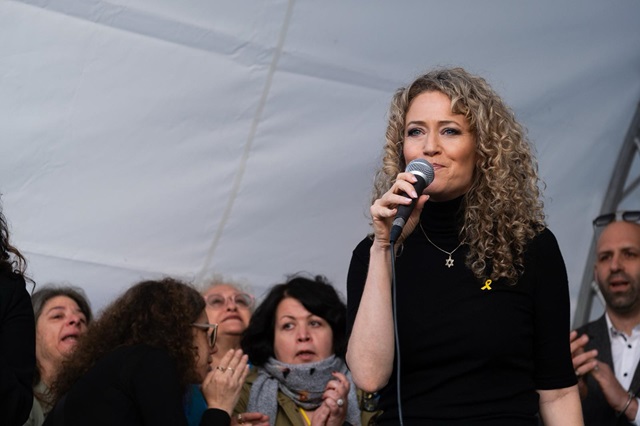
She extended this perspective to the broader Middle East and international diplomacy, particularly regarding Iran. Sucharewicz argued that repeated diplomatic attempts with fundamentalist regimes were bound to fail. “The diplomatic talks with this Iranian regime were bound to fail because for you cannot negotiate with fundamentalists the way you would negotiate with Denmark or Switzerland… From day one, those diplomatic attempts started already in 2003, a means for this fundamentalist regime to gain time.” She noted that these regimes often exploit diplomatic processes to advance militarisation and proxy networks, explaining, “They used the petrodollars coming into the regime… not to strengthen the economy, not to give it to the people, but to continue funding Hezbollah, Hamas, the Houthis with hundreds of millions every year, and exporting their fundamentalist ideology all over the world, all the way from Africa to Europe and beyond.”
Regarding the Joint Comprehensive Plan of Action (JCPOA) and military options while pursuing diplomacy: “It was right for President Trump to make another attempt and to really explore the diplomatic path to the very last moment. But seeing the lack of flexibility from the Iranian regime, seeing the discrepancy between what they’re saying and what they’re intending to do, and their unwillingness to even discuss nuclear capabilities… this is why it failed. But still, it was the right thing to do to give it a chance till the very end, while always having the military option on the table.” She contextualised Israel’s approach within a framework of defensive pragmatism, clarifying, “Israel will always be capable and insist on defending itself. If there are allies who share the same strategic goals… join forces, that’s great. But Israel will never demand and never force any ally to fight its own war.”
Sucharewicz also reflected on the potential long-term instability of the region, noting that coherent action by Western democracies is critical to mitigating global threats: “It really depends on one factor at this stage… whether the Western democratic states are uniting in the quest to counter the Iranian regime and diminish the terrorist proxy war machine of this regime… There is one more chance for the Western democracies to unite and build a united front against probably the biggest threat to global stability. And I deliberately say global and not just regional.” She recognised that wars can end through negotiations or exhaustion, but emphasised that with fundamentalist regimes, “clear victory is really the only option to ensure that this threat is gone.”
Addressing the complex question of criticism of Israel versus antisemitism, Sucharewicz highlighted the inflationary misuse of terms in European discourse: “What we see a lot is that criticism turns into a pathological political obsession… Germany, for example, has officially adopted the word Israel criticism into its linguistic dictionary… There is no Syria criticism. There is no Iran criticism. There is Israel criticism as a defined term.” She then offered the “3D definition” of antisemitism as a useful framework: “Criticism becomes antisemitism when three things happen: delegitimization, double standards, and dehumanization.”
In response to UN reports alleging potential ethnic cleansing due to settlement expansion, she provided a historical and contextual perspective: “When we speak of ethnic cleansing, we have to remember… For example, in 1947 and 1948, the Jordanian army expelled Jewish inhabitants from their homes… We cannot ignore causality when we speak of this conflict… For a population that over the decades has been consistently growing at a rate of around two to five percent per year, claims of ethnic cleansing are absurd. The same goes for settlements… Israeli governments have shown that they are capable of reversing settlements. Settlements have always been a matter of negotiation.” She emphasised that propaganda misrepresents the facts, and that the negotiation table, not international accusation, remains the forum for resolution.
Turning to strategies for reducing misinformation and improving public understanding, Sucharewicz highlighted the importance of early education and communication competence: “The best tactic is to start creating communication competence at a very early age… to ensure that schools put as much effort in building communication competence in a technological era as they put on mathematics and English, if not more… Provide children at a young age the capacity to detect misinformation, the sensibility to detect manipulation, influence, whether commercial or political.” She saw this as an essential tool for fostering critical thinking and resilience against ideological manipulation.
She stressed the pivotal role of civil society in fostering sustainable peace, particularly through people-to-people engagement: “One of the strong points for civil society organisations is the people-to-people component… the personal, social interaction is really the most powerful tool to deconstruct stereotypes and replace hatred with shared interests and understanding… Bringing Palestinian-Israeli children together and teaching them to understand each other at an early age is highly important.” However, she acknowledged the challenges of operating within the prevailing cultural context, noting that Palestinian children who participate in such initiatives risk their safety due to entrenched societal pressures: “Until today, the cultural context in the Palestinian territory is one that forces a Palestinian child who comes somewhere to Israel to play soccer with a Jewish child to go into absolute hiding, and keep this interaction absolutely discreet in order to protect his life. You are considered a traitor and worth killing if you meet up with Israelis and talk about peace.”
She stressed that these structural and cultural obstacles must be addressed as part of any meaningful reconstruction in Gaza: “The most important thing is, for now, a Palestinian society, especially now with the reconstruction in the Gaza Strip, to focus on replacing this culture of death and of hatred with a culture of peace and understanding… start socialising children from an early age into openness, into tolerance, into some connection with basic democratic values… Ensure that schools are no longer named after terrorists, that schoolbooks no longer teach children how to kill Jews as part of a math exercise, that media programmes no longer teach children to recall jihadist poems and dream of becoming a shaheed, that public squares are no longer called after jihadist terrorists who killed countless Jewish teenagers in one night in a suicide bombing. That all has to go.”
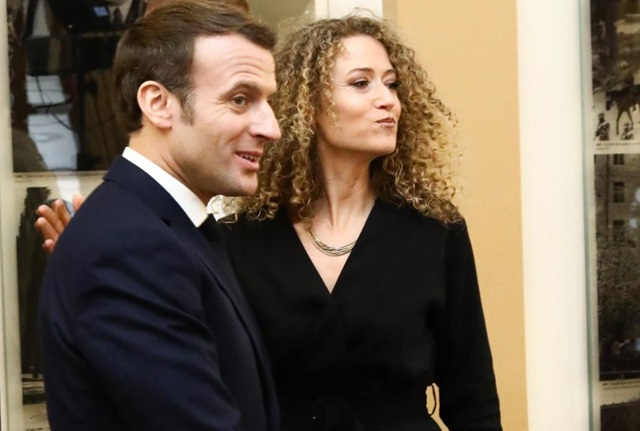
Her vision for the role of civil society was expansive and deeply pragmatic, linking education, media, urban planning, and public memory to long-term stability: “Not seeing a potential for peace, but that’s also when civil society can really start and work freely and effectively, bring people together and create something… create something on the decades of pain that we’ve been experiencing.” In her view, sustainable peace requires dismantling not only violent networks but also the ideological infrastructures that perpetuate hatred and fear.
Dr Melody Sucharewicz situates contemporary conflicts within a long historical and geopolitical continuum. She consistently links her insights from Germany, Holocaust memory, academic research, and first-hand observation in Israel and Europe to a coherent perspective on security, public diplomacy, and education. From the deliberate misrepresentation of Israel in European media to the strategic instrumentalisation of civilians by Hamas, and from Iran’s fundamentalist regime to grassroots initiatives promoting dialogue and understanding, she demonstrated a nuanced grasp of the interplay between ideology, history, and policy.
She concluded by highlighting the need for both strategic clarity and moral responsibility: “The hope-bringing things that happen in the Middle East, be it interaction between Palestinians and Israelis, be it the Abraham Accords from 2020… The terrorists, the jihadists, try to kill that all… What’s important now is to create the conditions for peace by dismantling the culture of death and building infrastructure, education, and civil society initiatives that replace hatred with understanding.” Her emphasis on comprehensive, long-term approaches illustrates a vision in which security, diplomacy, and civil engagement are inseparable.