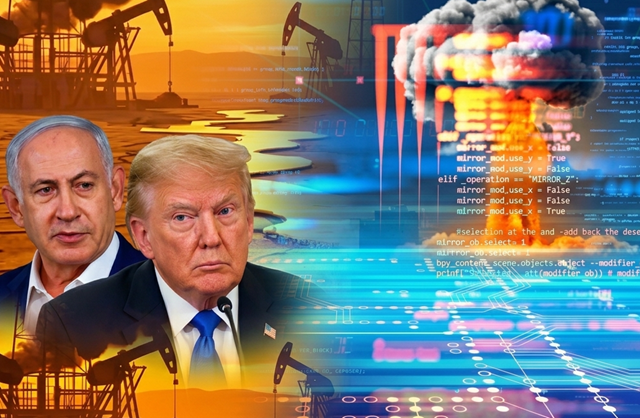
The world is again confronting a conflict whose shockwaves extend far beyond the immediate battlefield. The confrontation involving the United States, Israel, and their adversary -Iran has triggered a chain reaction now felt across continents. Energy markets are rattled, inflation is tightening its grip, recessionary fears are resurfacing, and global travel and trade are slowing. The international economy, still fragile after years of pandemic‑driven strain, faces a fresh and destabilising blow. In such a moment, mediation is not a diplomatic courtesy; it is an urgent global necessity.
Modern conflict does not remain confined to the geography of its origin. Oil and gas flows are disrupted not only by sanctions or blockades but by the uncertainty that war injects into markets. Shipping insurance premiums rise sharply. Airlines reroute or suspend operations. Investors retreat to safe assets. The global South, heavily dependent on imported energy, feels the pain first. The global North, already battling inflation, sees its recovery falter. In an interconnected world, the cost of conflict is no longer borne solely by the combatants; it is distributed across supply chains, financial systems, and households. Mediation, therefore, becomes a collective imperative. The longer the guns speak, the deeper the economic wounds.
But mediation cannot be a symbolic gesture. It must be credible, accepted by all sides, and grounded in the principle that no durable peace is achieved at gunpoint. Every party must concede something, however small, to gain something larger: stability. The qualities required of a mediator are demanding, and they must blend seamlessly. Strategic autonomy is essential; the mediator must not be seen as an extension of any power bloc. Global legitimacy matters, for without it no party will trust the process. Diplomatic and economic leverage must be real, not rhetorical. The mediator must be able to speak to all sides without being dismissed as partisan. And above all, the mediator must possess domestic political stability, for a nation distracted by internal turmoil cannot sustain long negotiations.
Few countries today meet these criteria. Traditional mediators—Nordic states, Switzerland, even the UN—find their influence diluted in a world of hardened geopolitical alignments. Major powers are too entangled in the conflict to be neutral. Middle powers are either too dependent or too divided. This vacuum is dangerous, but it also creates space for new actors.
India occupies a distinctive position in this landscape. It maintains strategic partnerships with the United States, defence and technological ties with Israel, and longstanding civilisational and economic links with the Arab world and Iran. It is one of the few countries that can speak to all sides without being immediately dismissed as biased. India’s global visibility has grown steadily, shaped by its economic rise, its leadership of the G20, and its expanding diplomatic footprint. Its current chairmanship of BRICS adds another layer of convening power, giving New Delhi a platform that bridges the developed and developing worlds. Whether one agrees with its political choices or not, the fact remains that India today is heard in capitals that once viewed it as peripheral. This credibility is not absolute, nor is it uncontested, but it is real enough to matter.
India’s own interests also align with the need for de‑escalation. As one of the world’s largest importers of energy, it is directly exposed to the volatility created by conflict. A prolonged crisis threatens its growth trajectory, complicates fiscal planning, and burdens citizens with higher prices. Mediation, therefore, is not merely altruistic; it is strategic self‑preservation. Yet India must tread with caution. Mediation is not about imposing solutions or projecting influence. It is about creating space for dialogue, absorbing diplomatic setbacks, and maintaining the trust of all parties. It requires patience, discretion, and a willingness to accept that progress may be slow and uneven.
For mediation to succeed, three conditions must converge. First, there must be a minimum willingness to talk. Even adversaries must recognise that endless conflict yields diminishing returns. Second, the mediator must be trusted by all sides. Trust is the currency of diplomacy; without it, negotiations collapse before they begin. Third, the framework must acknowledge mutual concessions. No party should feel coerced; every party must feel heard.
The world cannot afford a prolonged crisis. The economic tremors are already visible. The humanitarian cost is mounting. The geopolitical risks are rising. In such a moment, mediation is not an abstract ideal. It is the only responsible path. And nations with the credibility, balance, and diplomatic reach to attempt it must step forward not as saviours, but as stabilisers in an increasingly unstable world.