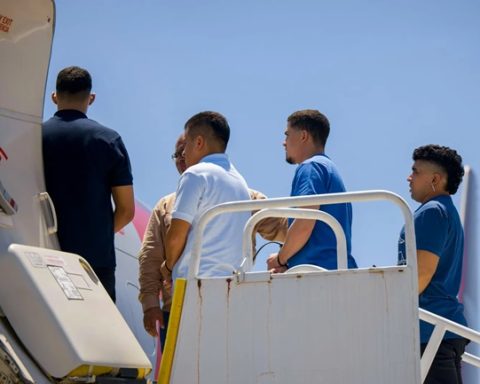
The story begins with a promise of opportunity and ends in abandonment thousands of miles from home. In September 1969, a group of young Palestinian men from Gaza boarded a plane believing they were headed to Brazil for well-paid work. Instead, they found themselves stranded in Paraguay under a dictatorship, victims of what would later emerge as a covert operation orchestrated by Mossad. Nearly six decades later, a new podcast highlighted by +972 Magazine has revived this largely forgotten episode, raising questions about continuity in Israeli policy toward Gaza.
The men had signed up through what appeared to be a legitimate travel agency offering employment abroad. Many were drawn by the promise of high wages and the possibility of supporting families left behind in the Gaza Strip, which Israel had occupied since 1967. Upon arrival in São Paulo, however, the deception began to unravel. Escorted by armed guards, they were transferred to another plane and flown to Asunción, Paraguay, a country unfamiliar to them and ruled at the time by dictator Alfredo Stroessner.
Once there, the men were processed without explanation. Officials assigned them arbitrary professions and transported them to remote rural areas. No jobs, housing, or support systems awaited them. The promised work program did not exist. Instead, they had been deliberately removed from Gaza as part of a secret plan to reduce the Palestinian population.
For years, this episode remained buried in personal testimonies and scattered archival traces. The new podcast series “Palestinians in Paraguay,” produced by a team of researchers and journalists, reconstructs the story through survivor accounts and declassified documents. Central to the narrative are two men: Mahmoud Yousef and Talal Al-Dimassi, both of whom were among those deported under what became known as the Paraguay Scheme.
Their stories reflect a broader pattern. Both men were born into displacement following the 1948 war and later grew up in Gaza. As young adults under Israeli occupation, they encountered the scheme under different circumstances. Yousef was lured by economic incentives, while Al-Dimassi, who had previously been detained and tortured, was effectively coerced into participation under threat of family expulsion.
Archival evidence suggests the operation was far more ambitious than previously understood. A 1969 Israeli government document outlines a proposal to deport up to 60,000 Palestinians to Paraguay, with financial arrangements made between the two governments. At the time, Gaza’s population was under 400,000, meaning the plan targeted a significant portion of its young male population.
Despite its scale, the scheme was short-lived. Many deportees quickly fled Paraguay, crossing into neighboring countries in search of survival. Some managed to rebuild their lives through trade or diaspora networks. Others, like Al-Dimassi, faced extreme hardship and violence.
The operation came to a dramatic turning point in May 1970. Desperate and disillusioned, Al-Dimassi and another deportee, Khaled Kassab, confronted the Israeli ambassador in Paraguay. The encounter escalated into a shootout that left the ambassador wounded and his secretary dead. While initial reports framed the incident as a politically motivated attack, the subsequent trial revealed the underlying story of forced deportation.
During court proceedings, the defendants used their platform to expose the scheme publicly. Their testimony dismantled the secrecy surrounding the operation and contributed to its termination. Both men were convicted and imprisoned, serving several years before release. Al-Dimassi would later claim that attempts were made on his life even while in custody.
Although Israel has never formally acknowledged the program, former officials have since confirmed its existence. At the time, discussions within the government focused on reducing the Palestinian population in newly occupied territories. The Paraguay Scheme represented one method among several aimed at encouraging what officials termed “voluntary emigration.”
The historical context is critical. Following the 1967 war, Israel found itself governing over a million Palestinians in the West Bank and Gaza. Internal deliberations reportedly included proposals to facilitate their departure by economic or covert means. The Paraguay operation, though ultimately unsuccessful, illustrates how such ideas were translated into action.
What makes the story particularly relevant today is the resonance between past and present. The podcast draws parallels between the 1970s scheme and recent developments in Gaza. Since 2023, policies and rhetoric from Israeli officials have increasingly referenced the idea of large-scale Palestinian relocation. Terms like “voluntary emigration” have re-emerged in political discourse, echoing language used decades earlier.
Recent reports describe efforts to facilitate the departure of Gazans through intermediaries and private entities, often under conditions of extreme hardship. Flights organized without clear destinations or support structures bear a striking resemblance to the earlier operation. While the scale and context differ, the underlying objective—reducing the Palestinian presence in Gaza—appears consistent.
At the same time, significant obstacles remain. International resistance, particularly from neighboring countries unwilling to accept large numbers of displaced Palestinians, has limited the feasibility of mass relocation. Historical precedent also suggests such efforts are unlikely to succeed in the long term.
The human dimension of the story underscores this reality. Despite decades of displacement, conflict, and hardship, Palestinians in Gaza have repeatedly demonstrated resilience and attachment to their land. Even those forcibly removed, like Al-Dimassi, maintain a deep connection to their place of origin.
In one account shared in the podcast, Al-Dimassi describes a recurring dream of Gaza—a landscape where destruction and hope coexist. The imagery reflects a broader sentiment among displaced Palestinians: that despite repeated attempts to uproot them, their identity and aspirations remain intact.
The rediscovery of the Paraguay Scheme serves as both a historical revelation and a contemporary warning. It highlights the persistence of policies aimed at demographic engineering, as well as the ethical and political consequences of such strategies. By bringing these stories to light, the podcast and its coverage by +972 Magazine challenge official narratives and invite renewed scrutiny of current events.