


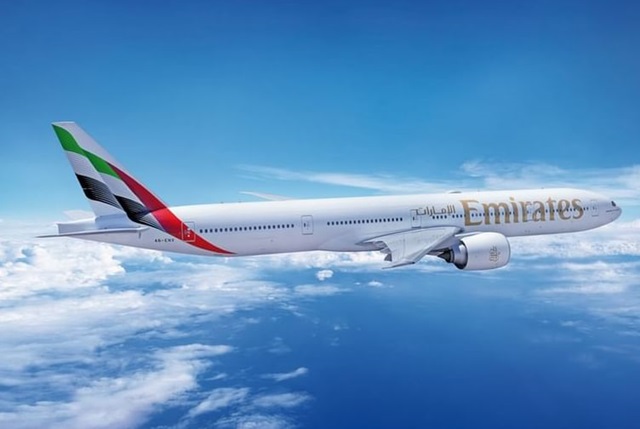
Emirates has obtained “war risk” insurance at a rate that industry insiders describe as “outrageously” low, allowing the airline to continue operations from Dubai despite the ongoing US and Israel strikes on Iran. According to the Financial Times, the carrier is paying roughly $100,000 a week to cover its entire fleet, far below what rival international airlines are being quoted for flights into the region, which range from $70,000 to $150,000 per flight. Private jet operators have faced premiums as high as $50,000 for a single trip.
The policy, negotiated by Emirates’ broker WTW, provides coverage for up to $2 billion in losses on the airline’s fleet, approaching the maximum available through global specialty insurance markets. Industry executives say Emirates’ scale, experience flying in the region, and close coordination with UAE authorities allowed it to secure unusually favorable terms. At least one insurer reportedly declined to join the deal, citing the rate as too low given the heightened risk.
Other Gulf carriers have resumed limited operations, including Etihad from Abu Dhabi, Air Arabia from Sharjah, and Qatar Airways from Doha, but Emirates remains the dominant operator, flying more services than its two premium rivals combined. Flights departing Dubai now follow tightly controlled air corridors monitored by the UAE military, with French and British fighter jets providing additional radar coverage against drones.
Global airlines have largely suspended services to Dubai due to safety and insurance concerns. British Airways, Lufthansa, and Cathay Pacific have canceled flights until at least summer, while Virgin Atlantic briefly restarted operations only to pull back. Aviation analysts say that high insurance costs are a critical barrier for foreign carriers, while Emirates complies strictly with safety protocols to maintain operations.
Dubai Airports’ CEO Paul Griffiths told CNN that the main obstacle for international airlines has been insurance rather than airport restrictions. “If foreign governments would underwrite… the operation of their airlines to the UAE, then obviously we will do everything we can to facilitate those,” he said, noting that Emirates and Flydubai dominate flights into the city since the conflict began.
The Financial Times reports that Emirates’ unusually low war risk premium highlights both the airline’s negotiating power and the extraordinary challenges insurers face in pricing coverage for one of the world’s most volatile airspaces.









