


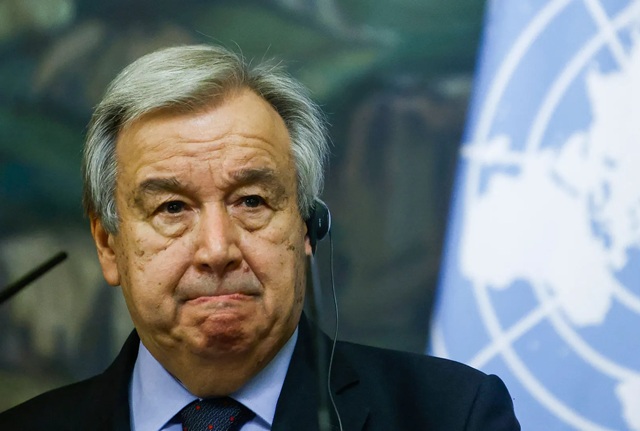
Failure of the UN system is ultimately a failure of its member states to maintain and foster its objectives. Inequality in the power of member states, and the partiality shown by some states in decision-making, have contributed to the overall impotence of the system. The erosion of objectivity in upholding the Charter approved by member states appears to be the main cause of this weakness. The decline of the UN system is a manifestation of the impermanence of all things. However, a vacuum in the world order is not the answer, as it could lead to anarchy and greater suffering throughout the world. Perhaps regionalism, and collective decision-making by regions and regional groupings, could form the new order that should replace the old order.
With all its blemishes and shortcomings, the world order as it was once known provided some degree of respect for human life and the sovereignty of nations before the new order that is now unfolding came into being. At present, the emerging order is dominated by a few over many, and the majority has little power or voice in how the new order is attempting to determine rules for the rest.
At the end of World War II, the world was desperate to avoid such conflict in the future, and after an unsuccessful attempt to promote multilateral cooperation through the League of Nations following World War I, national leaders came together to create the United Nations (UN). Designed as a forum for international engagement, the UN was established to defuse conflicts and prevent aggression from escalating into full-scale war. Underpinning this new world order was respect for sovereignty—the principle that no country should interfere in the domestic affairs of another.
For decades, the United Nations maintained that sovereignty must be respected. However, after the Rwandan genocide and the wars in the former Yugoslavia in the 1990s, scholars and diplomats reassessed this approach. In 2005, UN member states endorsed the Responsibility to Protect (R2P) doctrine. This principle asserts that countries have a fundamental responsibility to protect their citizens. If they fail to do so, the international community, through the UN, has a responsibility to protect vulnerable populations. R2P allows the UN and its member states to override national sovereignty, if necessary, to prevent large-scale loss of life and violations of basic human rights. In other words, countries acting within the UN system can use all means necessary, including military intervention, to prevent large-scale loss of life and violations of basic human rights.
In the context of the ongoing conflict involving Iran, the United States, and Israel, and preceding this, the devastation of Palestinians in Gaza, it appears that the R2P doctrine has been sidelined. Actions by groups such as Hamas and Hezbollah on the one hand, and the Iranian Revolutionary Guard on the other, have been used as reasons for military intervention by Israel in Gaza and Lebanon, and by the United States and Israel in Iran. In either case, there is little indication that the UN has been involved in any effective way within the ambit of the R2P doctrine to defuse unilateral military activities or to prevent the large-scale loss of life. Overall, the system appears to have failed, as evidenced by these recent events. While this is not necessarily a reflection on individual leaders, it is a reflection of a system that has failed and which has provided avenues for some leaders to act in their countries’ self-interest at the expense of the rights of others.
While the United Nations has a mandate to involve itself in countries with repressive regimes, it is constrained by the influence of superpowers who are members of the UN Security Council and who possess veto powers that can prevent any such intervention if they perceive it to be against their self-interest. While the UN Charter is built on the principle of state sovereignty and non-intervention in domestic affairs as articulated in Article 2(7), it is also balanced by obligations to uphold international peace, security, and human rights, although recent events have not been consistent with these principles.
The UN’s involvement in such countries is primarily handled through the Security Council, which can authorize actions ranging from diplomatic pressure to military intervention when a regime’s actions pose a threat to international peace and security, a definition that has broadened over time to include mass atrocity crimes. Readers are left to ponder whether the UN Security Council has taken any concrete action, diplomatic or military, to intervene in the situations mentioned above.
The Global Centre for the Responsibility to Protect seeks to mobilize the international community to act in situations where populations are at risk of mass atrocity crimes. However, the limitations it faces are many, and selective, self-interest-driven decision-making by countries that hold veto power is one of the key constraints, as noted by the Council on Foreign Relations.
While the UN has the legal mandate, through Chapter VII and the R2P framework, to intervene in repressive regimes, the practical execution of this mandate has been limited by the geopolitical interests of veto power-holding members and by the selectively applied threshold used to determine when a domestic situation constitutes a threat to international peace.
When it comes to the protection of human rights and the prevention of the loss of innocent lives in member countries, it is very unlikely that the current UN system can be fully revitalized, as its flaws are numerous. The concentration of power within the Security Council, particularly the veto authority granted to some members over the collective wishes of the broader membership, is one of the most significant of these flaws. Even if attempts are made to reform the UN system, it is extremely unlikely that the structure and powers of the Security Council will be fundamentally altered. In this context, alternative systems that distribute power and responsibility more equitably must be considered in order to better protect the citizens of the world from human rights abuses and loss of life.
A regional model is suggested as a potential alternative to the UN system. In such a model, the global policing role could shift from a centralized UN Security Council with individual country representation to a council composed of regional organizations such as the African Union, ASEAN, the European Union, the Organization of American States, and similar regional groupings, including both existing entities and those that may be formed in the future. These groupings, which are currently more focused on trade and economic cooperation than on security matters, could take on greater responsibility without direct individual country membership. As a guiding principle, the responsibility for ensuring that basic human rights are upheld within any country in a regional grouping, and that lives are not lost in defending those rights, should rest primarily with the regional body. In such instances, negotiation and diplomacy should always be the first course of action, followed by economic measures such as trade sanctions, and, as a last resort, military intervention if other measures fail.
This approach is based on the understanding that neighboring countries often have a deeper appreciation of a conflict’s history, culture, and key actors than distant international bodies. Regional organizations also have a stronger stake in maintaining stability, as they are directly affected by refugee flows, economic disruptions, and other spillover effects. Furthermore, governments that may ignore resolutions from global institutions may find it more difficult to disregard pressure from neighboring states. However, challenges remain, including disparities in resources between regions, the risk of regional hegemony where dominant states exert undue influence over smaller neighbors, and inconsistencies in the enforcement of human rights standards across different regions.
At the core of these challenges are disparities in economic and military power among countries within each grouping. While it may be difficult to eliminate such disparities entirely, a greater emphasis on shared economic development for mutual benefit, rather than the accumulation of wealth for military superiority, could contribute to a more balanced governance model within regions. Cultural differences within regions may also affect cohesion, but these are matters that regional groupings must address through dialogue and consensus-building.
From a broader perspective, regional groupings could enhance collective bargaining power, enabling smaller nations to have a stronger voice when acting as part of a unified bloc, whether in trade negotiations or in addressing human rights concerns. In many instances, such groupings could operate with a degree of independence from superpower rivalries.
One of the most significant challenges to this model is that major powers may perceive strong and independent regional blocs as a threat to their sphere of influence. As a result, they may attempt to weaken these groupings through bilateral agreements or other means designed to undermine unity. To remain effective and independent, regional organizations would need to develop their own funding mechanisms and defense capabilities, as reliance on external support would leave them vulnerable to external influence.
Strengthening trade and economic integration within regions offers one pathway to greater independence. Recent trends suggest that global trade is increasingly fragmenting into regional hubs, as countries seek to protect themselves from geopolitical tensions and supply chain disruptions. Developments such as increased intra-regional trade within ASEAN, the African Continental Free Trade Area, and the expansion of economic cooperation among developing countries reflect a broader shift toward regional resilience and reduced dependence on traditional global powers.
Despite these trends, disparities in economic and military strength will likely persist, and some countries will continue to wield greater influence than others. However, by prioritizing economic development over military expansion, regional groupings could gradually shift global priorities. Advances in military technology, including the effectiveness of relatively low-cost systems such as drones, also raise questions about the long-term value of expensive military investments. Redirecting resources toward improving the quality of life for citizens through economic cooperation may offer a more sustainable path forward.
Technological advancements, particularly in digitalization and the development of digital currencies, could further strengthen regional systems. A region that produces goods in demand and maintains sound economic governance could see its digital currency gain credibility and stability comparable to traditional hard currencies. Rather than relying on physical reserves such as gold, the value of such currencies could be based on economic performance and trust in institutional frameworks.
Digital systems offer several advantages, including neutrality through algorithm-based governance, the ability to facilitate instant transactions, and valuation based on real-time economic data. These features could enable more efficient and transparent economic interactions within and between regions, reducing reliance on traditional financial intermediaries.
Over time, the strengthening of regional systems could contribute to a more balanced distribution of global power. Rather than being concentrated in a small number of dominant states, power could be shared more broadly across regions. This could lead to fewer internal and international conflicts, as regional actors take greater responsibility for maintaining stability. Ideally, such a shift would also result in fewer human rights abuses and a reduction in violence against civilians. The limitations of the current system in achieving these outcomes suggest that it may be time to consider alternative approaches, and regionalism may offer one such path forward.










