

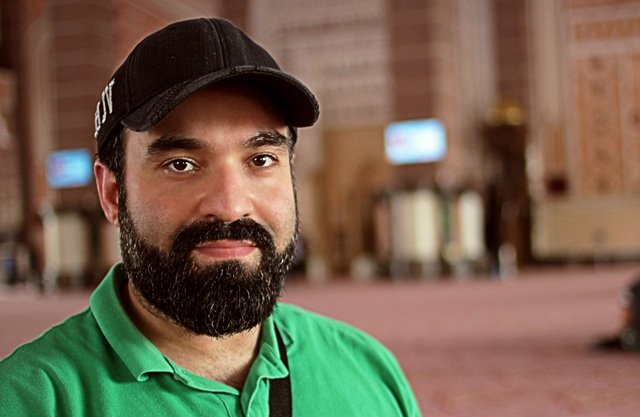
“We were the first city invaded on 22 September 1980 by Saddam’s army,” Dr Reza John Vedadi recalled of Khorramshahr, his birthplace, highlighting the formative impact of war and displacement on his early life. Fleeing the frontlines of the Iran-Iraq War as a child, he witnessed the fragility of life, the devastation of communities, and the enduring influence of geopolitics on ordinary citizens. These early experiences shaped not only his worldview but also his approach to storytelling, embedding a profound awareness of historical and political complexity into his creative and academic work. Vedadi’s documentaries, now numbering over fifty, explore West Asian and Muslim identity through the lens of socio-political dynamics and media representation, blending personal memory with rigorous scholarship.
A British-Iranian filmmaker and academic based in London, Vedadi has consistently interrogated the intersections of history, media, and identity. “My close relationship with my uncle, who was martyred in Khorramshahr, inspired me to examine not only personal loss but also spiritual guidance and social responsibility,” he reflected. This combination of personal trauma, historical consciousness, and spiritual inquiry informs his cinematic and academic output, providing a distinctive voice on issues ranging from Hollywood’s portrayal of Muslims to the socio-political evolution of Iran itself. His research bridges Western media studies and Islamic scholarship, investigating how narratives of power, culture, and identity are constructed, challenged, and disseminated globally.
Recently, I communicated with Dr Vedadi for an in-depth discussion focused on Iran, its history, culture, and ongoing geopolitical challenges. Drawing on his lived experience, creative practice, and academic research, he offered insights that challenge reductive portrayals of Iranian society and history. “The Iranian Revolution was not simply about replacing one ruler with another; it was about asserting independence, dignity, and the ability to shape one’s destiny under a framework that integrates democracy with cultural values,” he emphasised.
Excerpts of the interviews are as follows.
Question: Could you share your childhood experiences and early influences, and explain how these shaped your journey into filmmaking and your current philosophical outlook?
Answer: Regarding my childhood experiences: I was born before the war, the 1980s war between Iran and Iraq under Saddam. I was very young when we had to flee Khorramshahr, which is where I am from. The city is in the province of Khuzestan and borders the Shatt al-Arab; on the other side is Basra, Iraq. We were the first city invaded on 22 September 1980 by Saddam’s army. We had to leave and go to another town further away, and from there my father took us to Tehran, where he rented a house. We lived in Tehran for many years before I moved to the UK.
During that time in Iran, I had a very close relationship with my uncle. He had studied in the UK and Italy, training as a mechanical engineer. When the war started, he returned to Iran, and a few years into the war he volunteered to go to the front line, even though he had already completed his military service. He was martyred in the early 1980s in Khorramshahr, the city where I am from.
My close relationship with him inspired me to learn more about him. I found the will he had written before going to the front line. There is a video of it, subtitled in English, in which he speaks to and advises his brothers, sisters, and his parents. His words go beyond that moment and those people; he speaks in a deeply spiritual way. His will focuses on spiritual guidance, respect, and support for the revolution in Iran that took place in 1979. The Shah, Mohammad Reza Shah, was deposed and fled Iran, and Imam Khomeini returned and established, through a popular vote, the Islamic Republic, which we can discuss further in other questions. That spiritual dimension has stayed with me from my youth until now.
My father, on the other hand, was a businessman, and before that an engineer and mechanic. He also had a strong love for cinema. We would sit together, and he knew all the actors from the 1940s and 1950s, the era he grew up with. He used to go to the cinema in Iran and watch a lot of American films. My relationship with cinema began there. My expertise is in Western cinema, specifically US cinema, which is what I did my PhD in. So I think my love for storytelling and cinema came from my father, while my interest in the spiritual dimension and in understanding the Iranian Revolution on that level came from my uncle.
Question: Which mentors and academic experiences have had the greatest impact on your work, particularly within the context of Iranian cinema?
Answer: I studied media for my bachelor’s in the UK, then completed a master’s in film production, also in the UK. After that, I did a second master’s in Islamic studies. For my PhD in 2019, I brought these areas together and examined Hollywood alongside Islamic, Muslim, and what is often framed as “Eastern” identity. I combined media studies with sociology in my research, focusing on Western and US cinema, particularly Hollywood.
From Iranian cinema, there are many influential filmmakers. Abbas Kiarostami is one of the greatest filmmakers in history and is respected by directors such as Martin Scorsese and Akira Kurosawa, who is one of my favourite directors. During my PhD, I spoke with Hollywood filmmakers and screenwriters, including Chris Terrio, who wrote Argo in 2012 and won an Oscar for it. He explained that, as a young filmmaker, he was heavily influenced by Iranian directors such as Abbas Kiarostami, Mohsen Makhmalbaf, and Asghar Farhadi, who won Oscars for A Separation and The Salesman.
These filmmakers, along with others like Majid Majidi, have not only shaped Iranian cinema within Iran but have also established it globally as a powerful artistic form. In Iran there is also popular cinema, comedies and dramas made for entertainment, but the directors whose work transcends time, language, and culture have had a lasting influence on filmmakers around the world.
Academically, one of the most important figures who influenced me to focus on Islamic, Iranian, and broader Eastern identity in Hollywood was Dr Jack Shaheen. He dedicated much of his academic life to documenting and analysing how Arabs and Iranians have been depicted in Hollywood, from the early 1900s through to around 2010. He systematically examined how films portrayed Arab and Iranian identities, at a time when accessing films required significant effort, often relying on physical copies like VHS.
My PhD built on his work in more detail, analysing how Eastern identities, specifically Afghan, Iranian, Iraqi, and Palestinian, are represented in Hollywood. His influence shaped the direction of my research.
Question: How should we understand the legacy of Mohammad Mossadegh — as a democratic leader or as a victim of geopolitical intervention?
Answer: Regarding Doctor Mohammad Mossadegh, he came from a Qajar background. The Qajar were the royal dynasty before the Pahlavi and were a respected noble family. He was the first democratically elected Prime Minister of Iran. He nationalised Iranian oil, which until that time had been controlled by the Anglo-Iranian Oil Company, a British-established company that exploited Iran’s oil resources for the empire. Iran only received a very small fraction of the profits. Mossadegh argued that the oil belonged to the Iranian people and that they should benefit from it. In that sense, he was part of the wider decolonial movement of that era.
After the nationalisation of the oil company, MI5, MI6, and the CIA conspired to carry out a coup d’état and remove him from power. At that time, Mohammad Reza Shah had already fled Iran. Following the coup and the removal of the elected prime minister, the Shah returned from exile and ruled in a far more dictatorial manner.
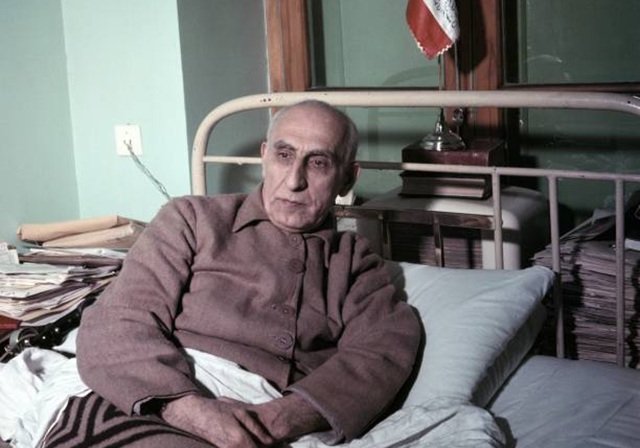
Was Mossadegh a victim of geopolitical intervention? Without doubt. He was a victim of the United Kingdom and the United States, who wanted to maintain control over the resources of West Asia. However, he did not have the time or the conditions to build durable institutions that could sustain the country beyond an individual leader.
In contrast, Ayatollah Khomeini was able to establish a system built on institutions and a constitution that could function beyond any one individual. He laid down a framework in which institutions operate according to the constitution, so that even if leaders are killed or removed, the system continues to function. This is something Mossadegh did not have the opportunity to achieve.
That is why Iran, despite sustained pressure and attacks, has not collapsed in the way other countries such as Libya, Syria, or Iraq have. It has been able to maintain its structure and assert itself regionally. While Iran has suffered losses, including civilians and infrastructure, this reflects the nature of the conflict rather than weakness. At the same time, Iran has demonstrated its ability to respond, target regional bases, and assert control over strategic areas such as the Strait of Hormuz. This has had a direct impact on global economics and geopolitics, shifting Iran from a position of being dictated to, to one where it asserts its own terms.
Question: To what extent did the 1953 Iranian coup d’état contribute to the ongoing distrust between Iran and Western nations?
Answer: As we discussed, the United States and the UK were responsible for removing an elected Prime Minister of Iran. The Iranian psyche, and many among the elites, especially those who did not support the Pahlavi or the monarchy, remember this and carry it with them. It is not something forgotten, it remains part of the collective memory even today.
It is now being discussed again, that another country came and changed the government of Iran using violence in the streets, as we saw in January 2026, removing a democratic prime minister. You have to bear in mind that Doctor Mossadegh had no nuclear programme, he was not accused of sponsoring terrorism, he had no missile programme, none of the accusations that are later made against Iran existed at that time. Yet he was still removed. He was a leader chosen by the Iranian people, and two foreign powers came, spent relatively small amounts of money, created unrest and riots in the streets, and forced him out, had him arrested, and removed him from power.
In his place, Mohammad Reza Pahlavi was restored, ruling in a far more dictatorial manner, more aligned and obedient to US and British foreign policy. This is where the ongoing distrust between Iran and the US and UK takes root, and it continues to this day.
We have seen this pattern of behaviour repeated. In June 2025, during negotiations, Iran was attacked, and many Iranian commanders and citizens were killed, with significant damage to infrastructure. Then again in 2026, when a leader was targeted and killed in his home along with members of his family, with reports suggesting dozens of bombs were used. Such actions are illegal under international law, immoral under the conventions of war, and unacceptable in any modern framework of conduct. Even in wartime, the targeting of leaders in this way crosses a clear line.
Given this history, the idea that Iran should trust the United States or the United Kingdom does not hold. Who can reasonably argue that Iran should place trust in a system that has repeatedly acted in this way? Particularly when US leadership itself is seen as inconsistent and unreliable, with statements that contradict themselves frequently.
There was a period, particularly under Ayatollah Khamenei, where patience defined Iran’s approach, despite the pressure and harm inflicted. That period is now seen as having passed. The view now is that Iran will seek justice through its own means, because no external power will provide it. Only Iran, its people, its military, and its leadership can pursue that justice.
And this history of mistrust does not begin in 1953. It goes back further, to the 1940s, when the UK occupied the southern half of Iran and the Soviet Union occupied the north. Even before that, there was British interference during the time of Churchill, when famine struck and many Iranians died. So this mistrust runs deep, shaped by a long history of intervention and interference.
Question: Was the rule of Mohammad Reza Shah Pahlavi genuinely progressive, or is this perception largely shaped by nostalgia?
Answer: Mohammad Reza Shah Pahlavi ruled Iran from 1941 to 1979, nearly four decades. He was very young when he became king. His father was forced to abdicate under pressure from the UK and had to leave Iran, and Mohammad Reza Shah was around twenty-two when he ascended to the throne.
He ruled for almost forty years, and during that time he was not a ceremonial monarch like in the United Kingdom or countries such as Spain, where an elected parliament and prime minister handle governance. He was the ruler in every sense. He appointed the Prime Minister, the foreign minister, the education minister, the defence minister, and dictated policy. He controlled the cabinet, appointed its members, and removed them. So he held full authority over the country.

In 1945, after the Allies defeated Germany, Stalin, Churchill, and Roosevelt held a conference in Tehran. There are well-known images of this. They convened this meeting without even informing Mohammad Reza Shah. This shows that although he was king, he did not have full control over his own country, and that he had been placed there with the backing of foreign powers, particularly the British and the Americans. We saw this again in 1953, when he was restored to power following the British and American-backed coup that removed Mossadegh.
During his rule, oil revenues increased dramatically. In the 1960s, revenues were around 400 million dollars, and by the mid-1970s they had reached around 20 billion dollars. This was a massive increase. However, how that wealth was used became one of the key issues that led to his downfall. While some money was spent on infrastructure, such as airports and development projects, a significant portion went into vanity projects that did not benefit the wider population in proportion to the country’s income.
Despite this wealth, literacy rates remained low. In the 1970s, before he was deposed, literacy among women was around 35 percent and for men around 45 percent. For a ruler who had been in power for four decades and claimed to be modernising the country, this was a serious failure. Although there were investments in universities and development, they did not match the scale of the country’s revenues.
There was also no real political progress. People were not allowed to express opposition to the Shah or his government. They could not freely elect their representatives or hold the government accountable. The Shah controlled all aspects of political life.
Those who opposed him risked arrest by SAVAK, his secret police, which was trained by the CIA and Israeli Mossad. SAVAK was known for detaining, torturing, and killing opposition figures and anyone who challenged the Shah’s policies.
Question: Did the Iranian Revolution succeed in freeing the country from foreign influence, or did it simply replace one form of authoritarianism with another?
Answer: To understand whether Iran is more authoritarian than during the Shah’s time, we first need to understand what that term means. Authoritarianism is a political system characterised by the rejection of political plurality, strong central power to preserve the status quo, and reductions in democracy, separation of powers, civil liberties, and the rule of law.
If you look at Iran during the Shah’s time, this description fits. By the late 1970s, the Shah had effectively implemented a one-party state. This was despite the 1906 constitutional movement in Iran, which had established a constitutional monarchy and was meant to allow public participation through parliament and elections. That framework is what enabled Mossadegh in the 1940s and 1950s to become the first democratically elected Prime Minister. However, over time, the Shah did not adhere to that constitutional system.
After the revolution, Imam Khomeini’s first step was to put the idea of an Islamic Republic to a public referendum. Around 98 percent of the population voted in favour. The constitution that followed became the foundation of the current system in Iran.
Under that constitution, the president is elected directly by the people, with elections held every four years. The president appoints cabinet members, but they must be approved by parliament. Members of parliament, the Majlis, are also elected directly by the population, representing their regions, and they are responsible for proposing, amending, and voting on laws.
The Leader of the Revolution, a role first held by Imam Khomeini and then by Ayatollah Seyyed Ali Khamenei after 1989, is selected by a body that is itself elected by the people. So the public elects the president, elects members of parliament, and elects the body that appoints the Leader.
The laws passed apply to all citizens. People have the right to protest, and this has happened many times since the revolution. Peaceful protest is recognised, but violence, such as burning public buildings, attacking police, or harming civilians, is not considered protest anywhere in the world, it is treated as rioting or terrorism.
There is also space for expression through the media within the framework of the law. Newspapers and media outlets do criticise the government, something that did not exist under the Shah. However, like any system, there are legal boundaries, for example around issues considered immoral under the law. Within those limits, political discussion, whether about domestic or foreign policy, is common.
There are many political parties, around seventy or more, along with independent candidates who run for office. There are also elected local officials, including council members and other representatives.
So in practice, Iran operates as a form of democracy, comparable in structure to systems in the West. The issue for Western governments is not the presence of elections, but the fact that Iran does not align with Western or US foreign policy. Iran positions itself in support of groups it sees as oppressed, whether in Palestine, Kashmir, or elsewhere, and that is where the real tension lies.
Question: More than four decades after 1979, has the Islamic Republic fulfilled its promises of justice and independence?
Answer: With regards to the promises after the Islamic Revolution of 1979, we can categorise the core promises into several areas and discuss them individually, independence, freedom and democracy, social justice and equality, Islamic values and governance, and an end to corruption.
Regarding independence, Iran was heavily influenced, if not effectively under a puppet system aligned with the United States and the West, mainly the United States. There were laws in place where, if a US citizen committed a crime in Iran, even against an Iranian citizen or official, they would not be tried under the Iranian judicial system but under the US system. This created a situation where Iranians were treated as second-class citizens. Iran was not independent. For example, during the Vietnam War, the United States used planes it had sold to Iran, flew them to Vietnam, carried out operations, and returned them without even informing the Shah. This is documented in the memoirs of his advisors and cabinet members. There were many such instances where Iran had no real autonomy and was tied to US decisions.
After the revolution, Iran has demonstrated its independence. Over the past forty-seven years, and especially in recent conflicts, it has defended itself without relying on other powers, even while facing some of the strongest military forces in the world, including countries with nuclear capabilities and their regional allies in the Persian Gulf and West Asia.
Regarding freedom and democracy, Iran holds elections for key positions, including the president and parliament. Members of parliament are elected directly by the people, and the president is also directly elected. The Leader of the Revolution is chosen through a body that is itself elected by the people. This creates a system where different levels of governance are tied back to public participation. There is also space in the media for discussion and criticism within the framework of the law, and people are able to express political views, even when they differ from government policy.
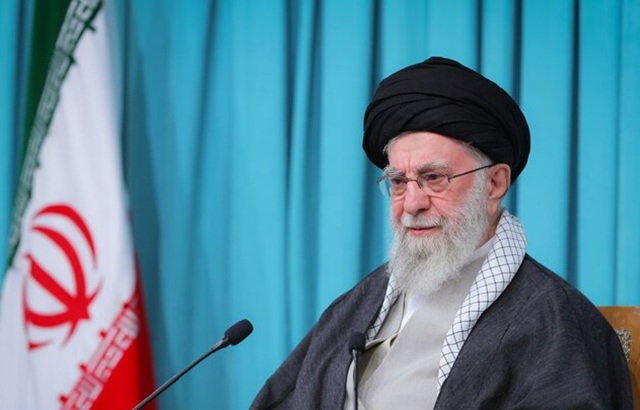
On social justice and equality, there has been significant progress. Literacy rates have risen dramatically, reaching high levels for both men and women, compared to much lower rates before the revolution. Around sixty percent of university students are women, and access to education has expanded across society. Iranian universities have produced graduates who contribute both domestically and internationally, including in fields such as technology and research. A larger middle class has emerged, and more people have access to resources and opportunities than before.
In terms of economic access, key services and resources have been made widely available. Fuel prices, for example, remain extremely low compared to global standards, and public services such as transport and utilities are either heavily subsidised or accessible to the majority of the population. This contrasts with many Western countries, where people often face difficult choices due to high living costs.
At the same time, it is important to recognise that no system is without problems. There are areas that require improvement. However, compared to the period under the Shah, there is a broader distribution of access, participation, and opportunity. Under the Shah, decision-making was centralised and aligned with external powers, limiting the ability to prioritise domestic needs.
The revolution also revived Islamic values in governance. Iran is an overwhelmingly Muslim country, and Islamic principles form a core part of its social and political identity. While there are individuals, particularly outside Iran, who oppose this, they represent a minority compared to the wider population.
Regarding corruption, there are cases where individuals within the system act improperly. These cases do arise, as they do in any country, but they are typically addressed within the system. The existence of corruption at an individual level does not define the entire structure of governance.
Despite decades of sanctions, external pressure, and attempts at destabilisation by the United States, Western European countries, and intelligence agencies, Iran has maintained its territorial integrity and internal stability. It has developed strong capabilities in research, science, and defence, including missile and drone programmes, and has produced a high number of advanced degree graduates. This has all taken place under sustained external pressure, which further demonstrates the level of institutional resilience that has been built since the revolution.
Question: Are current restrictions on women and freedom of expression a departure from revolutionary ideals, or an inherent part of the system?
Answer: Iran’s revolution, and Iran’s identity, society, and culture, evolve over time. The revolution did not come about to oppress citizens. It came to enable people to thrive within the boundaries of Iran’s culture and Islamic values.
At the moment, the idea that Iranian women are not free is not accurate. We have Iranian women in parliament, women who are members of the cabinet, and women who are active across all sectors of society. Only a few months ago, women made up around fifty percent of the scientific team that developed one of Iran’s most advanced satellites, which was launched into space. Iranian women play major roles in media, arts, science, culture, politics, and medicine. There are far more female doctors and consultants today than before. In that sense, Iranian women are as active and present in society as women anywhere else in the world.
The question then becomes, what is meant by freedom. Does freedom mean having no limits at all, or the ability to say and do anything without consequence? In the West, freedom of speech is often defined in a way that allows people to insult religion, insult prophets such as Jesus or Muhammad, or even burn the Qur’an. This is presented as freedom. Yet at the same time, there are restrictions in other areas. For example, in many Western countries, discussing certain groups in a positive way, if they are labelled as terrorist organisations, can lead to legal consequences.
We have seen cases in the UK where individuals, including elderly women, religious figures, and even disabled protesters, have been arrested for expressing anti-war or anti-genocide views. There have been thousands of such cases. In contrast, the number of arrests related to similar issues in Iran is far lower. So the claim that Iran is uniquely restrictive does not hold up when compared in this way.
Iran has freedoms within its own legal and cultural framework. Like any country, it has boundaries, but within those boundaries people express themselves, participate in society, and live their lives. If you visit Iran, you see people going about their daily lives, and in practice there is variation in how social rules are observed, including around dress.
There is also access to a wide range of ideas. Books representing different political and economic perspectives, including works by Western figures such as Barack Obama and Michelle Obama, are available in Persian translation and sold openly. This shows that engagement with different viewpoints is not blocked.
So Iran is free in many ways, within a framework shaped by its own values and society. Like any country, it has areas that can improve, but the idea that it is uniquely unfree is not supported when looked at in context.
Question: How should recent anti-government protests in Iran be interpreted — as isolated incidents or evidence of deeper systemic issues?
Answer: The riots in January 2026 have been presented as a foreign-backed attempt to damage Iran, harm citizens, and target infrastructure. Statements and social media posts from figures linked to US and Israeli institutions, including comments attributed to Mike Pompeo and messaging associated with Mossad, were seen as openly expressing support for those on the ground.
A legitimate protest is not a problem. As I mentioned, Iran has seen protests throughout the forty-seven years of the Islamic Republic. In fact, during the first eight or nine days of demonstrations in late December and early January, which were linked to currency devaluation, the protests were largely peaceful. No widespread arrests or violence were reported at that stage. The pressure on the Iranian currency was also linked to external economic measures, including US Treasury actions, which were acknowledged publicly as part of a broader strategy of economic pressure.
What followed was a shift from protest to violence. According to the account being presented, networks that had been built over time, including individuals linked to foreign intelligence, were activated. The situation escalated into attacks on police officers and civilians, and the destruction of public infrastructure, including buses, banks, mosques, hospitals, and ambulances. These actions moved beyond protest and into what is described as rioting and terrorism.
The claim is that this escalation was intended to create conditions for external intervention, with the narrative of protecting the Iranian people. However, after the unrest was brought under control, large numbers of Iranian citizens came out in support of the state and the constitution. The argument is that Iran had already faced a similar situation in 2022 during the Mahsa Amini protests and had adapted its response.
Iranian officials, including the President and the Leader, acknowledged that there are real economic challenges. Some of these are attributed to sanctions and external pressure, while others are linked to internal issues such as mismanagement or corruption. However, they have maintained that violence against civilians and public infrastructure cannot be justified as protest.
There are also widely differing claims about the number of casualties. Some external sources have suggested figures in the tens of thousands, while Iranian authorities have published names and figures in the range of several thousand, including security personnel. The higher figures are disputed, with the argument that no verifiable evidence has been presented to support them.
From this perspective, the narrative promoted by Western governments and aligned organisations is seen as a way to justify pressure on Iran, including sanctions that affect access to resources such as medicine. The argument is that this framing allows external actors to avoid scrutiny while portraying Iran in a negative light.
Question: Does Iran’s involvement with regional groups represent a strategy of national defence, or does it contribute to instability in the Middle East?
Answer: The riots in January 2026 have been proven to be a foreign-backed terrorist attempt to damage Iranian citizens and Iranian infrastructure. The CIA and Mossad, especially Mossad, publicly stated that they were with the rioters on the ground. The former head of the CIA, Mike Pompeo, also stated this, and in later interviews confirmed that the Mossad and CIA were in support of the rioters.
A legitimate protest is not a problem. Iran has had protests throughout the forty-seven years of the Islamic Republic. Even in the first eight or nine days of the protests in late December and early January, which were linked to the devaluation of the currency, they were peaceful. No one was arrested or harmed. The attack on the Iranian currency that led to these protests was directly linked to interference by the US Treasury, and this was admitted by the US Treasury Secretary, who acknowledged sustained pressure on Iran’s currency to cause devaluation and push people into the streets.
The intention behind this was to create conditions where unrest could escalate, allowing Mossad and CIA networks, cultivated over time, to be activated. This led to violence, including attacks on police officers, the killing and injuring of citizens, and the destruction of public infrastructure such as hospitals, mosques, banks, ambulances, buses, clinics, and other public services. These actions included extreme violence against civilians and were not acts of protest.
This was done so that the United States could position itself as a protector of the Iranian people, as it has attempted in other situations. However, Iran had already faced similar events in 2022 during the Mahsa Amini riots and had learned from that experience. Within two days of the riots being brought under control, millions of Iranian citizens came out in support of the government and the constitution, rejecting the actions of foreign-backed rioters and those involved in violence.
At the same time, both the Leader of the Revolution, Ayatollah Khamenei, and the president acknowledged that there are economic issues. Some are due to sanctions, interference, and economic sabotage by the United States, while others are linked to internal mismanagement or corruption that needs to be addressed. However, this does not justify violence, harming civilians, attacking police, or destroying infrastructure. Such actions are not protests, they are terrorism and riots.
The figures claiming that thirty, forty, or fifty thousand individuals were killed are false. These numbers have been promoted by organisations based in Washington and supported by the CIA. Iran has released figures of over three thousand individuals killed, including police officers and security forces, and has provided names. If claims of much higher numbers were true, evidence would have been presented. No verifiable evidence has been provided by any organisation or country to support those claims.
At the same time, Western governments, led by the United States and supported by Israel and others, use these narratives to apply pressure on Iran and portray it negatively. This is then used to justify actions such as sanctions, which have real consequences, including limiting access to medicine and essential resources for ordinary people in Iran.