
It is no longer credible to treat Afghanistan’s terrorism problem as a purely internal Afghan matter. Since the Taliban returned to Kabul in August 2021, Afghanistan has increasingly functioned as a permissive environment for armed groups whose violence crosses borders. United Nations reporting has repeatedly warned that Taliban tolerance of multiple terrorist organizations across Afghan provinces has created conditions for terrorism to project into the wider region. Pakistan’s repeated demarches, border clashes, and cross border strikes are symptoms of that deeper reality, not random diplomatic noise. If a regime allows militants to regroup, recruit, train, and plan on its soil, it is not a neutral observer of regional destabilization. It is one of its drivers.
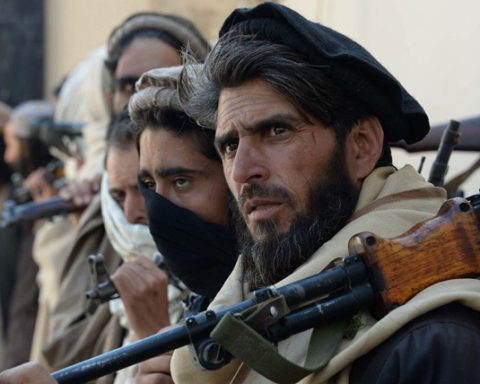
The clearest case is Tehrik e Taliban Pakistan, or TTP. This group is not simply scattered in remote hideouts with no political protection. Recent UN monitoring said TTP carried out numerous high-profile attacks in Pakistan from Afghan soil, while U.S. reporting said that despite Taliban commitments, Al Qaeda, ISKP, TTP, and other groups remained present in Afghanistan. By early 2026, UN material also reflected member state assessments that support to TTP inside Afghanistan included training and advice. Pakistan, for its part, has repeatedly argued that Afghan territory is being used with impunity by TTP and allied factions. Kabul keeps denying the charge, but denial is not rebuttal when the attacks continue and the safe havens endure. At minimum, this is deliberate tolerance. At worst, it is collusion dressed up as denial.
This matters because TTP is not a marginal irritant. It is the largest militant organization threatening Pakistan, historically intertwined with the Afghan Taliban and ideologically close to them. That relationship has become more dangerous, not less, since 2021. Reuters, the Associated Press, CFR, and CSIS all describe the same pattern: militancy has risen since 2022, Pakistan says TTP leaders and fighters are based in Afghanistan, and tensions have escalated from accusations and border closures to air strikes and even talk of “open war.” No regional order can remain stable if one neighbouring country becomes the rear base for insurgents attacking another. That is precisely why Afghanistan is no longer just a troubled state. It has become a security multiplier for the whole region.
ISKP presents a slightly different case, but not a less serious one. The strongest public evidence does not show a formal Taliban alliance with ISKP in the way the evidence increasingly suggests tolerance and support for TTP. In fact, ISKP is also an enemy of the Taliban. But that does not absolve Afghanistan of responsibility. UN reports show that the ISKP threat has grown, including attacks outside Afghanistan. Analysts at CSIS and the United States Institute of Peace warn that the post withdrawal counterterrorism gap has allowed the group to adapt, recruit, and externalize violence. The Moscow concert hall massacre in March 2024, which U.S. officials linked to ISKP, made the point brutally clear: what incubates in Afghanistan no longer stays in Afghanistan. A regime does not need to openly endorse every jihadist group for its territory to become their launchpad. Failure, selective enforcement, and permissive governance can be just as dangerous as declared sponsorship.
Another overlooked part of the problem is weapons access. UN reporting has warned that terrorist access to weapons from Afghanistan poses substantial threats to regional states. Sanctuary is only one part of a terror ecosystem. The other parts are arms, communications, mobility, and ideological legitimacy. A militant movement that can rest in Afghanistan, draw on local facilitators, and then cross into Pakistan or inspire attacks abroad is far more dangerous than a group under constant pressure. This is why the Afghan file can no longer be reduced to a humanitarian issue alone. It is also a hard security question with direct regional consequences.
Some will argue that Afghanistan is broken, poor, isolated, and incapable rather than malicious. That distinction matters morally, but less strategically. States and regimes are judged not only by what they say but by what they prevent. The Taliban promised that Afghan soil would not be used against others. Yet international monitoring kept pointing the other way, and regional actors responded accordingly. Pakistan says it is hitting terrorist sanctuaries. The UN has described tolerance of multiple armed groups. Regional governments increasingly see Afghanistan not as a buffer against extremism, but as an exporter of risk. The burden of proof therefore rests on Kabul, and so far, Kabul has not met it.
The policy lesson is blunt. The region should stop pretending that the terrorism question can be separated from Afghanistan’s political future. Any normalization of the Taliban without verifiable counterterrorism benchmarks would reward the permissiveness that has fuelled TTP violence and allowed ISKP to remain a transnational danger. Recognition, aid mechanisms, trade openings, and diplomatic access should be tied to measurable steps: arrests, extraditions, camp closures, border cooperation, financial disruption, and independent monitoring. Until that happens, Afghanistan will remain not just a victim of militancy but a central node in spreading it. For Pakistan, Central Asia, and beyond, that is not somebody else’s problem. It is the region’s most dangerous unfinished crisis.