


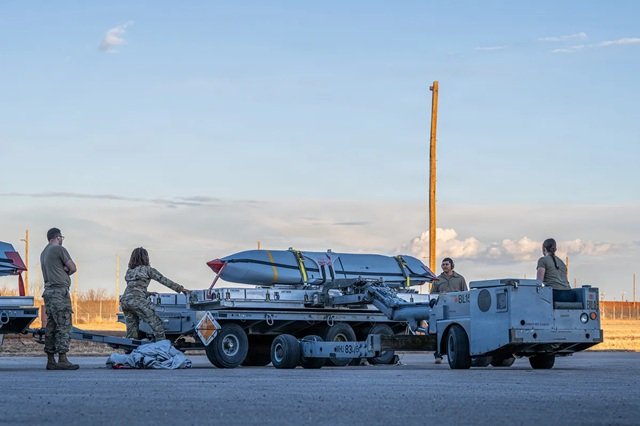
The United States has deployed nearly its entire inventory of stealthy JASSM-ER long-range cruise missiles to support military operations in Iran, drawing weapons from stockpiles originally reserved for other global contingencies. According to a source with direct knowledge of the matter, the order to transfer the $1.5 million missile from Pacific stockpiles was issued at the end of March, with missiles moved to US Central Command bases in the Middle East and to RAF Fairford in the United Kingdom. After these transfers, only about 425 JASSM-ERs remain available for other regions, from a prewar inventory of 2,300, with an additional 75 deemed unserviceable due to damage or technical faults. Bloomberg first reported these details, citing data and sources familiar with the deployments.
The JASSM-ER, or Joint Air-to-Surface Missile–Extended Range, can strike targets over 600 miles away, allowing US forces to avoid direct engagement with enemy air defenses. Alongside shorter-range JASSMs, approximately two-thirds of the US stockpile has now been committed to operations in Iran. During the first four weeks of the conflict, US forces reportedly launched more than 1,000 JASSM-ERs. These missiles have been fired from B-52 and B-1B bombers as well as strike fighters, supplementing attacks designed to limit risk to personnel while hitting key Iranian military and infrastructure targets.
The rapid deployment has raised concerns about stockpile depletion. Replacing the weapons used in the Iran campaign would take years of production at current rates. Lockheed Martin, the missile’s manufacturer, is scheduled to produce 396 JASSM-ERs in 2026, though output could rise to 860 if the production line focuses exclusively on these missiles. The scale of commitment has also affected other capabilities, as resources intended for potential conflicts with more advanced adversaries, such as China, have been diverted to the Middle East.
US forces have supplemented JASSM-ER strikes with Tomahawk cruise missiles and JDAM precision bombs, while Iran has responded with ballistic missile and drone attacks, including downing two US aircraft and over a dozen MQ-9 drones. President Donald Trump has hinted at escalated military measures, warning that Iran could be returned to the “stone ages,” though details of potential operations remain unspecified. Experts warn that continued reliance on standoff capabilities and long-range munitions exposes the US to supply constraints, especially given Iran’s ongoing missile attacks and the limited production capacity for interceptors like Patriot PAC-3 and THAAD systems.









