
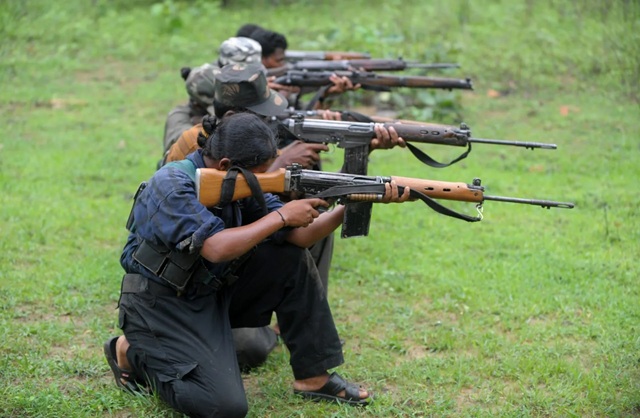
On March 25, 2026, the Government of Madhya Pradesh extended the ban on Left Wing Extremist (LWE) organisations, including the Communist Party of India-Maoist (CPI-Maoist) and its affiliated fronts, till November 2026, under the Madhya Pradesh Special Areas Security Act, 2000. The notification covers the Krantikari Kisan Committee (KKC) and Krantikari Jan Committee (KJC), which were earlier declared unlawful in January 2024. Despite Chief Minister Mohan Yadav declaring the state Naxalite-free in December 2025, authorities cited the need for sustained vigilance to prevent the resurgence of Naxalite activities. The renewed ban, aims to maintain surveillance and control over residual networks and affiliated entities.
Significantly, no CPI-Maoist-linked incident has been reported during the first 94 days of the current year (data till April 5, 2026), and data for 2025 indicates that the security situation in the State with regard to Maoist violence strengthened considerably, as compared to 2024.
Registering the highest number of overall fatalities on a year-on-year basis since March 6, 2000, when South Asia Terrorism Portal (SATP) started compiling data on Left Wing Extremism (LWE)-linked violence in the country, the State recorded 12 fatalities (one civilian and 11 Maoists) in 2025, as compared to three (all Maoists) in 2024. There were five fatalities (one civilian and four Maoists) in 2023, eight (two civilians and six Maoists) in 2022, and five (three civilians and two Maoists) in 2021. Since March 6, 2000, a total of 52 fatalities (15 civilians, four SF personnel, and 33 Maoists) have been recorded.
The single civilian fatality recorded in 2025 was the lowest in a year since March 6, 2000, and this level had been recorded thrice earlier – in 2023, 2020, and 2017. Civilian fatalities, at three, in 2021 were the highest in a year since March 6, 2000. The previous high of two fatalities had been recorded thrice earlier—in 2000, 2016, and 2019.
The last recorded SF fatality was on September 22, 2010, when Maoists killed a trooper of the Hawk Force (the special anti-LWE force of the Madhya Pradesh Police) near Sitapala village in Balaghat District. Since March 6, 2000, a total of four SF fatalities has been recorded in the State. Meanwhile, SFs killed 11 Maoists in 2025, while three were killed in 2024. A total of 33 Maoists has been killed in the State since March 6, 2000.
Further, though no Maoists were arrested in 2025, SFs arrested at least one Maoist in 2024. A total of 74 Maoists has been arrested in the State since March 6, 2000. As many as 13 Maoists surrendered in 2025, while there were no surrenders in 2024. A total of 28 Maoist surrenders has been recorded in the State since March 6, 2000.
There were at least 12 Maoist-linked incidents in 2025, as against six recorded in 2024. There were eight such incidents in 2023, nine in 2022, and 14 in 2021. Since March 6, 2000, a total of 120 such incidents have been documented.
In 2025, Maoist activities were reported from two Districts – Balaghat and Mandla. While Balaghat fell in the ‘moderately affected’ category, Mandla was in the ‘marginally affected’ category. In 2024, Maoist activities were reported from the Balaghat District alone, and it fell in the ‘marginally affected’ category.
Aggressive campaigns against the Maoists resulted in the recovery of arms and ammunition on four occasions in 2025, in addition to four such recoveries in 2024, and five in 2023. The total number of recoveries since March 6, 2000, stands at 38. In the current year, no such recoveries have been recorded (data till April 5, 2026). Earlier recoveries were substantial, featuring INSAS (Indian Small Arms System) assault rifles, SLRs (Self-Loading Rifles), .303 rifles, grenade launchers, magazines, live cartridges, and daily supplies like rice and oil from encounter sites in Balaghat District and Mandla District.
No incident of arson was reported in 2025, as was also the case in 2024 and 2023. The last such incident was reported on May 22, 2022, when more than 350 bags of tendu (Diospyros Melanoxylon) leaves collected by tribals were set on fire by cadres of the New Democratic Revolution Zindabad (NDRZ) of the CPI-Maoist at the Dadekasa-Bilal Kasa tendu leaves collection centre under the South Forest Division of Lanji Tehsil (revenue unit) in Balaghat District. The State has recorded a total of 10 such incidents since March 6, 2000.
Similarly, no incident of explosion was recorded in 2025, as was also the case in 2024. Since March 6, 2000, Maoists have triggered just one blast in the State – on December 11, 2001 – when cadres of the erstwhile People’s War Group (PWG) blew up a government guest house at Samnapur in Balaghat District.
Chief Minister Mohan Yadav has consistently made it clear: “There is no place for Naxalism on the sacred soil of Madhya Pradesh,” and early 2026 has witnessed continued quiet, with no incidents reported, suggesting a potential endgame for LWE in the State.
The National Investigation Agency (NIA) registered no specific cases or actions against Madhya Pradesh Maoists in 2025, focusing instead on broader CPI-Maoist conspiracies like the Odisha explosives loot (4,000 kilograms for Jharkhand strongholds) and the northern regional bureau revival involving absconders arrested in Maharashtra. While Madhya Pradesh incidents were handled by State Police and Hawk Force, NIA’s nationwide probes – charging 11 in explosives cases under UAPA – indirectly pressured the Maharashtra-Madhya Pradesh-Chhattisgarh (MMC) zone, disrupting supply chains. Unlike high-profile pan-India cases that locked up 390 cadres nationally in 2025, no Balaghat-specific NIA takeovers were noted,.
The Madhya Pradesh Police continue to face critical deficits in capacities and deployment. According to the latest Bureau of Police Research and Development (BPR&D) data, as on January 1, 2024, Madhya Pradesh had 122.94 Police personnel per 100,000 population, significantly below the inadequate national average of 154.96. The Police/Area Ratio (number of policemen per 100 square kilometres) was just 34.77, as against the national average of 65.78. Both the State and national averages on the Police/Area ratio were well below the sanctioned strength, at 40.67 and 83.81, respectively. The sanctioned strength for the States’ Police was 125,381, while just 107,183 personnel were in position, creating a deficit of 14.51 per cent. In addition, the sanctioned strength of the apex Indian Police Service (IPS) Officers in the State was 319, but just 271 officers were in position, a deficit of 15.04 per cent.
Nevertheless, a March 31, 2026, report revealed that, keeping in mind that the CPI-Maoist MMC Zone comprises the bordering districts of three neighbouring states – Madhya Pradesh, Maharashtra, and Chhattisgarh – including Balaghat District and parts of Mandla District in Madhya Pradesh, Rajnandgaon and Kabirdham Districts in Chhattisgarh, and Gondia District in Maharashtra, Additional Director General of Police (ADGP), Anti-Naxal Operations, K. P. Venkateshwar Rao, stated that there is no plan to withdraw forces from the erstwhile Naxal-affected areas of the Madhya Pradesh, despite the surrender of extremists. However, the forces remain on alert to respond to any untoward situation created by anti-national elements.
Though the Maoist infrastructure has been largely dismantled, residual threats from isolated cadres, potentially fleeing from Chhattisgarh, may persist, exploiting Balaghat District’s terrain for transit. Policing shortages could strain sustained vigilance, while gaps in remote areas limit intelligence generation and the delivery of state services, risking minor revival attempts amid the broader national contraction of LWE. The lack of local support has undermined the MMC Zone; however, unaddressed tribal grievances – particularly over tendu leaves or forest reserves – could still be exploited.
2025 marked a decisive decimation of Maoism in Madhya Pradesh, with unprecedented killings and surrenders eradicating the Kanha-Bhoramdeo (KB) Division and the MMC Zone foothold. The incident-free calm in early 2026 suggests that the State is effectively LWE-free. Augmenting Police capacities, infrastructure, and developmental interventions will be critical to consolidating these gains and preventing any resurgence in this peripheral zone.