


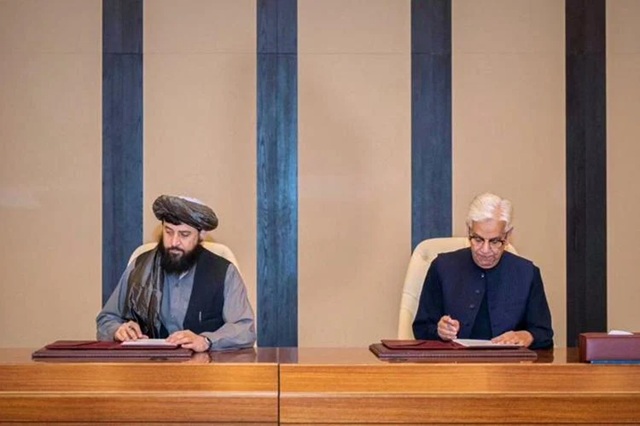
Pakistan’s Defence Minister Khawaja Muhammad Asif has strongly condemned Israel, calling it “evil and a curse for humanity” as violence escalates in Lebanon despite ongoing diplomatic efforts aimed at restoring peace. His remarks, made on the social media platform X, highlight growing concern in Islamabad as negotiations coincide with continued military operations in the region.
Asif pointed to what he described as a stark contradiction between peace efforts and ongoing bloodshed, stating that while talks are being held in Islamabad, civilians in Lebanon are being killed. He accused Israel of continuing a pattern of violence across multiple regions, referring to Gaza, Iran and now Lebanon as part of an ongoing cycle of attacks affecting innocent people.
The Pakistani minister further described Israel as a “cancerous state,” arguing that its existence has contributed to instability and destruction across the Middle East. His comments reflect Pakistan’s long-standing position of not recognising Israel and maintaining support for Palestinians and Lebanese groups in their opposition to Israeli military actions.
The statement comes as Israeli operations in Lebanon intensify, with reports indicating that hundreds of civilians have been killed in recent strikes. The escalation has drawn widespread international concern and criticism, with fears growing that the conflict could expand further across the region. These developments follow a prolonged military campaign in Gaza that has caused significant civilian casualties, many of them women and children.
The situation is also closely tied to broader regional tensions involving Iran. Since late February, when Israel and the United States launched military actions targeting Iran, hostilities have spread across multiple fronts. Lebanon has become a key area of conflict, particularly in relation to ongoing tensions involving Hezbollah.
Despite the escalation, diplomatic efforts continue. A 15-day ceasefire agreement between Iran and the United States was recently announced, based on a proposal from Tehran and facilitated in part by Pakistan. One of the key provisions of the agreement includes a ceasefire in Lebanon, although developments on the ground suggest that the situation remains unstable.
Pakistan’s involvement as a mediator has placed it at the centre of efforts to reduce tensions, but Asif’s remarks underline the difficulty of achieving lasting peace while violence continues. His statements reinforce Islamabad’s position calling for an immediate end to military actions and greater protection for civilians.
As the conflict continues, uncertainty remains over whether diplomatic initiatives will succeed. With tensions spanning several countries and involving major global powers, the risk of further escalation remains high, even as international calls for restraint intensify.









