by Our Correspondent in Islamabad
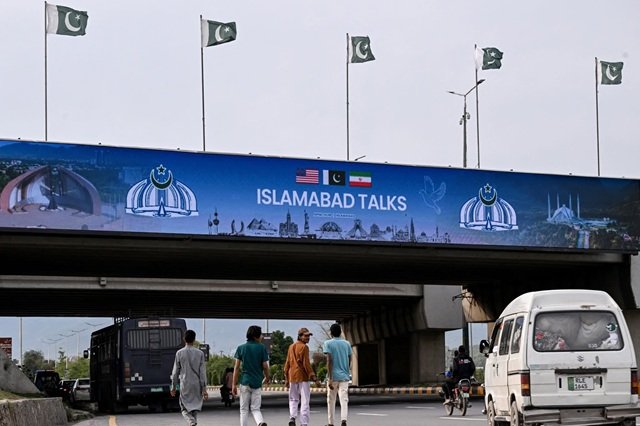
High-stakes negotiations between Iran and the United States in Islamabad have ended in a dramatic breakdown, with no agreement reached after extended discussions. The talks, which were expected to continue into a second day, were abruptly called off, signaling a deepening diplomatic crisis and raising concerns about regional stability.
Speaking after the failed negotiations, J. D. Vance stated that Iran had refused to accept Washington’s terms. He emphasized that no agreement had been reached and described the outcome as unfavorable, particularly for Tehran. According to him, the United States presented clear conditions which Iran ultimately chose to reject, leading to the collapse of the talks.
Iranian officials sharply disputed this characterization, accusing the United States of acting in bad faith and attempting to impose demands rather than engage in meaningful negotiation. Mohammad Marandi, a member of the Iranian delegation, said the American side was not serious about reaching a fair agreement. Iranian state media reinforced this position, portraying the U.S. as attempting to gain through diplomacy what it failed to achieve through military pressure.
Key disagreements centered on Iran’s nuclear program and control over the strategically vital Strait of Hormuz. Reports indicate that U.S. demands included restrictions on enriched uranium and conditions affecting sovereignty over the waterway. Tehran rejected these terms outright, insisting they violated national interests and independence.
In a defiant follow-up statement, Iranian officials made clear they are not seeking an immediate return to negotiations. “Iran is in no rush. The ball is now in America’s court. They have some time to reconsider their miscalculation, while the Strait of Hormuz remains closed,” the statement read, highlighting escalating tensions and the potential impact on global energy routes.
Despite the collapse, there are indications that diplomatic channels may not be entirely closed. A Pakistani correspondent speaking to Al-Mayadeen reported that J. D. Vance did not completely rule out the possibility of renewed engagement. According to the report, another round of negotiations could take place within a week to ten days, potentially involving a different American delegation.