

What compels a young woman raised in comfort to seek proximity to violence? What does it mean to voluntarily step into conversations with those who openly declare allegiance to brutality? And how does one reconcile the act of listening—to extremists, to soldiers, to victims—without surrendering to either empathy or condemnation? These questions do not merely frame the trajectory of Anna Ahronheim; they expose the tensions embedded in her own account of becoming a journalist who operates within the charged intersections of war, ideology, and technology.
Anna Ahronheim, currently serving as the editor for Defence and Technology at The Jerusalem Post, occupies a position that places her at the intersection of military reporting and the evolving architectures of modern warfare. Her career, which began at i24NEWS, has been shaped by a sustained engagement with armed conflict, militant organisations, and the technologies that increasingly define both. With academic training in counter-terrorism and homeland security, her work reflects an ongoing attempt to interrogate how violence is organised, justified, and operationalised across different contexts. She has reported on the rise of extremist networks, examined the mechanics of radicalisation, and more recently turned her attention to the defence industry, where innovation, strategy, and narrative converge in often opaque ways. Her reporting does not position itself outside these systems but moves through them, drawing on access, persistence, and an insistence on understanding the mechanisms that underpin conflict rather than merely its outcomes. Last night, I sat with her to unpack the insights drawn from years of work as a defence correspondent and editor.
Her narrative begins not in a conflict zone but in Montreal, where she describes a childhood defined less by insecurity than by an almost insulated normality. “There was no war. There were no concerns about any war,” she recalls, situating her early life within a society whose principal anxieties revolved around linguistic divisions rather than existential threats. The friction between French and English speakers, she suggests, constituted the dominant public discourse—a reality that, in retrospect, appears almost trivial when contrasted with the global crises that later came to dominate her professional life. Yet even within this environment, a dissonance emerged. She speaks of an early frustration: “There is a lot of war in the world… and nobody’s talking about it. Nobody cares about it.” This sense of neglect—of global suffering rendered invisible—becomes a formative provocation.
The response she received from a teacher—“well, then do something about it”—is presented not as a sentimental turning point but as a directive that she operationalised with precision. Her academic path into criminology and law, followed by a master’s degree in counter-terrorism and homeland security, reflects an attempt to dissect violence as structure. She frames this intellectual pursuit in stark terms: a desire “to really understand how terror groups become what they are, become the monsters that they are.” The language here is deliberate, revealing both an analytical impulse and an awareness of the moral weight embedded in such terminology.
Her relocation from Canada to Israel in her mid-twenties marks a geographical and psychological shift. The move is not narrated as an act of ideological commitment but as an educational decision—an opportunity to study within a region where the subjects of her academic focus were not abstract. Yet it is precisely this proximity that facilitates her unexpected entry into journalism. She describes it as accidental, “by chance”, coinciding with the rise of the Islamic State. The timing proves consequential. As the group expanded its global reach, so too did the demand for narratives capable of explaining its appeal and operations.
What distinguishes her account is not merely that she reported on the Islamic State, but that she engaged directly with its members and sympathisers. “I spoke to dozens of IS members,” she states, adding with disarming matter-of-factness that “some of them proposed to me.” The juxtaposition is jarring: a Jewish journalist based in Israel receiving marriage proposals from individuals aligned with an organisation explicitly committed to violence against people like her. Yet she does not dramatise this. Instead, she presents it as evidence of the group’s recruitment strategies—its openness, its audacity, and its reliance on direct outreach.
“They told me, come to the border… and we’ll bring you to Raqqa,” she recounts, referring to Raqqa, once considered the de facto capital of the Islamic State. The invitation is not framed as a serious temptation but as an illustration of access. For Ahronheim, the encounter highlights a broader observation: that the group’s success was partly rooted in its willingness to engage, to initiate contact, and to exploit the relatively unregulated environment of digital communication at the time. “They were so open and willing and wanting people to join their group that they actively reached out,” she explains, distinguishing this approach from other militant organisations that operate with greater secrecy.
Her work during this period also extended beyond reporting. She describes a dual function: producing stories while simultaneously attempting to prevent vulnerable individuals from joining the Islamic State. “Another angle was to stop children, minors, from joining,” she says, noting her interactions with law enforcement agencies and other actors involved in intervention efforts. This blurring of roles—journalist and informal participant in counter-radicalisation—raises implicit questions about professional boundaries, yet she presents it as a practical necessity shaped by circumstance rather than a theoretical dilemma.
The environments that facilitated radicalisation, in her account, are neither uniform nor easily categorised. “It depends on their age, their social status, their environment, their support,” she explains, resisting any attempt to reduce the phenomenon to a single cause. She recounts cases ranging from individuals radicalised through social media to those who encountered extremist ideologies within prison systems. “There were people… who had previously done a lot of drugs and found religion in prison,” she notes, emphasising the diversity of pathways that lead individuals towards extremist affiliations.
Social media emerges as a recurring theme, not as a simplistic scapegoat but as a mechanism that amplifies existing vulnerabilities. “The availability… for people to interact with Islamic State members or supporters” is identified as a critical factor in the group’s expansion. She extends this observation further, suggesting that radicalisation can occur in spaces not traditionally associated with political discourse: “even on video games, you could get radicalised.” The implication is not merely that technology facilitates communication, but that it collapses the boundaries between everyday life and ideological recruitment.
“Terrorism doesn’t have to kill; the moment you instil fear in people, that in itself is an act of terror.”
Her reflections on the eventual decline of the Islamic State resist triumphalism. While acknowledging the role of military operations, she emphasises the interplay between force and psychological intervention. “You had a psychological aspect and a military aspect,” she explains, referencing international efforts that combined direct combat with initiatives aimed at de-radicalisation. The success of these efforts, in her view, was contingent upon both dimensions: the ability to disrupt the organisation physically while simultaneously addressing the conditions that enabled its growth.
Yet she is careful to note that the threat has not disappeared. “We’re still seeing Islamic State support around the world,” she observes, framing the group not as an anomaly that has been eradicated but as part of a broader and persistent phenomenon. This continuity reinforces her earlier assertion that terrorism cannot be reduced to specific acts of violence. “I don’t think terrorism has to kill people,” she argues. “The fact that you’re able to put fear into the minds of people—that is terrorism.” The definition she offers expands the concept beyond physical harm to include psychological impact, suggesting that the effectiveness of such acts lies as much in perception as in destruction.
Her intellectual influences introduce another dimension. When she cites Tupac Shakur as a formative figure, the reference initially appears incongruous within the context of counter-terrorism. Yet she frames his work as a catalyst for her interest in criminology, particularly in understanding why individuals join gangs. “He was able to really put into words a lot of the frustration of youth,” she explains, drawing a conceptual link between gang dynamics and terrorist organisations. This comparison is not presented as equivalence but as an analytical framework, highlighting shared elements such as identity formation, marginalisation, and the appeal of belonging.
Her subsequent focus on groups like Hezbollah reinforces this perspective. She describes them as entities that operate across multiple domains, engaging not only in acts of violence but also in criminal activities such as money laundering and drug trafficking. The implication is that terrorism, in her analysis, cannot be isolated from broader networks of illicit activity, nor can it be understood solely through ideological lenses.
In her account, there is a consistent emphasis on learning through immersion rather than formal preparation. She acknowledges entering journalism without prior training: “I didn’t know how to write an article. I didn’t know anything.” The admission is not framed as a deficiency but as a condition that required adaptation. Covering military affairs without having served in the armed forces, and working within a professional environment in a language she had not fully mastered, are presented as integral to her development rather than obstacles that defined her limitations.
Her approach to credibility reflects a similar pragmatism. “I am very open with my sources,” she states, while simultaneously emphasising confidentiality. Trust, in her account, is not an abstract principle but a practical requirement, particularly in a field where information can carry significant consequences. “You have to build the trust… and that can take years sometimes,” she notes, suggesting that access is contingent upon sustained relationships rather than transactional interactions.
At the same time, she resists the notion that such relationships preclude critical reporting. “I will be critical… because that’s what we have to do as journalists,” she insists, positioning critique not as antagonism but as a professional obligation. The balance she describes—between maintaining trust and exercising scrutiny—reveals an underlying tension that remains unresolved, yet central to her practice.
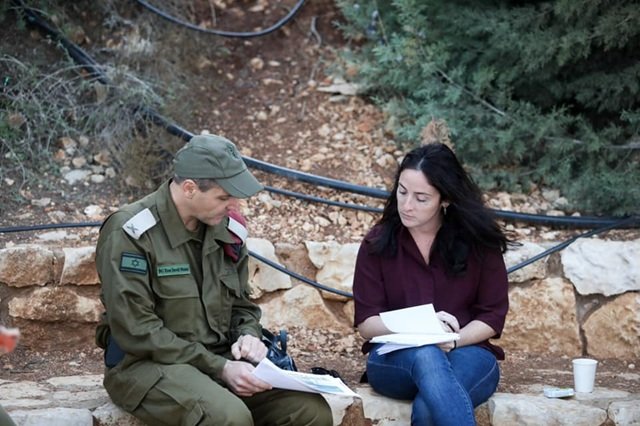
Her experiences also expose the emotional costs associated with this work. She recounts covering funerals of young soldiers and visiting sites of violence, including the killing of a young girl in her bed. These moments are described without embellishment, yet their cumulative effect is evident. “That was really tough,” she repeats, the understatement carrying its own weight. In the context of her reporting on the Islamic State, exposure to graphic material—executions and burnings—adds another aspect to this burden.
Her method of coping is pragmatic rather than introspective. Physical activity, specifically Thai boxing, becomes a mechanism for managing stress, while she also describes constructing “a wall” around her emotions. The metaphor suggests deliberate compartmentalisation, a strategy that enables her to continue working within environments that would otherwise be overwhelming. Yet she also acknowledges the fragility of this barrier, noting that it was more difficult to maintain when she stepped outside the role of journalist.
“Radicalisation isn’t one story—it depends on age, environment, vulnerability, and the moment someone is reached.”
The absence of a “typical day” in her work underscores the unpredictability that defines her profession. “There’s no nine to five,” she states, rejecting the notion of routine. This lack of structure extends to the process of reporting itself, where the tension between speed and accuracy becomes a constant negotiation. While she recognises the value of rapid reporting, she prioritises verification, particularly in the context of defence and technology, where misinformation can have significant implications.
In these reflections, Ahronheim presents a worldview shaped not by singular experiences but by the accumulation of encounters that resist simplification. Her account does not offer resolution or clarity; instead, it exposes the complexities inherent in attempting to understand and report on violence. The provocations that emerge from her narrative—about responsibility, about representation, about the limits of knowledge—remain open, inviting further interrogation rather than closure.
Her current position, covering defence and technology, relocates her from immediate scenes of violence to the infrastructures that sustain them. She is no longer primarily at the front lines but instead engages with the systems, companies, and innovations that shape contemporary warfare. This transition, however, does not imply detachment. Rather, it introduces a different set of complexities. “There’s a lot of bullshit out there,” she remarks bluntly, referring to the proliferation of defence technologies accompanied by sophisticated marketing but limited operational credibility. The statement reflects a scepticism directed not at warfare itself but at the narratives constructed around it—presentations that obscure as much as they reveal.
Her critique extends to the broader discourse surrounding artificial intelligence in military contexts. “Everybody uses AI,” she observes, challenging the tendency to frame it as a novel or transformative rupture. By pointing out that systems such as the F-15 have long incorporated forms of automated decision-support, she reframes the discussion as one of continuity rather than disruption. AI, in her account, is not an external addition to warfare but an embedded component within complex “systems of systems”. The implication is that public debates often lag behind operational realities, focusing on terminology rather than function.
Yet she does not dismiss the ethical implications. On the contrary, her insistence that “you have to have a man in the loop” when lethal decisions are made introduces a boundary that she treats as non-negotiable. “If you’re going to be taking a life, you can’t leave that to a computer,” she states, rejecting the notion of fully autonomous violence. The reasoning she offers is less philosophical than procedural: accountability requires a human agent. “At least you have a human responsible and not a machine.” This emphasis on responsibility situates her perspective within a framework that prioritises traceability over efficiency, even as she acknowledges that human decision-making is itself fallible.
Her assessment of regulatory frameworks is notably pessimistic. “There’s no actual regulation really surrounding AI,” she notes, describing the current state of governance as fragmented and insufficient. Rather than proposing solutions, she frames the issue as an ongoing process: “It’s a long journey ahead… I don’t think there’s a way out.” The absence of resolution here is consistent with her broader approach, which resists definitive answers in favour of exposing unresolved tensions.
“There are two dimensions to modern conflict: the military and the psychological—and the psychological battle is often overlooked.”
When discussing conflict in the Middle East, particularly the security situation in Israel, Ahronheim repeatedly returns to the difficulty of explanation. “Complicated. Not black and white,” she says, emphasising the inadequacy of simplified narratives. Her strategy for communicating this complexity to external audiences involves a form of hypothetical identification: asking others to imagine themselves within the conditions experienced by those living under threat. “How would you respond? What would you do?” she asks, not as a rhetorical device but as an attempt to disrupt distant abstraction.
At the same time, she identifies what she describes as a persistent gap between lived reality and global perception. This gap, in her view, is shaped significantly by what she calls “propaganda warfare”. She attributes considerable effectiveness to groups such as Hamas, particularly in their ability to coordinate messaging across disparate geographical contexts. “How is it that a student in Colombia is using the exact same words as someone in London… or in Brisbane?” she asks, pointing to the uniformity of language as evidence of organised influence. The repetition of phrases across continents becomes, in her interpretation, an indicator of strategic communication rather than spontaneous expression.
Her analysis of this phenomenon is not limited to non-state actors. She acknowledges a corresponding deficiency on the Israeli side: “Israel’s not good in propaganda warfare. They’re good in kinetic warfare.” The contrast she draws between physical capability and communicative weakness introduces a dual framework for understanding conflict—one that distinguishes between the ability to act and the ability to shape interpretation. In this framing, military effectiveness does not automatically translate into narrative dominance.
The discussion of international institutions further complicates her position. She expresses explicit scepticism towards the United Nations, describing it as ineffective in addressing the issues she considers most pressing. Her critique is not elaborated in theoretical terms but grounded in specific examples that she views as contradictory, such as the assignment of roles related to human rights to states she perceives as violators. The conclusion she draws—“the UN is useless”—is blunt, reflecting a broader disillusionment with multilateral mechanisms.
Her comments on Iran introduce another dimension to her analysis of conflict. She distinguishes between the Iranian population and the Iranian regime, emphasising that her concerns are directed at the latter. The regime is characterised as explicitly hostile, “hell-bent on the destruction” of Israel, a perception that, in her account, informs the rationale for military action. Yet she simultaneously questions the sufficiency of such action. “Dropping bombs isn’t going to destroy a regime,” she states, acknowledging the limitations of purely military approaches.
This ambivalence extends to the broader question of strategy. While she rejects the idea that military efforts are “meaningless”, she also concedes uncertainty regarding their ultimate effectiveness. “I don’t know… I wish I knew,” she admits when asked about alternative solutions. The absence of a clear pathway forward is not framed as a failure of analysis but as a reflection of the difficulty inherent in attempting to dismantle entrenched political structures.
Her emphasis on internal change within Iran—“a regime change is only going to happen when the people… do it”—introduces a reliance on agency that lies beyond external intervention. The role of the international community, in this context, is described as supportive rather than directive. Yet the mechanisms through which such support might be enacted remain undefined, reinforcing the sense of indeterminacy that permeates her account.
“If you’re going to take a life, you cannot leave that decision to a machine; there must always be a human in the loop.”
The events of October 7 emerge as a critical reference point. Although she was not actively working as a journalist at the time, her reflections on the attack highlight both its impact and the perceived failures that enabled it. “There were a lot of failures on the part of the military,” she acknowledges, noting that responsibility was accepted by military institutions but not by political leadership. This distinction introduces an internal dimension to accountability, suggesting that scrutiny is not limited to external actors.
At the same time, she situates public dissent within a democratic framework. Protests by Israelis against military actions, including those involving Iran, are described as legitimate expressions of opposition. “We are a democracy; people have the freedom to say what they want. If you’re against a war… go right ahead,” she says, affirming the right to dissent without framing it as undermining national cohesion. This coexistence of critique and participation reflects a political environment that she characterises as pluralistic, even under conditions of conflict.
Her observations on media freedom are similarly nuanced. While she asserts that journalists can “write whatever way they want”, she also acknowledges the presence of a military censor, particularly in matters related to security. This duality—freedom alongside restriction—illustrates the constraints within which reporting operates, especially in contexts where information itself can have operational consequences.
The cumulative effect of her reflections is not a coherent doctrine but a series of interrelated tensions. Technology promises efficiency yet raises ethical concerns. Military action offers immediate results yet fails to resolve underlying conflicts. Narratives shape perception yet are themselves contested and constructed. Within this environment, the role of the journalist becomes both essential and precarious.
Ahronheim’s self-description as a “storyteller” reflects this position, though it does not simplify it. The act of telling stories, in her account, involves moving between access and distance, between empathy and detachment, and between speed and accuracy. It requires engagement with actors across a spectrum that includes victims, soldiers, policymakers, and even those aligned with extremist causes. Each interaction introduces its own set of demands and risks.