Iranian leaders are presenting the recent cease-fire with the United States and Israel as evidence of resilience in the face of overwhelming military pressure. But beneath that narrative of survival lies a far more fragile reality. According to reporting from the Wall Street Journal, Iran now faces an immense postwar reconstruction burden that is straining its economy, weakening its industrial base, and increasing pressure on the government to consider sanctions relief through renewed negotiations with Washington.
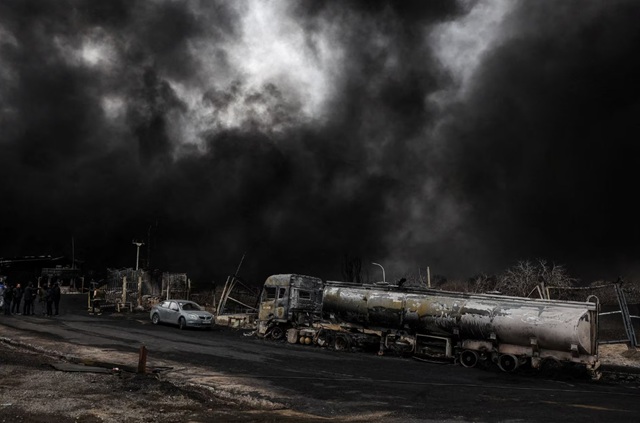
The scale of destruction left by five weeks of conflict is vast. U.S. and Israeli forces struck at least 17,000 targets across Iran, hitting factories, transportation corridors, ports, government buildings, military sites, and key industrial facilities. Iranian state media has estimated reconstruction costs at around $270 billion, although independent analysts caution that any early figure remains highly uncertain given the continuing assessment of damage and the wider economic ripple effects still unfolding across the country.
What makes the situation especially severe is the interconnected nature of the destruction. The air campaign did not only damage infrastructure such as roads, railways, and ports, but also targeted the industrial supply chains required to rebuild them. Steel production facilities, petrochemical plants, and other export-oriented industries were heavily hit. These sectors are essential both for reconstruction materials and for generating foreign currency, creating a double blow that limits Iran’s ability to finance recovery from within.
Even before the war, Iran’s economy was under significant strain. Inflation, currency depreciation, sanctions pressure, and periodic waves of public protest had already weakened confidence in the government’s economic management. The conflict has now intensified those vulnerabilities. Analysts say the destruction of export-generating industries further reduces Iran’s ability to earn the foreign exchange needed to import equipment and materials required for rebuilding.
Iran’s political leadership continues to emphasize resilience and self-sufficiency, but the economic reality is forcing difficult calculations. The country retains some leverage, including its ability to disrupt regional shipping routes such as the Strait of Hormuz and its capacity to threaten energy infrastructure across the Gulf. However, analysts argue that the scale of domestic destruction limits Tehran’s negotiating position more than it strengthens it, because the urgency of reconstruction increases dependence on external economic relief.
The Wall Street Journal reported that internal discussions within Iran reflect growing concern about economic collapse if sanctions remain in place. Some analysts warn that without meaningful sanctions relief, the country could face sustained structural pressure that not only undermines recovery but also threatens long-term political stability. The government now faces competing pressures: maintaining a posture of resistance while also addressing rising economic distress at home.
Diplomatic efforts have so far produced limited results. Early talks between U.S. and Iranian officials ended without agreement, although both sides have indicated openness to further negotiations. Key sticking points remain unresolved, particularly around uranium enrichment and broader security concerns. Despite the deadlock, diplomatic channels remain active, and additional rounds of talks are expected.
During the war, Iran launched thousands of missiles and drones at Israeli and Gulf targets, focusing in part on economic infrastructure such as airports, energy facilities, and industrial sites. However, the damage inflicted abroad was significantly less extensive than the destruction within Iran itself. Experts say the imbalance highlights the asymmetry of the conflict’s economic consequences, with Iran bearing the overwhelming burden of physical reconstruction.
Some analysts have compared the scale of destruction to earlier conflicts in the region, noting that the intensity and geographic spread of recent strikes mark a significant departure from previous wars. Unlike earlier conflicts that were concentrated along frontlines, this war brought sustained strikes deep into urban and industrial centers, including Tehran and other major cities.
Critical sectors of Iran’s economy were hit particularly hard. Petrochemical plants in the southwest, including major complexes, suffered significant damage. Steel production facilities in Isfahan and Khuzestan were also impacted. These industries are central to Iran’s export economy, with petrochemicals accounting for a large share of non-oil exports and steel contributing billions of dollars annually. The disruption of these sectors threatens both export revenues and domestic supply chains.
The economic consequences are already visible in everyday life. Reports from within Iran describe shortages, job losses, and factory closures spreading across multiple sectors. Damage to fertilizer production has disrupted agricultural supply chains, affecting farmers even in regions far from the conflict zones. Industrial workers in steel and manufacturing sectors have also faced layoffs as production has slowed or stopped.
Economists warn that the labor market impact could be severe. Millions of jobs are considered at risk across industries tied to steel, petrochemicals, and pharmaceuticals. The potential scale of unemployment could extend beyond industrial workers into retail, services, and other parts of the economy, creating a wider economic downturn that would be difficult to reverse without external financial support.
Adding to the pressure is a tightening blockade on Iranian exports. Estimates suggest that restrictions on shipping and trade could cost Iran hundreds of millions of dollars per day in lost revenue. Storage capacity for unsold oil is limited, raising the possibility that Iran may be forced to reduce or halt production if exports cannot resume. Such a scenario could damage oil fields and reduce long-term production capacity.
The government has responded with emergency measures, including restrictions on certain exports such as petrochemical products, in an attempt to prioritize domestic supply. However, these steps also reduce revenue inflows, deepening the fiscal challenge facing the state at a time when reconstruction demands are rising sharply.
Despite the damage, Iran still retains some structural strengths. It has developed a domestic industrial base over decades, partly as a result of sanctions, and it possesses significant natural resources, including large reserves of oil and gas. These assets could support recovery in the long term if international conditions improve. However, analysts caution that structural weaknesses, including banking instability and economic mismanagement, continue to undermine resilience.
Public sentiment remains another critical factor. Years of economic hardship and political dissatisfaction have already fueled widespread protests. The additional strain of war damage and economic disruption is intensifying public frustration. Many Iranians, according to reports cited by the Wall Street Journal, have lost confidence in official promises of recovery, raising concerns about future stability and potential emigration.
The government’s restrictions on internet access have further complicated the situation. A prolonged blackout has disrupted business operations, limited communication with foreign partners, and weakened the technology sector, which employs tens of thousands of people. These disruptions are compounding the broader economic slowdown at a moment when coordination and external engagement are most needed.
As Iran begins the long process of rebuilding, it faces a convergence of crises: massive physical destruction, severe financial constraints, diplomatic uncertainty, and rising domestic discontent. While officials continue to frame the cease-fire as a political and military success, the economic reality suggests a far more difficult road ahead.