


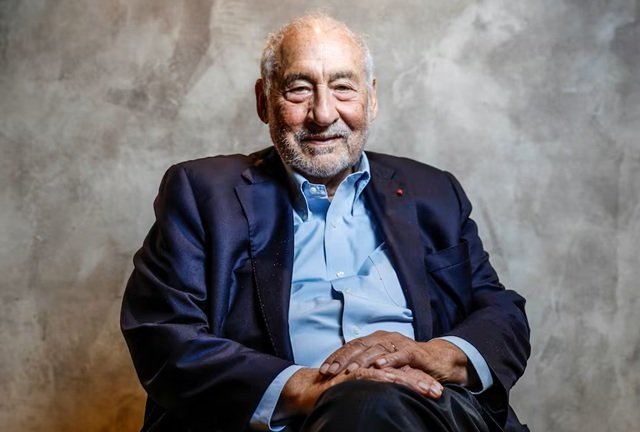
The concentration of wealth in the 21st century has reached levels so extreme that even comparisons to America’s Gilded Age fall short, according to economist Joseph Stiglitz. Speaking in an interview reported by El Pais, the Nobel Prize-winning economist paints a stark picture of a global system increasingly shaped by the interests of billionaires whose influence now extends deeply into politics, media, and public policy. For Stiglitz, the defining feature of this era is not just inequality, but the unprecedented power that accompanies it—and the risks that poses to democracy itself.
At 83, Stiglitz has spent decades studying inequality, globalization, and economic systems. Yet even he appears alarmed by the current trajectory. He argues that today’s richest individuals—figures like Elon Musk, Jeff Bezos, and Larry Ellison—wield economic and political influence far beyond anything seen in the late 19th century, when industrial titans such as John Rockefeller dominated the U.S. economy. While Rockefeller was immensely wealthy, Stiglitz notes, his fortune and reach pale in comparison to the fortunes amassed in today’s tech-driven economy.
But the real difference, he insists, lies not only in scale but in behavior. Many of the magnates of the Gilded Age, for all their excesses, eventually embraced a degree of social responsibility, funding libraries, universities, and research institutions. By contrast, Stiglitz sees a troubling ideological shift among today’s elite, particularly in Silicon Valley. He describes a prevailing mindset rooted in extreme libertarianism—a belief that success is entirely self-made and that government intervention should be minimal or nonexistent.
This, he argues, is both historically inaccurate and socially dangerous. The modern tech economy, he points out, was built on decades of publicly funded research, from the development of the internet to advances in computing and artificial intelligence. The idea that today’s billionaires succeeded entirely on their own ignores the foundational role of government investment. Yet despite benefiting from these public goods, many among the ultra-wealthy resist taxation and regulation, promoting what Stiglitz calls an “astonishing degree of selfishness.”
The consequences of this ideology extend far beyond economic debates. Stiglitz warns that the fusion of wealth and political power is eroding democratic institutions in ways not seen before. While corruption existed in the 19th century, he argues that the current moment represents something more systematic and more dangerous. Under the administration of Donald Trump, supported by a network of wealthy backers, Stiglitz sees what he describes as an unprecedented assault on democratic norms.
One of his chief concerns is the growing influence of billionaires over media. He highlights the acquisition of major media outlets by powerful individuals and the potential for editorial interference, particularly when critical voices are silenced despite commercial success. Such developments, he argues, threaten the independence of the press, a cornerstone of democratic societies. Unlike in the past, when media ownership was more dispersed, today’s concentration creates vulnerabilities that can be exploited for political ends.
This erosion of institutional resilience raises a broader question: are modern democratic systems strong enough to withstand the pressures of concentrated wealth? Stiglitz is cautious in his answer. While acknowledging that today’s institutions are more developed than those of the Gilded Age, he warns that they are not proving strong enough to counterbalance the influence of powerful economic actors. The danger, he suggests, lies in complacency—the assumption that democratic safeguards will hold without active defense.
To address these challenges, Stiglitz is involved in efforts to improve global understanding of inequality. He is contributing to the creation of an International Panel on Inequality, modeled in part on the Intergovernmental Panel on Climate Change. The goal is to provide reliable, comprehensive data on wealth distribution, helping policymakers and the public grasp the scale of the problem.
The data already available is striking. According to Stiglitz, half of the world’s population has received just 1% of the wealth created over the past 25 years. This statistic alone, he argues, underscores the severity of global inequality. At the same time, vast sums—trillions of dollars—are set to be transferred from one generation to the next, particularly in wealthy countries like the United States. This intergenerational transfer threatens to entrench inequality further, creating what Stiglitz describes as a hereditary plutocracy.
Such a system, he warns, undermines the idea of meritocracy that many societies claim to uphold. While the narrative of the self-made individual remains powerful, the reality is that inherited wealth and structural advantages play an increasingly dominant role. Without intervention, the gap between rich and poor is likely to widen even further, with profound social and political consequences.
One of the key tools Stiglitz advocates for addressing inequality is taxation, particularly targeting extreme wealth. He supports the idea of a global minimum tax on wealth, proposing a modest rate of 2% for the richest individuals. The simplicity of such a tax, he argues, is one of its strengths. By setting a clear baseline, it would reduce opportunities for avoidance and ensure that the wealthiest contribute a fair share.
However, Stiglitz is under no illusions about the challenges involved. He acknowledges that the wealthy often use their influence to shape tax policy, introducing loopholes and exemptions that undermine its effectiveness. He points to examples where proposed taxes have been diluted through political pressure, rendering them largely symbolic. This, he says, is a predictable pattern—one that policymakers must anticipate and counter.
The struggle over taxation reflects a broader battle over the role of money in politics. For Stiglitz, reducing inequality is not just about redistribution; it is also about limiting the political power of wealth. In the United States, he notes, campaign financing allows billionaires to exert disproportionate influence over elections and policy decisions. Addressing this imbalance, he argues, requires fundamental reforms to campaign finance systems.
Beyond politics, Stiglitz emphasizes the need to strengthen independent media and ensure a diverse information ecosystem. He calls for robust public broadcasting systems and greater support for investigative journalism, both of which are essential for holding power to account. At the same time, he argues that technology companies—particularly social media platforms and artificial intelligence developers—should compensate traditional media for the content they use. Such measures could help sustain journalism in an era of declining revenues and increasing concentration.
Stiglitz also highlights the importance of regional autonomy in media and technology. In Europe, for example, he argues that reliance on platforms owned by foreign corporations creates vulnerabilities. Developing independent, partially public alternatives could enhance both economic and political sovereignty, ensuring that information flows are not dominated by a handful of global players.
Underlying all these proposals is a deeper concern about the direction of modern capitalism. Stiglitz does not reject markets or innovation, but he insists that they must be balanced by strong institutions and a commitment to shared prosperity. Without such balance, the system risks becoming increasingly unstable, both economically and politically.
The current moment, he suggests, represents a critical turning point. The concentration of wealth and power has reached levels that demand urgent attention, yet the political will to address these issues remains uncertain. The choices made in the coming years will shape not only economic outcomes but the future of democracy itself.
For Stiglitz, the stakes could hardly be higher. The erosion of democratic norms, the rise of hereditary wealth, and the growing influence of billionaires all point to a system under strain. Whether that system can be reformed—or whether it will continue to drift toward greater inequality and instability—remains an open question.
What is clear, however, is that the debate over inequality is no longer just about economics. It is about power, governance, and the fundamental principles that underpin modern societies. As Stiglitz warns, ignoring these issues is not an option. The consequences, he suggests, could be far-reaching and irreversible, reshaping the world in ways that echo the past but exceed it in scale and impact.









