


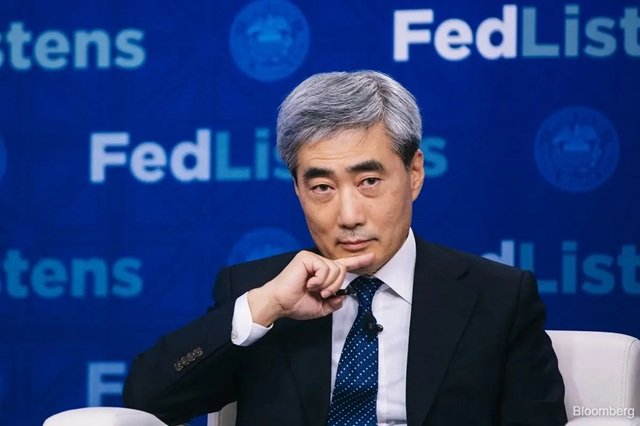
The newly appointed Governor of the Bank of Korea, Hyun Song Shin, used his inaugural address in Seoul on April 21, 2026, to deliver a stark assessment of the global and domestic economic landscape, signaling that the era ahead will demand a fundamental rethinking of central banking. His remarks, both reflective and forward-looking, framed the challenges confronting policymakers as not only cyclical but deeply structural, shaped by geopolitical tensions, technological upheaval, and shifting financial systems.
Stepping into the role after years in academia and international institutions, Shin acknowledged both the honor and the weight of responsibility placed upon him. He paid tribute to his predecessor, Chang Yong Rhee, crediting his leadership during a period marked by volatility and uncertainty. Yet Shin made clear that the challenges ahead would test the limits of conventional policy frameworks, requiring innovation and adaptability.
At the heart of his address was a sobering diagnosis of the global economy. The lingering effects of conflict in the Middle East have pushed oil prices higher, intensifying inflationary pressures while simultaneously constraining growth. Financial markets, he noted, remain volatile, with risks of imbalances continuing to build beneath the surface. These immediate concerns are compounded by longer-term transformations, including the fragmentation of global trade driven by tariff tensions and the accelerating impact of artificial intelligence on industries, productivity, and labor markets.
Domestically, South Korea faces its own set of structural headwinds. Shin pointed to demographic decline, rising social polarization, and vulnerabilities in the real estate market and household debt as factors eroding the country’s traditional engines of growth. These internal pressures, interacting with global uncertainties, make the trajectory of the economy increasingly difficult to predict.
Against this backdrop, Shin argued that central banks must once again redefine their role. He traced the evolution of central banking from its origins in early European deposit banks to its modern responsibilities of managing inflation, growth, and financial stability. Each transformation, he emphasized, was driven not by theory alone but by real-world crises and practical experience. Today’s environment, he suggested, demands a similar willingness to adapt and experiment.
To navigate this period of transition, Shin outlined four key priorities for his tenure. The first centers on monetary policy. With inflation and growth paths clouded by supply-side shocks, he pledged a cautious yet flexible approach, emphasizing the need to balance competing objectives. Enhancing the effectiveness of policy tools and improving communication with markets will be critical, as will coordination with government authorities when appropriate.
The second priority focuses on financial stability, an area Shin believes requires a fundamentally new perspective. Traditional distinctions between banks and non-bank institutions are rapidly dissolving, while cross-border financial activities and linkages between financial and asset markets are becoming more complex. In response, the Bank of Korea plans to strengthen its early warning systems by incorporating market-based indicators alongside conventional metrics. Expanding oversight to include non-bank sectors and off-balance-sheet activities will also be essential in identifying emerging risks.
Shin’s third priority highlights the importance of maintaining trust in money and modernizing payment systems in an increasingly digital and globalized financial environment. He underscored the strategic importance of internationalizing the Korean won, including plans to introduce round-the-clock foreign exchange operations and establish offshore settlement systems. These measures aim to enhance the currency’s accessibility and resilience, supporting its broader use in trade and investment.
At the same time, the central bank is preparing for the future of digital finance. Shin referenced ongoing efforts to expand the use of central bank digital currency and tokenized deposits, as well as international collaborations designed to strengthen the role of the won in digital payments. However, he cautioned that innovation must be carefully managed to avoid undermining financial stability, signaling the need for new macroprudential frameworks tailored to this evolving landscape.
The fourth priority reflects a broader vision of the central bank’s role in addressing structural economic challenges. Shin argued that issues such as demographic change and market imbalances are not separate from monetary policy but integral to its effectiveness. As economic realities shift, gaps between perception and reality can weaken policy transmission, making it essential for the central bank to engage in research and provide policy guidance on structural reforms.
Beyond policy, Shin devoted significant attention to the internal transformation of the Bank of Korea itself. He emphasized the importance of fostering an organizational culture that enables individuals to reach their full potential, arguing that institutional strength depends on the capabilities of its people. Breaking down silos between departments and encouraging collaboration across research, policy, and operations will be key to developing a more integrated approach to complex challenges.
Digital transformation within the institution is another priority. Shin noted that meaningful productivity gains will require changes in how work is conducted, including improvements in data systems, personnel management, and information sharing. These internal reforms, he suggested, are essential for ensuring that the central bank can respond effectively to a rapidly changing environment.
Shin also signaled a desire to elevate the Bank of Korea’s role on the global stage. With South Korea attracting international attention not only for its cultural exports but also for its policy innovations, he pledged to create platforms for greater engagement in international forums. By contributing to global discussions and learning from other economies, the central bank can both share its experiences and gain insights to address domestic challenges.
In closing, Shin returned to a central theme of his address: trust. In a period defined by uncertainty and transformation, he argued that the central bank must serve as a stable anchor for the economy. Achieving this will require not only sound policy but also collaboration, adaptability, and a willingness to confront difficult questions.









