

Journalism has always been a contested practice, but in politically sensitive environments it becomes something far more volatile: a struggle over truth, authority, and control of narrative. The case surrounding the “Aisha” documentary published by Adhadhu Online has exposed that tension in the Maldives with unusual intensity, raising questions that go beyond a single production and into the wider relationship between media and state power.
The documentary has triggered a criminal investigation, a police raid on a newsroom, and the seizure of journalistic equipment under a court warrant. Authorities maintain that the material published may amount to defamation against President Dr. Mohamed Muizzu, and that evidence must be secured for forensic examination. From that standpoint, the state presents its actions as lawful, procedural, and grounded in criminal process. Yet the scale and speed of enforcement has inevitably drawn scrutiny, particularly given concerns that legal mechanisms may be deployed in ways that exert pressure on media institutions during politically sensitive moments.
What makes this case especially contentious is not simply the reaction to the documentary, but the nature of its construction. Critics argue that the production relies heavily on a narrow evidentiary base, reportedly centred on a single source making serious personal allegations involving the President. More significantly, questions have been raised about whether the material presented meets even basic thresholds of corroboration expected in reporting claims of this gravity. In situations involving public figures, reputational harm is not a minor consequence; it carries political and institutional weight that demands careful verification.
Reliable accounts circulating in Malé further add to this concern, suggesting that no formal complaint had been lodged with law enforcement or independent oversight bodies prior to the escalation of the case. Instead, the matter appears to have moved rapidly from publication to investigation, raising questions about how and why criminal thresholds were interpreted as being met in the absence of a visible complainant process. While authorities may act on intelligence or publicly available material, the absence of a clear initiating complaint inevitably fuels debate over proportionality and intent.
The government’s position is that this is not about disagreement over narrative, but about potential harm caused through publication. It is argued that unverified claims, particularly those involving private conduct of a sitting head of state, can fall within the scope of criminal defamation where reputational damage is significant. On that basis, the raid on Adhadhu’s office is presented as a lawful step to secure digital evidence, with authorities stating that material relevant to production and dissemination of the documentary may exist within newsroom systems.
That explanation, however, does not settle the broader concern raised by observers: whether the response is proportionate to the nature of the publication. The seizure of journalistic equipment from a media outlet is not a neutral procedural step in practice, even if authorised by a court. It directly affects operational capacity and inevitably raises questions about whether enforcement actions extend beyond evidence preservation into deterrence. Travel restrictions imposed on senior editorial figures further intensify that perception, regardless of stated intent. But, paradoxically, without such rapid steps, accountability from the state and government’s point of view may also remain a pipe dream. After all, the documentary directly targets the head of state.
Opposition figures, including former President Abdulla Yameen, have framed the issue as part of a wider pattern of state-media tension, arguing that political leadership should focus on governance rather than pursuing punitive measures against journalists. While such commentary is undeniably political in nature, it reflects a broader concern that disputes involving media reporting are increasingly being absorbed into institutional and partisan conflict rather than resolved through transparent legal scrutiny.
Western diplomatic commentary, as is often the case, has introduced an additional layer of external framing to what is essentially an internal political matter. The British High Commission in Malé has expressed concern regarding media freedom and the importance of protecting independent journalism. While such statements align with established diplomatic positions, they also sit within a broader context where external actors are frequently criticised for applying uneven standards when commenting on press freedom, particularly given that many democracies, including the United Kingdom, continue to face internal debate over the limits of expression, protest regulation, and online speech enforcement.
The deeper issue in the Maldives case is not confined to whether the documentary is accurate or inaccurate in its claims, but how allegations involving public figures are transformed into matters of criminal investigation. Journalism often operates in spaces where information is incomplete, contested, or reliant on limited sources. That does not exempt it from responsibility, but it does mean that the threshold between publication and legal liability must be clearly defined and consistently applied.
Where that clarity weakens, the result is a system in which both media and state begin to operate on perception rather than principle. Journalism risks being interpreted through the lens of intent rather than evidence, while state response risks being viewed through the lens of political sensitivity rather than legal necessity. In such an environment, the space for accountable reporting narrows, not through a single action, but through cumulative pressure and uncertainty.
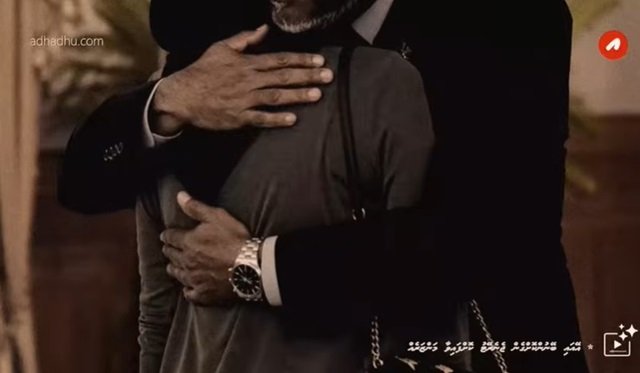
The “Aisha” documentary controversy therefore reflects something larger than a single publication or investigation. A further layer of concern has been raised around the documentary’s use of highly stylised visual material, including what appears to be AI-generated imagery, reconstructed scenes, and graphic representations presented as narrative reinforcement. Critics argue that when such techniques are used in reporting serious allegations, particularly those involving a sitting head of state, they risk blurring the boundary between evidential reporting and constructed perception.
In such contexts, the issue is not the use of technology itself, but whether visual fabrication is being employed in a way that amplifies unverified claims without clear disclosure or evidential grounding. This raises difficult questions about editorial responsibility, particularly where visual storytelling may influence public perception more strongly than the underlying factual record.
It exposes the fragile boundary between scrutiny and accusation, and the difficulty of maintaining that boundary when political stakes are high. The central question is not simply whether journalism should be free, but how a society ensures that freedom does not collapse into unverified harm, and that legal authority does not expand into unchecked restriction.
That balance is where the real issue now sits, and it is far from settled.