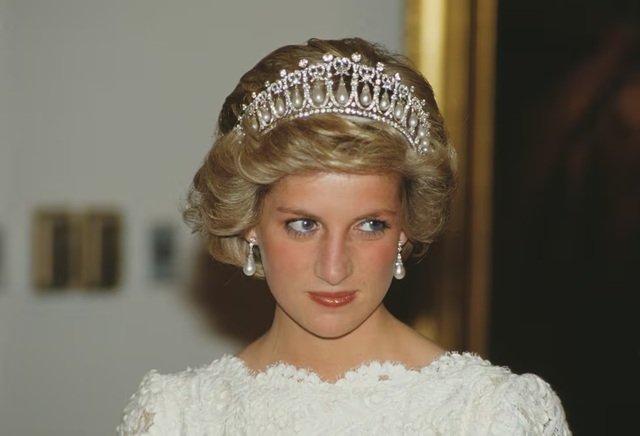
A forthcoming documentary titled Diana: The Unheard Truth is already generating intense international attention despite its release being scheduled for 31 August 2027. The timing coincides with the 30th anniversary of the death of Diana, Princess of Wales, who died in a car crash in Paris in 1997. The series, structured in three parts, is based on approximately five hours of previously unheard audio recordings made by Diana in the early 1990s. According to producers, the material offers an unusually direct insight into her emotional state during one of the most turbulent periods of modern royal history.
The recordings were made in 1991 under the supervision of Dr James Colthurst, a close friend of the princess. At the time, the tapes were secretly taken out of Kensington Palace and passed to author Andrew Morton, whose 1992 biography Diana: Her True Story reshaped public understanding of the British monarchy. That book, which relied heavily on Diana’s own testimony, marked a turning point in how the royal family was perceived, revealing fractures within what had long been presented as a stable institution. In the decades since Diana’s death, less than an hour of the original recordings has been made public, making the newly accessed archive particularly significant.
The production company Love Monday TV has obtained full access to the recordings in collaboration with Morton and Colthurst, both of whom also appear in the series. Editor Michael O’Mara joins them in revisiting the circumstances under which the original biography was created. The documentary not only revisits Diana’s words but also examines the risks taken at the time by those who helped bring her story into the public domain, as well as the scrutiny and pressure they faced from royal officials and the media once the material emerged.
The content of the recordings is expected to focus heavily on Diana’s private reflections on her life within the royal household, her sense of isolation, and her desire for independence from institutional constraints. The tapes reportedly include her predictions about the future of then-Prince Charles, now King Charles III, and his relationship with Camilla, now Queen Camilla, whom he married in 2005. They also contain references to her thoughts about her children, Prince William and Prince Harry, as well as other members of the wider royal family, including Sarah Ferguson and Andrew Mountbatten-Windsor, formerly known as Prince Andrew.
Beyond royal dynamics, the recordings are said to touch on deeply personal subjects. According to production notes, Diana speaks candidly about emotional distress, including references to suicidal thoughts, her struggle with bulimia nervosa, and the breakdown of her marriage. These revelations, described by producers as “three astonishing confessions,” are expected to form a central narrative thread of the series. The inclusion of such sensitive material has already prompted discussion about the ethics of revisiting deeply private testimony decades after it was recorded.
The documentary also features commentary from individuals who were close to Diana during her life. Among them are Delissa Needham, a school friend making her first on-camera appearance, hairstylist Sam McKnight, astrologer Penny Thornton, dancer Wayne Sleep, former bodyguard Ken Wharfe, royal press secretary Dickie Arbiter, photographer Kent Gavin, and journalist Richard Kay of the Daily Mail. Their contributions are expected to provide context for the recordings and help reconstruct the environment in which Diana lived, both inside and outside the palace.
Behind the scenes, the project is led by editor Sophie Todd, producer Emily Hirst, and director of photography Justin Frahm. Financing comes entirely from Rainmaker Films, headed by Clay Pecorin, Russell Geyser, and Zak Tanjeloff, alongside Plymouth Films, led by Kevin Weisberg. The production team has framed the documentary as an effort to recontextualize Diana’s legacy, presenting her not only as a tragic public figure but as a resilient and self-aware woman navigating extraordinary scrutiny.
According to promotional materials, the series aims to challenge long-established perceptions of the princess by emphasizing her personality, humor, and emotional intelligence. Producers describe her as a figure of resilience who maintained self-awareness under intense global attention. They also highlight her “infectious humour” and “mischievous laughter,” suggesting that the recordings reveal a more complex and multidimensional individual than commonly portrayed in previous media narratives.
The narrative further suggests that Diana envisioned a future in which she would step away from royal constraints and build an independent life, while Charles and Camilla continued their relationship. This framing has already sparked renewed debate over how the monarchy has evolved since the 1990s and how much of its modern image is shaped by unresolved public perceptions of that era. Supporters of the project argue that it provides historical insight into a defining moment for the British royal family, while critics are likely to question whether revisiting such intimate material respects Diana’s privacy and legacy.
The producers insist that the intention is not sensationalism but historical reflection. They argue that Diana’s voice remains a powerful cultural force and that the recordings offer a rare opportunity to hear her perspective in her own words. “When Diana spoke, the world listened,” the production notes state, framing the documentary as a continuation of that global attention. The team also suggests that the material allows audiences to see how Diana responded to pressure, shaped her identity, and imagined a future beyond the constraints of royal life.
As anticipation builds, Diana: The Unheard Truth is already positioned as one of the most closely watched documentary releases of the coming years. Its combination of newly revealed personal testimony, high-profile historical context, and ongoing public fascination with the British monarchy ensures that its release is likely to reignite global discussion about Diana’s life, her legacy, and the institution she once inhabited.