The United States’ war with Iran has entered a volatile and politically charged third month, with President Donald Trump facing growing domestic backlash, legal scrutiny, and diplomatic deadlock. On Friday, Trump dismissed a third peace proposal from Tehran, signaling that no breakthrough is imminent and leaving the conflict in a tense stalemate that has now stretched to 60 days since Washington formally notified Congress of the start of hostilities. What began as a rapid military escalation has evolved into a protracted confrontation increasingly compared by polling and analysts to America’s most unpopular wars in modern history.
The rejection of Iran’s latest offer underscores how far negotiations have drifted from any meaningful resolution. Tehran’s proposal, delivered through Pakistani mediators after failed talks in Islamabad and the collapse of a second planned round, was met with a firm presidential refusal. Trump acknowledged that Iran “wants to reach an agreement,” but added that its terms “do not satisfy” Washington’s expectations. He further suggested that Iranian negotiators remain inconsistent and politically fragmented, complicating any path toward compromise. The exchange reflects a broader breakdown in diplomacy since a fragile ceasefire was declared on 8 April, which briefly halted active combat but did not resolve underlying tensions.
At the center of the growing controversy is a legal dispute over the 60-day limit imposed by U.S. law on unauthorized military engagements. Under American war powers legislation, the executive branch must either obtain congressional authorization to continue military action beyond that period or end hostilities. The Trump administration, however, has argued that the clock effectively stopped with the ceasefire, claiming that the conflict’s “active hostilities” concluded when fighting paused. Critics in Congress reject that interpretation, arguing that the war has not ended but merely shifted into a low-intensity phase of blockade, sanctions, and diplomatic pressure.
On the ground, the confrontation remains frozen but highly unstable. Iran continues to restrict access through the Strait of Hormuz, a vital global shipping route, while Washington has imposed what officials describe as a “complete economic and maritime blockade” on Iranian ports. Though large-scale exchanges of fire have paused, both sides continue to exert pressure through economic and strategic measures that many analysts classify as acts of ongoing warfare rather than peace. The earlier rounds of negotiations in Pakistan failed to produce consensus, and Tehran’s insistence on lifting international sanctions in exchange for concessions remains a central sticking point. Washington, in turn, has shown no willingness to relax its economic pressure campaign.
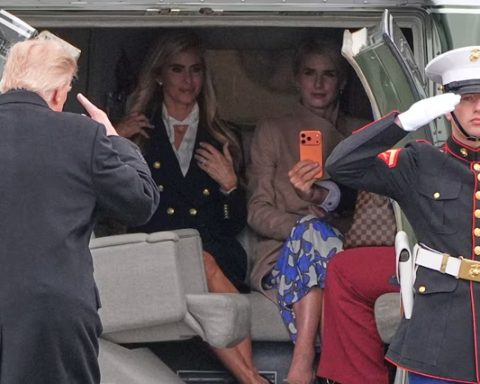
Trump has repeatedly framed the conflict in stark terms, presenting only two possible outcomes: total military escalation or a negotiated settlement. Speaking from the White House before departing for Florida, he said the United States could either “blow them up” or reach a deal, while insisting that negotiations are still ongoing through indirect channels, including telephone contact rather than in-person diplomacy. He also claimed that traveling to Islamabad for further talks would be unnecessary, reflecting his administration’s preference for remote engagement over traditional diplomatic summits.
Behind the scenes, Trump has also consulted senior military leadership, including General Brad Cooper of U.S. Central Command, to review potential escalation options and strategies for pressuring Tehran over its nuclear program. Officials familiar with the discussions describe a range of contingency plans, though analysts remain skeptical that additional military force would significantly alter Iran’s strategic posture. The Iranian government, despite internal divisions acknowledged by U.S. officials, has shown no public indication of abandoning its core demands or altering its nuclear policy under pressure.
The political cost of the war, however, is becoming increasingly clear in public opinion data. A recent survey published by The Washington Post and ABC News indicates that 61% of Americans believe the decision to use military force against Iran was a mistake, placing the conflict in the same category of public disapproval as the Iraq War at its most unpopular point in 2006 and the Vietnam War during the early 1970s. The data highlights a sharply polarized electorate: nearly 80% of Republicans support the war, while overwhelming majorities of Democrats and most independents oppose it. A separate Reuters poll shows overall support for the war at just 34%, declining further from earlier weeks of the conflict.
This erosion of public support is intensifying political pressure in Washington as the 60-day legal deadline expires. The Trump administration insists that the statutory requirement for congressional authorization no longer applies, arguing that the ceasefire effectively reset the conflict timeline. A senior administration official, speaking anonymously, maintained that “hostilities have ended” since the truce took effect and that no direct military exchanges have occurred since. However, opponents argue that continued blockade measures and ongoing military readiness contradict that claim and keep the United States effectively engaged in war.
The dispute has reached Congress, where lawmakers from both parties are questioning the administration’s interpretation of war powers law. While most Democrats oppose the continuation of military action, a notable dissent came from Republican Senator Susan Collins, who joined efforts to pass a resolution limiting the president’s authority to extend the war. Though the measure ultimately failed, Collins argued that the 60-day limit is a binding legal requirement, not a suggestion, and emphasized the need for a clearly defined strategy and achievable objectives before continuing military engagement.
As diplomatic efforts stall and legal debates intensify, Trump’s war in Iran is becoming not only a foreign policy crisis but also a domestic political liability. With negotiations stalled, public opposition rising, and Congress challenging executive authority, the conflict now stands at a precarious intersection of law, politics, and military strategy. Whether the administration escalates pressure, seeks a breakthrough with Tehran, or attempts to redefine the legal framework of the war, the coming weeks are likely to determine not only the trajectory of the conflict but also its place in American political history.