by Our Political Affairs Editor
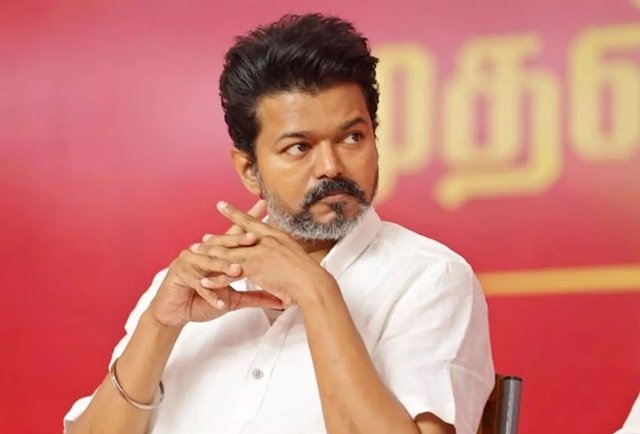
108 seats. Short of 118. That is Vijay’s reality.
Everything else—the mandate, the momentum, the disruption—comes second. Without numbers, there is no government. And right now, he does not have them.
The scramble has already begun. Support is being explored from the Congress and AIADMK. But no party walks in empty-handed. They will ask for ministries, influence, and leverage. If Vijay agrees, he shares power. If he refuses, he risks losing it altogether. There is no clean option here—only trade-offs.
This is where the comparison to Arvind Kejriwal stops being theoretical. In 2013, Kejriwal formed a government in Delhi without a majority, leaning on Congress support he did not control. It lasted 49 days. He resigned when he could not push through his agenda. At that moment, it was not seen as bold—it was seen as collapse. Power lost, government gone, credibility questioned.
The comeback came later. In 2015, he returned with 67 out of 70 seats. But that outcome was not guaranteed when he walked away. It was a gamble that could just as easily have ended his political relevance.
That is the template being discussed around Vijay now: accept only unconditional support, reject anything that limits control, and if that fails, force another election. It sounds decisive. It is also risky.
Because the first step in that path is failure to govern.
If Vijay forms a government with outside support, he will be constrained from day one. Every decision will carry the weight of negotiation. Every policy will require approval beyond his party. The image of independence that powered his rise will begin to erode immediately.
If he refuses and pushes for another election, he is betting that voters will reward him with a stronger mandate. That assumption has no guarantee behind it. Voters do not always reward defiance. Sometimes they punish instability.
This is not a moment for symbolism. It is a moment of choice.
Take support and compromise, or reject it and risk everything.
Kejriwal chose to walk away and came back stronger—but only after losing power first. Vijay now stands at that exact edge. The difference is simple: what worked once in Delhi may not work again in Tamil Nadu.