Few public intellectuals have spent more time analyzing the rise and decline of American global power than Fareed Zakaria. For decades, the Indian-born journalist and geopolitical commentator has occupied a unique position in American media, balancing the roles of analyst, historian and public critic while chronicling the dramatic transformations reshaping the international order. Now, as Donald Trump’s second presidency accelerates tensions both inside and outside the United States, Zakaria is warning that the world has begun to fundamentally rethink America’s role in global affairs.
In a recent interview with the Spanish newspaper El País, conducted around the release of the Spanish edition of his latest book, The Age of Revolutions, Zakaria reflected on the collapse of liberal optimism, the rise of nationalism and the dangerous instability defining the modern era. His conclusion was stark: after decades in which the United States acted as the central organizing force of the Western world, many countries increasingly see Washington itself as the problem.
Zakaria’s intellectual career has mirrored the rise of globalization itself. Born in Mumbai to a politically engaged family, he moved to the United States in the 1980s to study at Yale and Harvard before becoming one of the country’s most recognized commentators on foreign policy. Through his writing for The Washington Post and his CNN program GPS, Zakaria built a reputation for explaining global shifts to American audiences at a time when the United States appeared unmatched in power after the Cold War.
His 2008 book The Post-American World became especially influential during the presidency of Barack Obama, who was famously photographed carrying the book during his presidential campaign. In that work, Zakaria argued that the United States was not collapsing but entering a world where other powers were rising rapidly alongside it. Nearly two decades later, he believes the geopolitical transition has become even more destabilizing than he anticipated.
In The Age of Revolutions, Zakaria examines four centuries of Western political transformation through what he describes as a series of revolutionary upheavals. Rather than presenting history as a smooth narrative of progress, he identifies moments when technological and economic changes transformed societies so dramatically that they provoked intense political backlash.
The revolutions he studies range from the Dutch liberal experiment of the seventeenth century to England’s Glorious Revolution, the French Revolution and the Industrial Revolution. But the second half of the book shifts toward the present, where Zakaria argues the world is now experiencing simultaneous technological, economic, geopolitical and identity revolutions that are reshaping societies at extraordinary speed.
Unlike periods of relative stability after World War II or after the collapse of the Soviet Union, Zakaria says modern societies are once again entering a period defined by conflict between forces pushing for rapid transformation and movements demanding resistance or retreat. Globalization, digital technology, demographic shifts and economic liberalization have produced enormous wealth and innovation, but they have also generated deep insecurity and social fragmentation.
Zakaria sees clear parallels between today’s world and the turbulent decades between the 1890s and the 1930s. That earlier period witnessed the rise of electricity, railroads, telephones, radio and cinema — technological breakthroughs that radically altered how people understood time, communication and social life. Massive migration, urbanization and industrialization created profound cultural disorientation, eventually contributing to authoritarian movements and nationalist backlash across Europe.
The similarities to the digital revolution of the twenty-first century are difficult to ignore. Social media, artificial intelligence, global migration and economic integration have reshaped daily life at astonishing speed. Yet Zakaria stops short of predicting catastrophe on the scale of the Second World War. Unlike the early twentieth century, he argues, today’s societies possess large middle classes and welfare systems that provide a degree of stability absent in earlier eras.
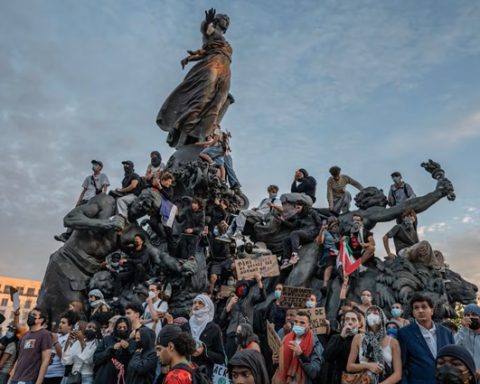
Still, he warns that liberal democracy remains under severe pressure. The rise of populist nationalism, democratic backsliding and illiberal governments across multiple continents reflects a growing sense that traditional political systems are failing to manage the consequences of globalization. Zakaria believes many voters no longer trust institutions to protect their identities, economic security or cultural traditions.
That crisis is especially visible in the political career of Donald Trump, whom Zakaria describes less as an ideological strategist than as a leader driven by personal power, image and dominance. According to Zakaria, Trump’s worldview resembles that of an eighteenth-century emperor more than a modern democratic president. He is motivated by spectacle, unilateral action and public displays of authority rather than coherent geopolitical doctrine.
Zakaria argues that Trump’s presidency is also the culmination of decades of expanding executive power in the United States. While earlier administrations gradually concentrated authority within the presidency, Trump has pushed those trends to unprecedented levels by openly ignoring legal and institutional constraints that previous presidents at least formally respected. Congressional Republicans, Zakaria says, have largely abandoned their traditional role as a check on executive authority in favor of personal loyalty to Trump.
Despite his criticism, Zakaria insists the United States will survive Trump’s presidency. In fact, he suggests there may be value in Americans experiencing the full consequences of the nationalist and anti-globalist politics many have demanded. According to him, societies sometimes need to confront the practical failures of political myths directly before they can move beyond them.
Yet Zakaria’s larger concern lies not only in domestic politics but in America’s changing relationship with the rest of the world. For decades, the United States functioned as the anchor of a broad Western alliance system built around free trade, democratic values and military cooperation. Under Trump, that consensus has fractured dramatically.
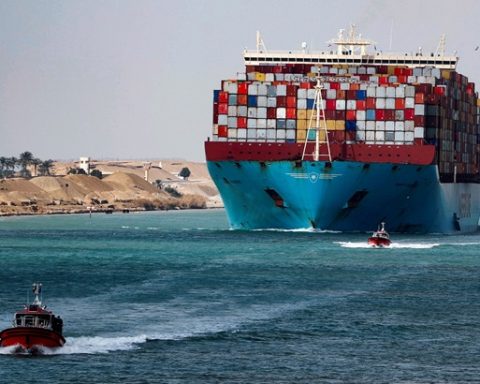
Zakaria points to the striking transformation of American economic policy as evidence of this shift. Once the world’s strongest advocate of free markets and global trade, the United States has increasingly embraced protectionism, tariffs and economic nationalism. At the same time, allies such as the European Union and Canada are expanding partnerships with countries including India and China, often seeking ways to reduce dependence on Washington.
According to Zakaria, this represents a historic psychological change. Countries that once viewed the United States as the guarantor of stability are now adapting to the possibility that American unpredictability itself may be one of the central risks confronting the international system.
The Middle East, meanwhile, offers another example of a world entering dangerous uncertainty. Zakaria believes recent conflicts involving Iran, Israel and Gulf states reveal the limits of military solutions in geopolitics. Echoing former U.S. Secretary of State Henry Kissinger, he argues that international relations are often less about permanently solving problems than about managing them.
While Israel has emerged militarily dominant in the region after devastating conflicts involving Hamas, Hezbollah and Iran-backed militias, Zakaria says it has simultaneously suffered profound political and moral damage internationally. He also warns that Prime Minister Benjamin Netanyahu’s close alignment with partisan American politics has weakened the historically bipartisan relationship between the United States and Israel, particularly among younger Americans increasingly critical of Israeli policies.
For Zakaria, these global fractures reflect the broader collapse of the liberal optimism that dominated the decades after the Cold War. The belief that globalization, democracy and technological progress would naturally produce stability and prosperity has given way to a far more fragmented and anxious reality.
Yet despite the turbulence, Zakaria remains resistant to fatalism. He does not believe history simply repeats itself, even when certain eras seem to echo one another. Instead, he argues that societies still possess the ability to adapt, reform institutions and avoid the catastrophic mistakes of the past.
What concerns him most is whether political systems can evolve quickly enough to manage the revolutionary forces now reshaping the world. As globalization weakens, nationalism rises and technological disruption accelerates, Zakaria believes humanity is entering a defining historical transition — one in which the future of liberal democracy, American power and the international order itself may all be renegotiated simultaneously.