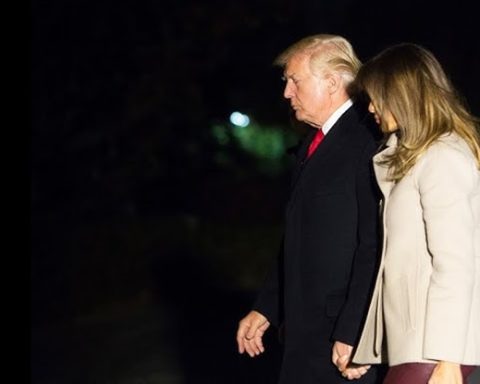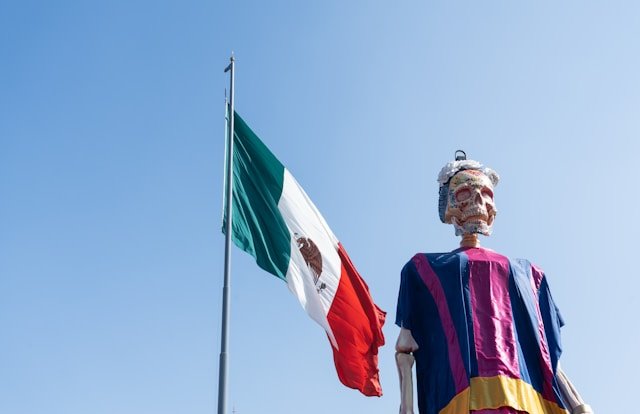
US President Donald Trump said on Friday that Washington was close to reaching a trade agreement with Mexico and that negotiations with Canada were also progressing, as the three North American countries seek to resolve tensions over tariffs and trade rules.
“We are close to reaching an agreement with Mexico. It will be a very good agreement, hopefully for them too, but it will certainly be a good agreement for us,” Trump said at the White House before travelling to Fort Myer, Florida, for an election rally. He said Canada was also working hard to secure a deal with the United States.
“Although I hate to say it, we have all the cards in our favour in both cases,” he added.
The negotiations centre on a framework to reduce tariffs affecting the automotive and steel industries, both important to the economies of Mexico and Canada. The talks have gained urgency since Washington announced in July that it would not renew the United States-Mexico-Canada Agreement (USMCA), which Trump signed during his first presidency in 2020.
Negotiations between Washington and Mexico City accelerated after media reports last week suggested that discussions had stalled because of opposition from US Commerce Secretary Howard Lutnick. According to The Wall Street Journal, the two countries had been close to an agreement under which the United States would reduce tariffs on steel, aluminium and automobiles in exchange for concessions from Mexico. Disagreements over duties on vehicles and metals reportedly prevented the deal from advancing.
Trump has sought to portray the remaining differences as manageable. Speaking at an election rally in Kansas on Monday, he said the United States would not lose $150 billion through its trade deficit with Mexico. Referring to the deficit, he declared that Washington was close to a major agreement that could reduce the figure dramatically, “maybe to zero”.
Mexican President Claudia Sheinbaum said on Tuesday that the countries were also “very close” to an agreement, while stressing that several issues remained unresolved. She said Washington wanted to rebalance trade, whereas Mexico was seeking the greatest possible reduction in existing tariffs on vehicles, steel and aluminium, as well as assurances that no additional duties would be imposed.
“There are still issues that we have not fully resolved because we want what is best for Mexico,” Sheinbaum said. She added that the US administration had shown a constructive attitude towards the negotiations.
The three countries have spent months discussing arrangements to replace the USMCA, which Trump described during his first term as the best trade agreement in history. Since returning to the White House for a second term, however, he has pursued changes to trade rules intended to benefit US industries. The countries have consequently shifted towards bilateral negotiations.
Mexican officials remain optimistic that an agreement can be reached before the end of the year. Economy Secretary Marcelo Ebrard said last week that he hoped to secure more flexible US tariffs on Mexican vehicle and steel exports.
The automotive sector is particularly concerned about the 25% US tariff on vehicles that fail to meet the USMCA’s rules of origin. Under the existing agreement, 75% of a vehicle’s components must originate in North America for it to qualify for tariff-free treatment. Washington wants to raise that threshold to about 82%, while also demanding that half of the components come from US factories. The proposals are intended to exclude Chinese and European components but would impose additional requirements on manufacturers operating across the region.
Mexico also faces a 50% US tariff on steel under Section 232 of US trade law, alongside a general 10% tariff imposed on the country under Section 301.
Sheinbaum’s government has pursued high-level diplomatic discussions to secure tariff reductions without derailing negotiations. As a gesture of goodwill, Mexico has temporarily suspended its 10% tariff on imported automotive components, even as it continues pressing Washington to ease restrictions on its exports.