


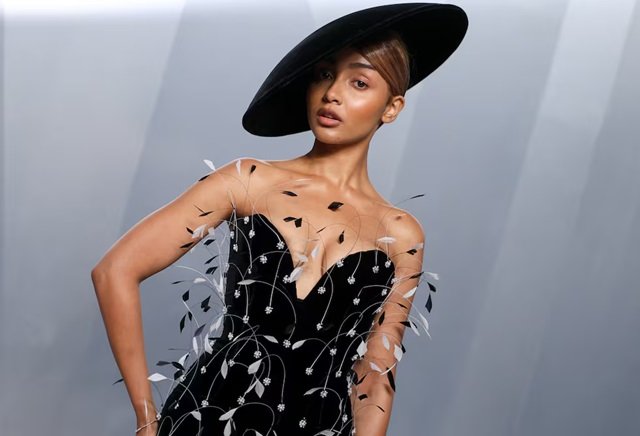
At just 25 years old, PinkPantheress has become one of the most distinctive figures in global pop culture, building an artistic identity that feels simultaneously nostalgic, futuristic, deeply British, and unmistakably Generation Z. In less than five years, the singer and producer has gone from anonymously posting songs online to commanding international festival stages and winning one of the United Kingdom’s most prestigious music honors.
According to a feature published by the Spanish newspaper El País, PinkPantheress now stands as perhaps the most recognizably British pop star of her generation — a title earned not only through her music, but through an entire aesthetic universe built around tartan patterns, hyper-fast electronic beats, camp visuals, and the calculating precision of what she herself describes as a “chess player’s mind.”
Her arrival as a global cultural force was fully displayed during her widely discussed appearance at the Coachella music festival in California earlier this year. On one of America’s most influential stages, PinkPantheress delivered a performance that blended electronic music, Y2K nostalgia, British cultural references, and theatrical visual styling in a way few contemporary artists could replicate. For many observers, it marked the symbolic moment when the United Kingdom unveiled a new ambassador for its evolving pop identity.
But Coachella represented only one stop in a much larger international campaign. The performance formed part of her first major world tour, which began a year earlier and continues through the summer, including a highly anticipated appearance at Barcelona’s Primavera Sound festival.
Behind the carefully curated image lies Victoria Beverley Walker, born in Bath, southwest England, in 2001. Long before she became PinkPantheress, Walker grew up in a family shaped by both intellectual rigor and cultural diversity. Her mother, originally from Kenya, worked as a caregiver, while her father taught statistics. Chess also occupied an important place within the family. Her aunt, Susan Lalić, is an internationally recognized chess champion and International Master.
Walker herself learned chess from a young age, and she has often compared her artistic career to a strategic match played several moves ahead. “If I wasn’t an artist, I would be a chess player,” she once wrote online. “Everyone in my family is.”
That strategic thinking would later define her approach to music and fame.
As a teenager, Walker studied piano and developed an obsession with producing music on her computer. She later moved to London to study film, hoping initially to become a film editor. But she quickly realized the film industry moved too slowly for her ambitions.
In an interview previously cited by El País from The Guardian, she admitted she always needed a “fast route” into creative work and understood early that music production offered quicker opportunities than cinema. If she could not excel completely at something, she explained, she did not want to pursue it at all.
That ruthless self-awareness became one of the defining features of her rise.
Like many artists from Generation Z, Walker first turned to TikTok, uploading snippets of unfinished songs alongside videos documenting her efforts to gain attention online. Some posts carried captions such as “Day 2 of sharing my music until someone notices.”
Someone did notice. Then millions did.
Within months, tracks like Just for Me exploded across TikTok and streaming platforms. Her sound — a rapid fusion of electronic music, garage, pop melodies, nostalgic early-2000s samples, and fragmented rhythms optimized for the attention span of social media audiences — immediately distinguished her from conventional pop stars.
Yet even as her music spread globally, Walker initially refused to reveal her face publicly. She feared that being perceived visually as a Black woman in electronic music would change how listeners judged her work.
“The public is less willing to listen to electronic music if it’s made by a Black woman,” she later admitted in comments quoted from The Hollywood Reporter.
As her popularity surged and record labels entered the picture, anonymity became impossible. Walker responded by constructing PinkPantheress not merely as a stage name, but as a fully separate persona. She deliberately built distance between herself and the public image that audiences consumed.
The name itself originated from her TikTok username, inspired by the classic Pink Panther cartoon character. But the broader aesthetic evolved gradually through music videos, fashion choices, and visual storytelling.
Her style became what she jokingly described as “young auntie” fashion — a modern reinterpretation of Y2K aesthetics featuring fitted jeans, tiny handbags, crop tops, and urban British styling. Online fans compared the look to a department store floor manager from the early 2000s, reinvented through the lens of internet culture.
As she released projects like To Hell With It and later Heaven Knows, PinkPantheress increasingly demonstrated an ability to combine visual identity with musical experimentation. She toured with major stars such as Olivia Rodrigo and contributed music to the global blockbuster Barbie, further expanding her international profile.
But according to El País, the true turning point arrived with her second mixtape, Fancy That. By then, PinkPantheress had fully embraced her role as an exaggerated, almost theatrical embodiment of Britishness.
Rather than imitate American pop trends, she leaned deliberately into distinctly British references — tartan fabrics, tea parties, telephone booths, regency aesthetics, and awkward humor infused with camp sensibility. She explained in interviews that her “Britishness” ultimately became her greatest artistic advantage.
“Whenever I move closer to an American sound, it feels less authentic to me than when I embrace something more British,” she said in comments quoted by El País from The Hollywood Reporter.
Tartan eventually became her visual signature. She incorporated the iconic Scottish pattern into outfits, makeup, and music videos with remarkable consistency. In one video, she merged Regency-era imagery reminiscent of Bridgerton with the chaotic youth culture of the British teen drama Skins. In another, she blended tartan styling with chess imagery, linking her family heritage directly to her artistic mythology.
Her visual creativity helped transform songs like Stateside into massive online successes, generating tens of millions of views and establishing her as one of the internet era’s most recognizable aesthetic architects.
Yet beneath the carefully stylized image, PinkPantheress repeatedly insists that her ambitions extend beyond personal fame. She has spoken openly about wanting to create space for young women interested in music production — especially those who feel excluded from an industry still heavily shaped by image expectations.
She has argued that female artists should not feel pressured to dance perfectly, maintain idealized body standards, or constantly perform traditional pop femininity in order to succeed behind the production desk.
That message gained symbolic weight earlier this year when PinkPantheress achieved a historic milestone at the BRIT Awards. She became both the first woman and the youngest artist ever to win the BRIT Award for Producer of the Year — a category historically dominated by male producers.
For many in the British music industry, the victory represented more than a personal achievement. It signaled a generational shift in how pop stars are created, marketed, and understood.
PinkPantheress has succeeded not by following traditional rules of celebrity, but by mastering the fragmented digital culture that shaped her audience. Like a skilled chess player, she appears to think several moves ahead, transforming internet virality into long-term artistic identity while maintaining complete control over her image.
In doing so, she has not only conquered pop music’s global stage. She has also become one of the clearest symbols of how Generation Z is redefining what modern stardom looks like.









