A lawyer for Elon Musk has launched a direct attack on the credibility of OpenAI chief executive Sam Altman during closing arguments in a closely watched California trial that could reshape the legal and financial foundations of one of the world’s most influential artificial intelligence companies. The case centres on allegations that OpenAI abandoned its original nonprofit mission in favour of a structure designed to enrich executives and investors, with Musk accusing the organisation of betraying its founding principles.
The dispute, heard in federal court, marks the culmination of a legal battle in which Musk is suing OpenAI, Altman, and associated parties for breach of charitable trust and unjust enrichment. Musk argues that the company, originally created to develop artificial intelligence for the benefit of humanity, effectively “stole a charity” by transforming itself into a profit-driven enterprise backed by massive commercial investment. He is seeking around $150 billion in damages, which he says should be directed to OpenAI’s nonprofit arm, and is also calling for Altman and OpenAI president Greg Brockman to be removed from their positions.
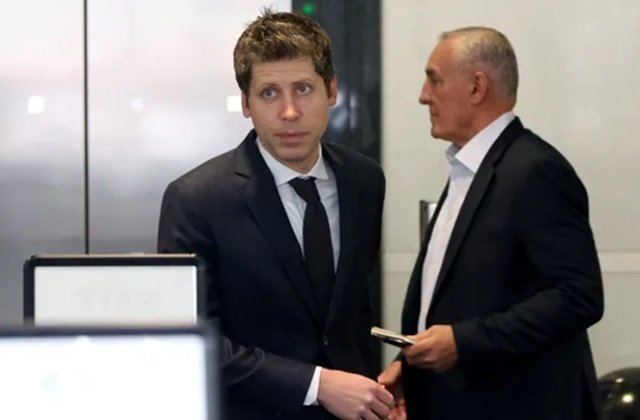
During Thursday’s closing arguments, Musk’s attorney Steven Molo told the jury that Altman’s credibility was central to the case, alleging that multiple witnesses had described the OpenAI chief executive as untrustworthy. Those witnesses reportedly included Musk himself, former board members, and former chief scientist Ilya Sutskever. Molo argued that Altman’s own testimony under cross-examination failed to provide a clear affirmation of complete honesty, framing this ambiguity as evidence of deeper concerns about his reliability.
At the heart of Musk’s argument is the claim that OpenAI misled him into contributing approximately $38 million during its early development, before shifting toward a for-profit model and accepting vast sums of investment from companies including Microsoft. Musk’s legal team alleges that this transformation represented a fundamental betrayal of the organisation’s founding agreement, which was intended to ensure artificial intelligence development remained safe and publicly beneficial rather than commercially controlled.
Molo also accused OpenAI of prioritising financial gain over safety considerations, arguing that the company’s leadership had enabled a structure that enriched insiders at the expense of its original mission. He further highlighted comments made by Greg Brockman regarding the value of his OpenAI stake, which he said illustrated a lack of restraint and ethical awareness among senior leadership. “The arrogance, the lack of sensitivity, the failure to account for just common decency is really, really abhorrent,” Molo told the court.
OpenAI’s defence team strongly rejected these claims, arguing that Musk’s lawsuit is built on selective interpretations and retrospective objections. Sarah Eddy, representing the company, told the jury that Musk’s case relied on “sound bites and irrelevant false accusations” rather than substantive legal grounds. She argued that Musk’s own testimony had been contradicted by other witnesses and documentary evidence, and said the lawsuit failed to demonstrate any enforceable breach of contract or trust.
Eddy further contended that by 2017, it was widely understood among OpenAI’s leadership, including Musk himself, that the organisation required far greater funding than a nonprofit model could sustain. She argued that the shift toward a for-profit structure was therefore a practical necessity rather than a betrayal. According to her, Musk’s opposition stemmed in part from disagreements over control, with OpenAI’s founders refusing to place advanced artificial intelligence systems under the authority of a single individual.
The defence also challenged Musk’s broader intentions, pointing to his attempts to integrate OpenAI into his own commercial ecosystem, including Tesla, and his later creation of the competing artificial intelligence company xAI. Eddy argued that these actions undermined Musk’s claim that his motivations were purely rooted in public benefit, suggesting instead a pattern of strategic rivalry within the rapidly evolving AI industry.
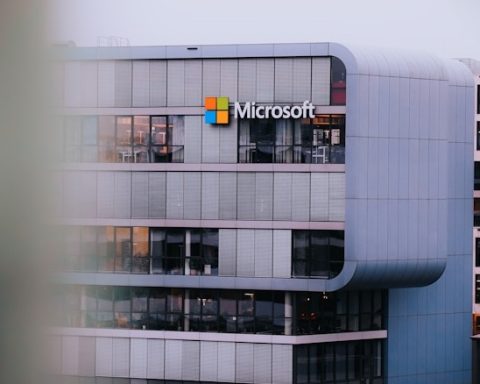
The case has also drawn in Microsoft, which has invested heavily in OpenAI over multiple funding rounds. Musk’s legal team alleges that the technology giant was aware of the company’s alleged breach of its founding principles and supported its transformation into a commercial entity. Microsoft, which has committed tens of billions of dollars to its partnership with OpenAI, has not independently responded in detail within the courtroom arguments, though its role remains a significant backdrop to the dispute.
Beyond the courtroom, the trial reflects broader global anxieties over the rapid expansion of artificial intelligence and its governance. OpenAI’s ChatGPT, launched in 2022, has become one of the most widely used AI systems in the world, but has also intensified debates over job displacement, misinformation, deepfakes, and the concentration of technological power in a small number of companies. The outcome of the case is therefore being closely watched not only as a corporate dispute, but as a potential precedent for how foundational AI organisations can evolve.
If Musk succeeds, the court could order significant damages and potentially restructure aspects of OpenAI’s leadership and governance. If he fails, the case may instead reinforce the company’s current hybrid model and strengthen its position as it moves toward a possible public listing that could value it at around $1 trillion. For now, the jury’s deliberations remain pending, with no clear timeline for a verdict and further proceedings expected if the case extends beyond the initial decision window.