What was expected to be a routine internal gathering of the Illankai Tamil Arasu Kachchi (ITAK) central committee in Vavuniya instead escalated into a deeply chaotic and confrontational episode that has sent shockwaves through Tamil political circles. Multiple senior party sources speaking to Jaffna Monitor have described a meeting that collapsed into personal clashes, ideological hostility, and allegations of misconduct among top-ranking members, raising serious questions about discipline within one of Sri Lanka’s most prominent Tamil political parties.
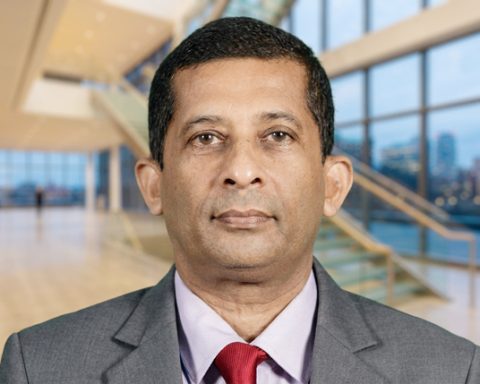
According to those present, the meeting quickly deteriorated after a dispute emerged over allegedly falsified minutes from a previous session. The disagreement reportedly escalated between senior party figure M.A. Sumanthiran and former Northern Provincial Council member Kurukularajah. Witnesses claim that tensions rose sharply when Sumanthiran, long projected in public as a calm and legally disciplined constitutional advocate, became visibly enraged during the exchange. Several attendees alleged that he pulled back a chair and moved aggressively toward Kurukularajah in what appeared to be an attempt to physically assault him. While the confrontation did not result in injury, participants described the moment as one of the most severe breakdowns of decorum seen within the party in recent years.
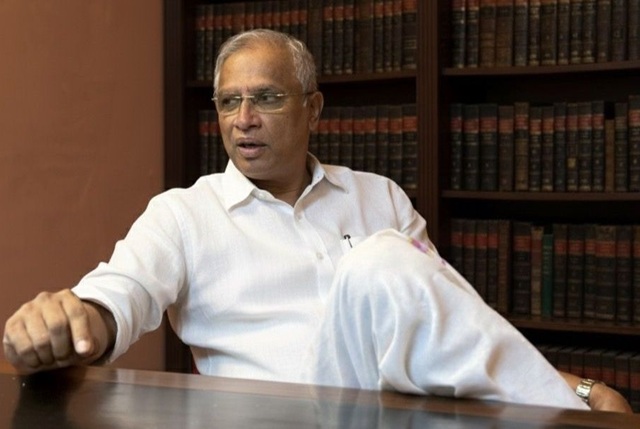
The situation intensified further when S. Sritharan, a sitting parliamentarian and long-standing internal rival of Sumanthiran, intervened in a manner that reportedly inflamed the already volatile atmosphere. According to attendees, Sritharan responded to the confrontation with highly charged and unparliamentary language, including phrases such as “மடையா, அடிடா பாப்போம்,” loosely translated as “You fool, hit me and let’s see.” His reaction, rather than de-escalating the situation, allegedly pushed the gathering closer to open disorder, requiring urgent intervention from other senior members of the leadership to prevent physical escalation between factions. Party officials were eventually forced to step in to separate individuals and restore a minimal level of order within the room.
Beyond the personal confrontation, the meeting also exposed deeper ideological and identity-based tensions within ITAK. A senior party member from the Trincomalee region reportedly raised a highly sensitive accusation, alleging that Sumanthiran had systematically sidelined Hindu members of the party while favoring individuals associated with the Methodist Church. The allegation carried additional weight due to Sumanthiran’s own Methodist background and his public role as a preacher within that religious tradition. Although the accusation was eventually contained within the meeting, sources told Jaffna Monitor that it highlighted growing unease among sections of the party regarding perceived religious favoritism, leadership inclusivity, and internal power consolidation.
Further controversy emerged when allegations were raised regarding the conduct of individuals aligned with Sumanthiran’s faction. One particularly serious claim involved party figure Peter Ilancheliyan, who is described by insiders as a close and loyal associate of Sumanthiran. Attendees alleged that he arrived at the central committee meeting in an intoxicated state, sparking outrage among some members who questioned how such conduct could be tolerated during a high-level political gathering. One attendee told Jaffna Monitor that such behavior would be unacceptable even in minor community settings, adding that its presence in a formal party decision-making forum reflected a troubling decline in internal discipline and standards.
The broader timing of the confrontation has added further emotional and political sensitivity to the incident. The events unfolded during Mullivaikkal Remembrance Week, a period in which Tamils across the world commemorate the mass civilian deaths during the final phase of Sri Lanka’s civil war. For many grassroots supporters and observers, the sight of senior Tamil political leaders descending into near physical confrontation during such a solemn period has been viewed as deeply distressing. Rather than projecting unity, reflection, or strategic coherence, ITAK’s leadership instead appeared consumed by internal rivalries, personal grievances, and competing ideological alignments at a time when symbolic solidarity is typically expected.
Against this backdrop, the party’s leadership has reportedly moved to contain the fallout by establishing a committee comprising the acting leader, administrative secretary, and treasurer to investigate allegations linked to internal disputes, including questions surrounding S. Sritharan’s voting conduct in relation to Constitutional Council decisions. Separate accusations circulating within party ranks include claims that he may have supported controversial appointments and facilitated liquor bar permits, allegations that remain politically sensitive and internally divisive. While none of the claims have been independently verified, senior sources indicated that some were considered serious enough to warrant formal internal review.
The unfolding crisis, as reported through sources cited by Jaffna Monitor, underscores a widening rift within ITAK’s senior leadership, where ideological differences, personal rivalries, and competing visions for political direction appear to be converging into open hostility. For a party long positioned as a central voice in Tamil nationalist politics, the internal breakdown revealed in Vavuniya is likely to intensify scrutiny over its cohesion, credibility, and capacity to present a unified front at a critical political moment in Sri Lanka’s post-war landscape.