


According to documents released and analyzed by the National Security Archive, the story of the Brothers to the Rescue shootdown did not begin in the skies over Cuba, but in a growing paper trail of warnings inside U.S. government agencies. Email exchanges and internal memoranda from the Federal Aviation Administration (FAA) show officials openly anticipating the possibility of a deadly confrontation long before it occurred. One FAA email, written in January 1996, described a “worst case scenario” in which Cuban forces would eventually shoot down one of the aircraft if provocative flights continued.
That prediction proved devastatingly accurate. On February 24, 1996, Cuban MiG fighter jets intercepted and shot down two unarmed Cessna planes belonging to the Cuban exile group Brothers to the Rescue (BTTR), killing four people. But as the declassified material shows, the trajectory toward that moment had been marked by repeated warnings, diplomatic tension, and growing concern inside the Clinton administration that the situation was spiraling out of control.
The FAA documents, made public through Freedom of Information Act requests and highlighted in a National Security Archive publication, reveal that officials across multiple agencies had flagged the risks posed by repeated unauthorized flights into Cuban airspace. These flights, conducted by BTTR under the leadership of pilot José Basulto, included not only surveillance but also symbolic political actions such as dropping leaflets over Havana calling for resistance against the Cuban government.
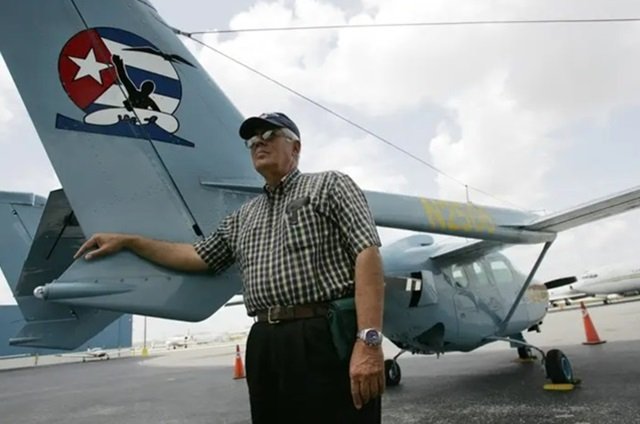
Inside the FAA, concerns escalated throughout 1995 and early 1996. Officials documented repeated Cuban protests over airspace violations and noted warnings from Washington policymakers that Cuba might eventually respond with force. A summary of internal meetings cited fears of “land-based gunfire” or aerial interception if the flights continued. Despite these concerns, regulatory enforcement remained inconsistent, and attempts to fully ground the operations repeatedly failed.
One of the most striking elements in the FAA record is the recognition that U.S. officials were aware of the danger but unable—or unwilling—to impose a definitive stop. Communications cited by the National Security Archive show that senior figures in the U.S. government, including White House and State Department officials, expressed concern that BTTR flights were crossing Cuban “red lines.” Some urged stronger intervention to prevent escalation, but bureaucratic divisions and legal limitations meant that warnings were often the strongest action taken.
A critical FAA email from January 22, 1996, captured the growing anxiety in stark terms. It noted that State Department officials had pressed for tighter controls on Basulto’s activities and warned that continued overflights could trigger a lethal response. The email explicitly referred to the possibility that Cuba would shoot down a plane and stressed the need for the FAA to be fully prepared for such an outcome.
Despite this, flights continued. Internal chronologies compiled by the FAA and later released through the National Security Archive show a pattern of repeated warnings issued to BTTR pilots, followed by continued violations of Cuban airspace. The agency even considered suspending pilot certifications but did not implement a permanent grounding order before the fatal incident occurred.
On the night before the shootdown, tensions reached a peak. According to records cited by researchers and detailed in the National Security Archive collection, a senior White House official responsible for Cuba policy warned that a planned BTTR flight the next day could finally provoke Cuban military action. That warning, like earlier ones, did not stop the mission from proceeding.
The following day, Cuban air defense forces engaged the two civilian aircraft after they entered restricted airspace north of Havana. Communications transcripts included in FAA records show the final exchanges between Cuban air traffic control and the BTTR pilots, in which the pilots acknowledged the risks but continued their flight path. Shortly afterward, Cuban MiG jets fired on the aircraft, bringing down both planes over international waters and killing all on board.
In the aftermath, U.S. authorities issued a formal “cease and desist” order against José Basulto and Brothers to the Rescue. The FAA directive, drafted after the incident, accused the group of operating aircraft in a manner “careless or reckless so as to endanger the lives or property of others.” It also permanently barred them from conducting flights within Cuban territorial airspace. The timing of the order, issued only after the deaths, underscored one of the central tensions revealed in the declassified record: enforcement had come too late.
Scholars cited in National Security Archive analyses have described the episode as a case study in escalating miscalculation between political activism, state sovereignty, and regulatory oversight. Internal documents suggest that both U.S. and Cuban authorities had repeatedly signaled their red lines, but neither side succeeded in preventing escalation once those boundaries were tested in practice.
The declassified record also highlights backchannel diplomatic efforts that preceded the tragedy. According to researchers, there were attempts to negotiate limits on BTTR operations in exchange for political concessions, including discussions involving Cuban leadership and U.S. intermediaries. These efforts ultimately failed to produce a binding agreement that could have halted the flights.
Today, the documents serve as a blunt reminder of how bureaucratic warnings can coexist with operational inaction. The National Security Archive’s release shows that key officials understood the risk of fatal escalation well in advance, yet the institutional mechanisms required to prevent it did not align in time to change the outcome.
The Brothers to the Rescue shootdown remains one of the most controversial incidents in post-Cold War U.S.–Cuba relations. It sits at the intersection of exile politics, Cold War legacy tensions, and the dangers of aerial confrontation in politically sensitive airspace. The newly declassified FAA files do not resolve those debates, but they do illuminate the moment when warning became reality—and when words like “worst case scenario” stopped being theoretical and became history.









