


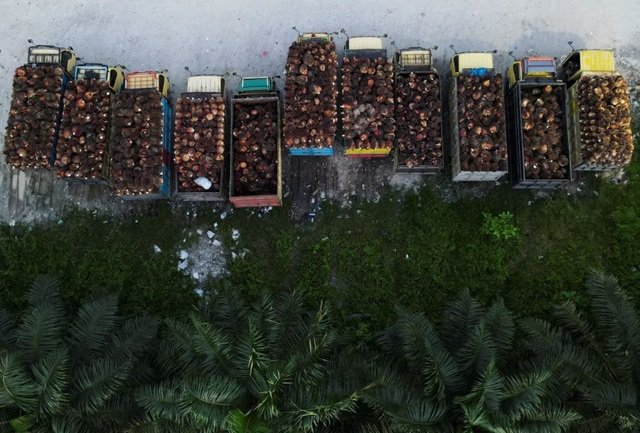
Indonesia has announced a sweeping overhaul of its commodity export system, moving to centralise shipments of key natural resources through a government-appointed state-owned entity, in a policy shift that has triggered sharp concern across regional commodity markets. The decision, unveiled by President Prabowo Subianto during a parliamentary address, will require exports of major commodities such as crude palm oil, coal and ferroalloys to be routed through a single designated export channel.
The move marks one of the most significant expansions of state control over Indonesia’s resource sector in recent years and immediately raised fears among analysts that producer margins could come under pressure. By introducing a state-controlled intermediary between exporters and international buyers, market participants warn that pricing flexibility could be reduced and commercial negotiations significantly altered.
Investors reacted swiftly to the announcement, with Indonesia’s benchmark Jakarta Composite Index falling about 2 per cent as commodity-linked stocks led declines. Companies across palm oil, coal and mining sectors were among the hardest hit, reflecting concerns that tighter export control could weaken earnings and disrupt established trade relationships. Analysts noted that the policy could shift Indonesia’s export system away from direct business-to-business transactions toward a more centralised model, potentially changing how prices are set in global markets.
Under the new framework, exporters will undergo a transition period from June to August 2026 before full implementation begins in September, after which all contracts and transactions must be processed through the state-backed export entity. Authorities say the system is designed to improve oversight, reduce under-invoicing and strengthen state revenue collection in a sector long criticised for weak reporting and profit shifting.
President Prabowo argued that Indonesia has lost substantial revenue over the past two decades due to under-invoicing practices in natural resource exports, estimating losses at around US$343 billion. Under-invoicing refers to declaring exports at lower-than-market values to shift profits abroad and reduce tax obligations. The government says centralising exports will improve transparency and ensure more accurate valuation of commodity flows.
However, market participants and analysts caution that the policy could introduce new layers of bureaucracy and operational friction. By placing a state entity between producers and global buyers, the system may reduce flexibility in contract negotiations and increase administrative costs, potentially compressing margins for exporters. Some analysts also warn that global buyers could become more cautious if they are required to transact through a centralised agency rather than directly with producers.
Commodity-linked stocks across the region reflected these concerns, with several major producers seeing notable declines following the announcement. The reaction underscores investor anxiety over increased state intervention in one of the world’s most important commodity-exporting economies, particularly in sectors where Indonesia holds dominant global supply positions such as palm oil and coal.
Policy observers note that the new export agency, expected to be placed under a state-backed investment structure, signals a broader shift in how Indonesia manages strategic resources. While the government frames the reform as a way to improve transparency and curb illicit financial flows, critics argue it could also concentrate pricing power in state hands and reshape global commodity trading dynamics.
Uncertainty remains over how existing long-term supply contracts will be treated under the new system, adding another layer of concern for both producers and international buyers. Analysts say markets are likely to treat the announcement as a significant policy risk until greater operational details are clarified, with investors closely watching whether the reform ultimately enhances efficiency or imposes lasting constraints on Indonesia’s commodity trade.










