


by Durga
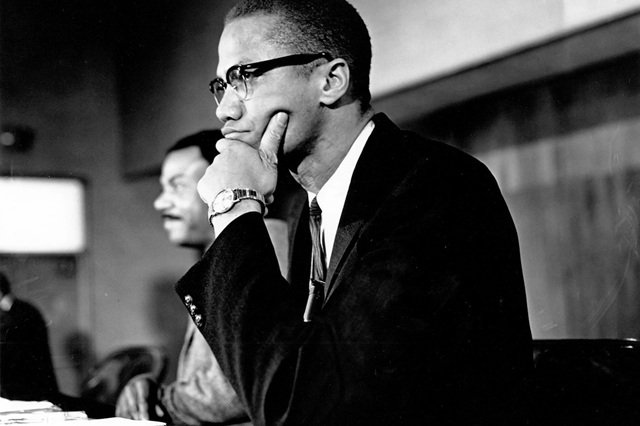
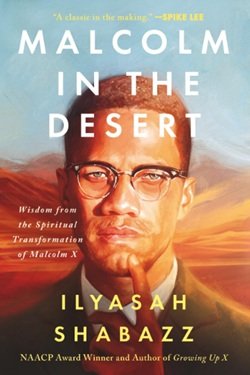
The book Malcolm in the Desert: On Pilgrimage, Transformation, and Sacred Disruption is a bold and uneasy hybrid: part spiritual commentary on Malcolm X’s life, part philosophical treatise on transformation, and part political reinterpretation of race, violence, and liberation. It attempts nothing less than a rereading of Malcolm X through the lens of pilgrimage and metaphysical awakening. Yet this interpretive ambition produces a persistent tension between illumination and abstraction. The book is at once intellectually expansive and politically contentious, offering a vision of transformation that is compelling in tone but often unstable in its handling of historical struggle. It asks whether Malcolm X should be understood primarily as a revolutionary thinker or as a spiritual traveller whose political radicalism was only one phase of a deeper interior unfolding.
At its conceptual centre lies a philosophy of transformation grounded in voluntary rupture. “The journey begins the moment you choose to make the journey… Once we have made the choice to fully engage in the practice of pilgrimage, we are almost immediately confronted with a towering proposition to embrace uncertainty.” This framing immediately shifts agency inward, situating historical and political experience within a model of conscious initiation. The implication is that change is less imposed by external conditions than summoned by internal readiness. Yet this emphasis on choice sits uneasily alongside the material histories of coercion, racial violence, and structural domination that the book itself later documents. The result is a conceptual tension between existential agency and historical constraint that is never fully resolved.
This tension becomes sharper in the book’s sustained effort to reinterpret suffering as meaningful disruption. “Sacred disruptions break us out of routine and comfort… they are divine envoys compelling us to step beyond the boundaries of a world that can no longer contain who we are becoming.” Here, suffering is not merely endured but elevated into a kind of spiritual pedagogy. Similarly, “Lostness is not a void or even necessarily a problem… It can loosen the grip of our old habits and put us into direct contact with a vibrant wellspring of aliveness and creativity.” The rhetorical power of such claims is undeniable, yet their philosophical cost is significant. By transmuting structural harm into existential opportunity, the text risks dissolving the specificity of historical violence into a generalised grammar of growth.
The book’s treatment of grief is particularly revealing in this respect. “Grief is one of our greatest allies in the practice of surrender and on the journey of pilgrimage… It reveals what truly matters to us.” Again, grief is reframed as epistemic resource rather than simply affective response. “Grief is what holds and supports us in a process of surrendering to our lives exactly the way they are—with all of the trauma and despair and disappointment and rage.” While this reframing can be read as an attempt to dignify emotional suffering, it also subtly reorients grief away from its political dimensions. “We have to grieve those losses to be fully present for what is right here and right now… We have to make friends with grief.” The repeated insistence on reconciliation with pain risks blurring the line between acceptance and resignation.
This inward turn extends into the book’s broader critique of political conflict. “The armed rebel is trapped in the binary of oppressor versus oppressed… It reproduces the same violent logic that necessitated its existence.” This is one of the most provocative claims in the text, and also one of its most controversial. It suggests that revolutionary violence is structurally self-defeating, replicating the logic it seeks to overcome. Yet the argument remains largely philosophical rather than historically grounded, and it struggles to account for the asymmetries of power that generate such violence in the first place. Similarly, “No bloody revolution will ever save us—not really. Not when we step into the view of oneness, shared ecosystems, and cosmic unity.” The appeal to unity here risks functioning as a moral horizon that overrides political analysis.
The book’s reconstruction of Malcolm X’s intellectual evolution is both its most engaging and most contentious intervention. “White people are the devil was an important truth at one point in Malcolm’s life… And yet, the Hajj revealed something far more expansive.” This framing positions Malcolm’s ideological shifts as stages of spiritual expansion rather than political recalibration. “In our cultural memory, Malcolm’s continued spiritual awakening… tends to be glossed over.” The text explicitly challenges dominant historiographies that fix Malcolm within militant nationalist imagery, arguing instead for a more fluid narrative of transformation. Yet this interpretive generosity can also function as a softening mechanism, one that risks detaching Malcolm’s earlier rhetoric from its specific historical context of racial terror and political urgency.
The book is at its strongest when it remains anchored in lived experience rather than interpretive abstraction. “For weeks in prison, Malcolm forced himself into the ‘praying-to-Allah posture’… overwhelmed with rage and contempt but also guilt and shame.” These moments of embodied struggle resist philosophical generalisation and offer a more grounded sense of psychological transformation. Likewise, ritual practices are rendered with material sensitivity: “Putting on the simple white cloth garment… was a profound symbolic gesture… a renunciation of all worldly distinctions.” Here, transformation is not an abstract ideal but a bodily discipline, enacted through repetition and constraint.
Yet even these grounded moments are frequently absorbed into broader metaphysical claims. “Discipline was less about pushing ourselves with force, and more about creating rhythms and structures that keep what matters most close to the heart.” Such formulations drift toward universalisation, transforming situated practices into general principles of being. This movement from specificity to abstraction is one of the book’s defining stylistic and intellectual tendencies, and it contributes to both its elegance and its instability.
The book’s engagement with race and empire introduces a more forceful political register, but it remains entangled with its overarching spiritual framework. “The conversation about Black life is always more incisively a conversation about Black death—about what has been culturally sanctioned, about the disposability of Black bodies.” This is one of the text’s most incisive formulations, directly confronting the necropolitical structure of racial order. “For all of its potential, America has always been and continues to be a domination story at its core.” Yet even here, the analysis is gradually reabsorbed into a discourse of universal awareness that risks displacing structural critique with ethical interiority.
The same tension appears in its discussion of colonial violence and global capitalism. “The West, through covert operations, economic pressure, and military intervention, ensured that Congo’s independence existed in name only.” The historical clarity of this statement is striking, but its analytical force is again refracted through a broader metaphysical lens in which liberation becomes primarily a function of consciousness. “Capitalism is a story of survival, where access to basic needs is tied to economic output.” While this critique is familiar within political economy, the book tends to translate systemic critique into psychological diagnosis, emphasising disconnection and reactivity over institutional analysis.
Forgiveness and compassion are similarly reconfigured. “Forgiveness is not about sanctioning behavior; it’s about allowing ourselves to be free.” This is a powerful reframing that foregrounds ethical self-determination. Yet it is complicated by claims such as “Holding on to anger is like drinking poison and expecting the other person to die.” Such formulations, while rhetorically effective, risk moralising emotional responses to injustice in ways that obscure the legitimacy of anger as a political force. “Compassion is born in the depth of suffering… It helps us to not just see the real nature of suffering but to also understand what an appropriate response might be.” Even here, compassion is subtly redirected from solidarity toward interpretation.
Ultimately, the book culminates in a radical assertion of individual responsibility. “You are alive right now, and thus divinely appointed to become the person who can meet the overlapping global crises of our time—because you’re here, and no one else is coming.” This is both its most empowering and most problematic claim. It elevates agency to a near-metaphysical imperative while simultaneously risking the erasure of collective structures and historical constraints. The promise is existential awakening; the danger is political simplification.
What remains after reading is a text of genuine philosophical ambition, but also of unresolved contradictions. It seeks to honour Malcolm X by expanding his legacy into a universal theory of transformation, yet in doing so it risks dissolving the very historical density that made his politics so urgent. Its greatest achievement is to reframe Malcolm not as static icon but as evolving subject; its greatest limitation is that this evolution is ultimately absorbed into a spiritual grammar that smooths over the harder edges of conflict, power, and material struggle. The result is a work that is intellectually stimulating, ethically sincere, and politically ambivalent—an interpretation that opens Malcolm’s legacy to new forms of meaning, but not without cost to its historical sharpness.









