


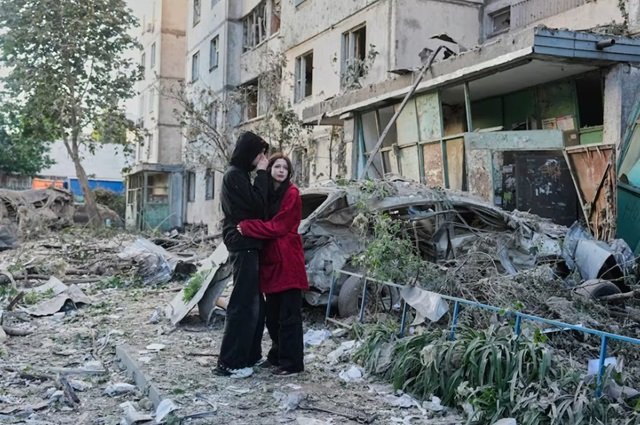
The war in Ukraine is entering what analysts describe as a more volatile and ideologically charged phase, with Russia combining intensified military operations against Ukrainian territory with increasingly aggressive rhetoric directed at Europe. According to an analysis published by the Spanish newspaper El País, senior figures in Moscow are framing the conflict not only as a struggle against Ukraine but as part of a broader confrontation with the European Union, which Russian officials increasingly compare to historical adversaries such as Nazi Germany.
The article describes a growing sense of strategic uncertainty inside Russia. Despite months of heavy fighting, the Kremlin has not achieved decisive breakthroughs on the battlefield, particularly in eastern Ukraine and along key occupied corridors linking Russian territory to Crimea. While Russian leadership continues to project confidence in an eventual victory, the military reality on the ground suggests a prolonged and costly war with no immediate strategic resolution.
President Vladimir Putin has repeatedly suggested that Russia is making progress and approaching an eventual conclusion to the conflict. However, the article notes that these claims contrast sharply with battlefield developments, where Ukrainian resistance, supported by Western technology and intelligence systems, continues to complicate Russian advances. The war, now in its fifth year since the 2022 invasion, has become a prolonged attritional conflict rather than the rapid campaign initially envisioned by Moscow.
A key concern highlighted by El País is the economic and structural strain on the Russian state. According to internal warnings cited from financial authorities, military spending now accounts for approximately 40 percent of the national budget, raising questions about long-term fiscal sustainability. Officials within Russia’s financial institutions have reportedly cautioned that maintaining this level of expenditure could become increasingly difficult without further economic or societal mobilisation.
The article also describes preparations within Russia for potential escalation, including the possibility of a new wave of mobilisation. After the politically costly mobilisation of 2022, the Kremlin has sought alternative recruitment methods, such as offering high financial incentives for доброволь volunteers and expanding prison recruitment. However, these sources of manpower are increasingly limited, prompting debate within Russian political and military circles about whether a broader compulsory mobilisation may eventually be unavoidable.
At the same time, the Kremlin has reportedly strengthened internal control mechanisms in anticipation of continued conflict. Measures include tightening border controls and developing the capacity to restrict internet access while maintaining core government services. These preparations, according to the analysis, suggest that Russian authorities are laying the groundwork for a more intensive phase of societal mobilisation if the conflict escalates further.
Alongside military developments, rhetoric from senior Russian officials has become increasingly confrontational toward Europe. Foreign Minister Sergey Lavrov and other high-ranking figures have drawn historical parallels between the European Union and Nazi Germany, while warning that European states are already indirectly engaged in the conflict through their support for Ukraine. Some Russian officials have gone further, suggesting that European countries could themselves become legitimate targets in the event of escalation.
The article, drawing on El País reporting, also highlights statements from Russian political and security figures that depict the West as actively waging war against Russia. These narratives are reinforced through state media and official communications, which increasingly frame the conflict as a civilizational struggle rather than a regional war. Such rhetoric, analysts warn, serves both domestic political purposes and strategic signalling to foreign governments.
Within Russia’s strategic community, opinions differ on the future trajectory of the war. Some analysts argue for escalation, including deeper strikes against European-linked infrastructure and even hypothetical nuclear scenarios, while others suggest a more limited approach focused on securing territorial gains and negotiating constraints on Ukraine’s military alignment. Despite these differences, there is broad agreement that the conflict is far from resolution and may persist for years.
El País notes that expectations in Moscow regarding potential diplomatic breakthroughs involving the United States have largely faded. Early hopes that a change in U.S. leadership could produce a more favourable negotiating environment for Russia have not materialised in the way the Kremlin anticipated, leaving Moscow with fewer diplomatic exit options and reinforcing hardline positions within the Russian state.
Military analysts cited in the report suggest that Russia’s long-term strategy increasingly depends on sustained pressure, resource mobilisation, and the expectation that Ukraine may eventually weaken under prolonged strain. However, they also acknowledge that Western military and technological support has significantly raised the cost of the war for Russia, complicating any straightforward path to victory.









