
Another of the five police stations captured by the rebels during the April 1971 uprising was the Warakapola Police Station in the Kegalle District. The rebels who captured the Warakapola Police Station controlled the Aranayake, Dedigama, Pindeniya, Bulathkohupitiya, Mawanella, Warakapola, and Rambukkana police areas for several days. Several police stations were destroyed there.
The rebel leaders throughout the country had no means of consolidating the power they had gained in areas where they had temporarily taken control. When the security forces entered such controlled areas, only random ambush attacks were carried out. There were no reports of any attempt to confront the military forces in any district. It took the security forces several days to consolidate their control in many districts, including Kegalle, and to remove the roadblocks that had been set up to obstruct traffic. Lieutenant Colonel Cyril Ranatunga was the military coordinator of Kegalle District during the April 1971 uprising.
Dedigama Wilson
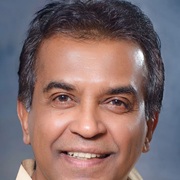
The first JVP member in Kegalle District was Kegalle Wilson Dedigama. The JVP was founded on 14 May 1965, and he was among its ten founders. Born on 16 November 1941 in Ruwanwella, Wilson joined the Hayleys Company in Colombo as a labourer in 1962.
Wilson Dedigama told the writer at his home that he had maintained a close relationship with Wijeweera until 1968. It was through his mediation that a secret meeting of 20 people was held in Thimbirigasyaya to transfer power to Wijeweera from Shanmugadasan’s Youth Union.
Wilson’s brother, Manathunga, was also killed in Yakella during the April uprising. Wilson also participated in the unsuccessful attack on Karawanella Police Station. Since the JVP has historically been an organization that drew much of its strength from newcomers, when younger activists than Wilson came to prominence in the late 1970s, veterans like Wilson were pushed aside and became disillusioned.
Socialist Union
The Kegalle District leader of the JVP uprising was Sarath Wijesinghe, a resident of Paragammana. The district deputy leader was Wasantha Dissanayake, alias Podi Dissanayake, who was born in Perale, Monaragala. Both were undergraduates at the University of Peradeniya.
The 1965 president of the Socialist Union of the University of Peradeniya was Gampola Bertie Gangadhara, while the 1966 president was Passara D. M. P. B. Dissanayake.
At that time, its secretary was Panadura Nihal Dias. After Nihal Dias was removed from organizational activities, Sarath Wijesinghe became its leader in 1968.
Later, through him, Rohana Wijeweera succeeded in gaining control of the Socialist Union for the JVP in 1969. Sarath Wijesinghe was a very popular leader and a skilled organizer. He was introduced to Wijeweera in Kegalle by Aragamage Pathmasiri Weeraratne, alias E. P. Weeraratne, a student of Maharagama Teachers’ College and a friend of Loku Athula, a resident of Mawanella.
The frontline female activists of Kegalle District were Leelawathi Senaratne, Vinitha Fernando, Sujatha Hadagama, Hemamali Wijesinghe, alias Juliet of Dickwella, Mallika Kumari of Bulathkohupitiya, Parape Karuna, and Leela. In addition, many young women from Kegalle District also joined the rebellion.
Ariya in Thulihiriya
The most important attacks in Kegalle District were the assault on Warakapola Police Station and the Thulihiriya military detachment. The leader of these attacks was M. P. Ariyadasa, alias Thulihiriya Ariya. A graduate of the University of Peradeniya, Ariya joined the JVP in 1968 and became a full-time member in 1970.
Dorawaka Gunathunga, Mahene Gunapala, Kohombadeniye Somasiri, and a group of others participated in the attack on Warakapola Police Station.
After the defeat of the rebellion, Thulihiriya Ariya, who retreated to Wilpattu, was arrested in Piliyandala in 1972 and was later released by mistake in Anuradhapura in December of the same year. Ariya, who later returned to Wilpattu, was arrested in Polgahawela on 8 October 1975. A police statement stated that he had been cultivating chena land in Namal Oya.
Aranayake Attack
The leader of the Aranayake rebellion was Galabadaralage Ananda Bandara Athurapana. He was born on 2 November 1944 in Athurapana. He was the eighth child in a family of ten.
Ananda studied at Mawathagoda Central College (now Rivisanda Central College), where he also served as the chief student leader. A graduate of Vidyodaya University, he also served as the President of the Kegalle District Graduates’ Association in 1970. He was a teacher at Ussapitiya Sri Sudharmalankara Pirivena.
Ananda also participated in the attack on Aranayake Police Station. The police were later forced to withdraw from Aranayake for tactical reasons. Athurapana was shot dead during an attack by the army near Mayurapada College, Mawanella, on 10 April 1971.
Mawanella Attack
Ilukgoda Senaratne, alias Iluk, of Mawanella, was arrested in connection with a bank robbery in Okkampitiya along with Loku Athula and was later released on bail.
The leader of the April rebellion in Mawanella was Upali Indusena. After he was arrested by the police on 25 January 1971, leadership in Mawanella was handed over to Balasuriya and Podibanda.
After the army stormed Meddewala village on 6 April 1971, Balasuriya took refuge in the forest. Podibanda became inactive.
The next combat leader of the rebellion in Mawanella was Muhammadiram Ralalage Dharmathilaka Bandara. He was born on 31 March 1953.
The Mawanella rebels established a camp in a government bungalow in the Anagama Colony of Mawanella as their headquarters. After a clash with the army near Mayurapada College in Mawanella on 10 April 1971, the group retreated and dispersed.
The License Camp
Following the counterattacks launched by the security forces after the police attacks of 5 April in Kegalle District, the rebels established several camps on the instructions of their leaders. The License Camp was the main one.
Several other camps were established in Dorawaka, Thulihiriya, Rambukkana, Parape, Bulathkohupitiya, and several other locations. The leaders of those camps were Thulihiriya Ariya, Parape Thilak, and Justin Wijesinghe, respectively.
Justin’s elder brother was Sarath Wijesinghe. Justin was also killed in a military gun battle in Narammala in early May.
Sarath Killed by a Rebel
Kegalle District leader Sarath Wijesinghe travelled from Thulihiriya to Bulathkohupitiya on 6 April with the intention of launching a major attack on Kegalle Police Station.
Sarath Wijesinghe was killed on 7 April at Gatiyamulla School when his gun was accidentally fired by another rebel, Nimal Gladius, a resident of Yatiyanthota.
The incident occurred when Sarath Wijesinghe was passing by while Seneviratne, a rebel leader, was teaching a group of rebels, including Nimal, how to use a firearm. Sarath’s younger brother, Gnanathilaka Wijesinghe, was also present at the time.
Sarath’s death was a major blow to the future of the Kegalle uprising.
By this time, Nimalasiri Jayasinghe, alias Loku Athula, had joined the Kegalle group, but several district leaders had emerged within the rebellion, surpassing his leadership role.
After Sarath Wijesinghe was unexpectedly killed, leadership of the Kegalle group passed to activists including Kagama Upasena, Wasantha Dissanayake, and Udeni Bandula. However, none of them could fill the gap left by Sarath Wijesinghe’s leadership.
Udeni Bandula told the writer that the License Camp also published three issues of a newspaper printed using lithographic methods.
Retreat to Wilpattu
The Kurunegala District leader of the rebellion, Samaratunga Devage James, alias Bola Samare, told the writer that on 25 April he and Samson visited the License Camp in Kegalle and presented a proposal to retreat to Wilpattu to its leaders, including Wasantha. Later, arrangements were made for the retreat.
Bola Samare told the writer that the Kurunegala rebels were camped in Pallekele at that time and that they had also decided to retreat to Wilpattu.
The group led by Bola Samare included several female rebels, including Sujatha Hadagama, Dickwella Leela, Dharma, Susila, Pushpa, Piyaseeli, and Dhammika. The group numbered about 150 people, and the deputy leader was Wasantha Dissanayake.
The rebels from Kegalle District, on their way to Wilpattu, first arrived at Mampita Temple in Nelumdeniya. A military attack was launched there. They then stayed at Rangwala Ashokaramaya for about three days before retreating to Hakbelikanda Aranya.
Hakbelikanda had to be reached by crossing the Ma Oya. From Hakbelikanda, they travelled to Welikambura in Mawanella and then to Narammala.
N. K., who joined the JVP while studying at the University of Peradeniya, Udeni Bandula was born on 6 March 1948 in Laxapana, Hatton. He was the second child in a family of eight.
Udeni, who was a frontline activist in the group that later retreated to Wilpattu, was once a well-known environmentalist. He was also a lawyer who worked for consumer rights and was a father of two children.
Several people died in military attacks in Wilpattu. The most prominent among them was Sujatha Handagama, a student at the University of Peradeniya. She was killed by military gunfire at Medagoda, Narammala, on 13 May 1971.
Hemamali Wijesinghe was also seriously injured in a gun battle in Puttalam on 5 December 1971.
Another person who died in Wilpattu was Ananda Gamage, who worked at the Borella Medical Research Institute. His elder brother, Egoda Gamage Premadasa, alias Postal Gamage, was a Panadura-born trade union activist during the 1971 uprising.
Gamage told the writer that the family patriarch, E. G. Karunadasa, was also arrested on 24 June 1971 for stealing millions of rupees from the Weligama Bank to raise funds to reorganize the JVP, which had collapsed after the April 1971 uprising. He was imprisoned for six years and released on 12 November 1977.
Wilpattu Camps
The rebels from Kegalle and Kurunegala Districts retreated to the Wilpattu Sanctuary, while a group from Anuradhapura District retreated to forests near Dambulla and Polonnaruwa.
The rebels in the Southern Province fled to the Sinharaja area. The most difficult retreat was the journey from Kegalle to Wilpattu. About 200 rebels initially joined the retreat, but only about 30 remained.
There were also rebels in another part of the Wilpattu Sanctuary. Eventually, about 68 rebels belonging to the groups of Nandana Marasinghe, Anuradhapura Kaluwije Somapala Garusinghe, and Bola Samare gathered together in Wilpattu.
Although the rebels were positioned in the jungle like guerrilla fighters, they were limited to attacks on security forces and their positions.
Wijeweera, who was imprisoned at the time, denied that he was involved in jungle activities, while Nandana Marasinghe publicly told rebels in the Kantale jungle that he had been instructed to teach monkeys in the jungle.
Hundreds Die in Kegalle
An official government statement issued on 21 April 1971 stated that 29 rebels had been killed in clashes in the Kegalle area.
Another government report on 22 April stated that 99 rebels had been killed in the Rambukkana, Galigamuwa, and Warakapola areas. Of them, 30 were in Kegalle and 25 were in Karawanella.
The Air Force also reported that the Thulihiriya Textile Factory and Tholangamuwa Central College were bombed on the same day.
During the first four days of May 1971 alone, 3,978 April rebels surrendered to the government across the country. The largest number, 396, surrendered in Kegalle District.
Patrick and George Nidahas
The Pindeniya divisional secretary of the Kegalle District rebellion was Patrick Wijaya Fernando of Thudugala, who belonged to a leftist family. His father was a local doctor and a former Deputy Mayor of Kegalle.
His sons, Wimal, Sarath, and Patrick, all born in Moratuwa, joined the 1971 rebellion. After completing his education at Kegalle College, Patrick joined the JVP in 1968 while studying at Gampaha Ayurveda College and became a full-time member in 1969.
Patrick, who was part of the group that retreated to Wilpattu on 8 April 1971 under the leadership of Bola Samare, was arrested by the military at Bambaragala on 21 April 1971 after being shot.
The Criminal Justice Commission indicted Patrick Fernando, Warakapola George Perera, and Kegalle Arangala Rahula for the deaths of four people, including a Grama Sevaka, caused by Kegalle rebels.
Patrick Fernando and Warakapola Rajapaksa Pathirannihelage George Perera, who were convicted, were sentenced to life imprisonment. Rahula was also sentenced to three years’ imprisonment. They were released after the abolition of the Criminal Justice Commission.
April Heroes Commemoration Begins in Kegalle
The JVP had arranged to hold several meetings across the country to commemorate the 5 April 1971 uprising.
Wijeweera was already in prison at that time, and the main speaker at these commemorative meetings was General Secretary Upatissa Gamanayake.
The meetings were held from 5 April to 11 April 1977 at the Kegalle, Kurunegala, Anuradhapura, Polonnaruwa, Matara, Galle, and Colombo City Halls.