by Our Correspondent in Geneva
A series of explosive allegations surrounding former Eastern Province political aide Azad Maulana have emerged from a detailed account provided by Mohamed Haris, a Sri Lankan citizen living in Switzerland, who claims he became directly involved in Maulana’s journey from Sri Lanka to Europe in 2022.
Azad Maulana later became one of the central figures in the Channel 4 documentary that examined allegations surrounding the Easter Sunday attacks in Sri Lanka, where claims were made about possible links between elements within Sri Lanka’s security establishment and the coordinated bombings.
However, during testimony attributed to the wife of Zahran Hashim’s associate, Hadiya, references were made to an individual identified as “Abu Hind” from India, who was allegedly in regular communication with Zahran and played a significant role in the planning and direction of the attacks. These claims contributed to questions raised by sections of Sri Lankan society over whether external actors may have had involvement in the attack, although such allegations remain disputed and have not been conclusively established.
According to sources cited in connection with Maulana’s earlier statements to international forums, including testimony submitted before the United Nations, Maulana had previously referred to what he described as the role of Indian intelligence agency R&AW in Sri Lanka and alleged contacts between intelligence officials and Sri Lankan political figures, including former minister Basil Rajapaksa.
However, these claims and details did not feature prominently in the Channel 4 documentary, which focused primarily on allegations involving Sri Lankan military intelligence. The documentary’s director later acknowledged that the production relied heavily on Maulana’s testimony and that several of the claims presented could not be independently verified. The conflicting narratives surrounding Maulana’s statements, his role in international investigations, and the allegations involving multiple intelligence networks have continued to fuel debate over the unresolved questions surrounding the Easter Sunday attacks.
Meanwhile, Haris alleges that Maulana’s arrival in Europe was not simply an attempt to seek political asylum but was connected to a wider international operation involving intelligence contacts, confidential documents, legal networks, and a multi-million-dollar financial arrangement. The claims, however, have not been independently verified.
According to Haris, he had little knowledge of Maulana before their contact began. He said that while living in Sri Lanka, he had only heard Maulana’s name in connection with his role as under-secretary and media spokesperson for Sivanesathurai Chandrakanthan, better known as Pillayan. Haris said he had never met Maulana personally and had no political involvement or relationship with him before the events described.
Haris said that changed in January 2022 when he began receiving repeated WhatsApp calls from an unfamiliar number. Initially ignoring the calls, he eventually answered after the number repeatedly appeared on his phone.
The caller, according to Haris, identified himself as Azad Maulana.
Haris said he was surprised and asked why Maulana, someone he had never personally interacted with, was contacting him. According to his account, Maulana said he had obtained Haris’s number through a prominent political figure who had close connections with him.

The request, Haris said, was direct: Maulana wanted assistance in seeking asylum.
Haris told Maulana that asylum applications required legal grounds and that simply leaving Sri Lanka because of a political disagreement would not automatically qualify a person for protection. According to Haris, Maulana said he had a serious dispute with Pillayan and wanted to leave the country.
The two continued communicating for around 10 days before Maulana travelled to Europe, Haris said.
During those conversations, Haris said he questioned Maulana about his travel arrangements and whether he had permission to enter Switzerland. According to Haris, Maulana said he did not possess a Swiss visa but had obtained a French-issued Schengen visa after paying approximately 2 million Sri Lankan rupees.
Haris said he requested a copy of the visa through WhatsApp and checked whether it allowed entry into Switzerland. According to his account, the document was a valid Schengen visa, allowing travel within the region.
Maulana eventually travelled from Sri Lanka to France through Qatar Airways, arriving at Charles de Gaulle Airport in Paris, according to Haris. He said he and another person drove from Switzerland to Paris to collect him and bring him back.
Haris claimed that upon arrival, Maulana expressed concerns about using his own credit cards or identification documents because he feared his movements could be monitored. According to Haris, Maulana asked him to use his financial accounts temporarily for accommodation and expenses.
Haris said Maulana later settled all payments and arrived with approximately US$70,000 in cash.
The relationship between the two men, according to Haris, became more complicated after Maulana began discussing his asylum strategy and his concerns about various international actors.
Haris claimed that Maulana rejected applying for asylum in France because he believed Pillayan had strong connections there through former associates. Instead, according to Haris, Maulana focused on Switzerland as his destination of choice.
During preparations for an asylum application, Haris said Maulana discussed his connections with international human rights figures and other contacts. He claimed Maulana referred to Meenakshi Ganguly, South Asia Director of Human Rights Watch, and a person named Chris associated with Nonviolent Peaceforce.
However, Haris said those contacts did not immediately materialize after Maulana’s arrival, leading him to introduce Maulana to a legal team familiar with asylum cases.
According to Haris, lawyers examined Maulana’s claims and explained that Switzerland’s asylum process required evidence of a direct and credible threat that met legal standards.
Haris said the legal advisers explained that a conflict with a political group or paramilitary organization alone would not automatically establish grounds for asylum unless the threat met the requirements under Swiss law.
During those discussions, Haris said Maulana raised additional claims involving conflicts with senior Sri Lankan officials and wanted those allegations included in his asylum application.
Haris said a detailed legal statement was prepared, translated, and reviewed as part of the asylum process. He alleges that the contents of that statement later reached outside actors.
According to Haris, journalist Martin Schüepp became involved during this period and introduced Maulana to another legal team. Haris claimed that after Maulana signed new powers of attorney, control of his legal process shifted away from the original lawyers.
He further alleged that Maulana was later pushed toward providing an exclusive interview to Channel 4 as a condition connected to the new arrangement.
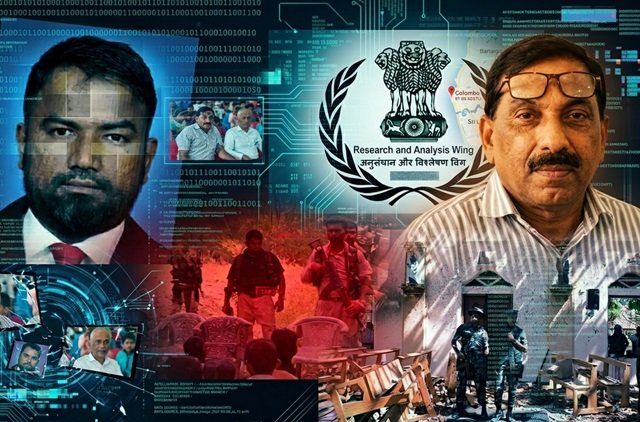
The most serious allegations in Haris’s account relate to claims involving Indian intelligence agency Research and Analysis Wing, commonly known as RAW, and a large financial transaction.
Haris alleges that Maulana told him a senior RAW official had contacted him and claimed that his safety was a priority. According to Haris, Maulana was told that Indian intelligence personnel already knew where he was staying in Switzerland.
Haris said Maulana became frightened after receiving that contact.
He also claimed that Maulana carried a bag containing sensitive documents and that Maulana told him the documents included confidential information related to the Sri Lankan government and portions connected to the Easter Sunday bombings.
According to Haris, Maulana said certain actors wanted access to those documents and that discussions were taking place over their release.
Haris further alleged that Maulana received a proposal involving a protected relocation arrangement, including a new identity, new passports, and security guarantees.
He said the situation changed when another offer emerged involving representatives connected to a Danish businessman who lost family members during the Easter Sunday attacks.
According to Haris, Maulana claimed that representatives of the businessman offered money in exchange for access to documents. Haris said Maulana initially mentioned an offer of US$15 million and later claimed that a settlement worth US$34 million had been reached.
Haris alleges that the money was transferred into a Dubai bank account and claims the transaction involved RAW-linked individuals.
These allegations have not been independently confirmed.
Following the alleged transaction, Haris described what he said was an attempt to remove Maulana from Switzerland immediately.
According to Haris, Maulana was instructed to leave the country and was told arrangements had been made for him to travel through Italy before boarding a private aircraft.
Haris claimed Maulana attempted to delay the move and later contacted him from a train, saying he was being taken against his will.
Haris said he immediately contacted Swiss authorities. According to his account, police requested identification information and used details provided by Maulana to locate him.
Haris claims Swiss authorities intercepted the journey, prevented Maulana from being taken across borders, and placed him under protection.
He said Swiss federal police later questioned him extensively and recorded his statement regarding Maulana’s arrival, the alleged documents, the claimed financial transaction, and the individuals involved.
Haris has since made further allegations about Maulana’s alleged role in the Easter Sunday attacks, claiming that Maulana possessed information that requires investigation. Those claims remain disputed and have not been established through an independent judicial finding.
The allegations raise questions about the events surrounding Maulana’s departure from Sri Lanka, his asylum process in Europe, the alleged documents involved, and the identities of individuals who may have interacted with him.
Haris maintains that official investigations and court proceedings are the only way to determine the authenticity of the claims, the origin of the alleged funds, and the circumstances surrounding the documents and international contacts described in his account.