The military confrontation between the United States and Iran has demonstrated how a weaker power can challenge a far stronger opponent through asymmetric warfare, according to an analysis examining the conflict’s tactics, costs and strategic consequences.
Despite the overwhelming technological and military advantage of the United States and its allies, Iran maintained its ability to continue fighting by combining decades of military development, low-cost weapons systems and strategies designed to extend the conflict beyond conventional battlefields.
One example highlighted in the analysis involves drone warfare. An Iranian drone used to target energy facilities in Qatar could cost between €17,000 and €43,000 depending on its model and production year, while a US-made Patriot interceptor missile used to destroy such a drone can cost around €3.2 million. With multiple interceptors often launched to ensure success, the financial imbalance creates a cost advantage for the attacking force.
The conflict showed how Iran used this type of asymmetric approach to pressure US and allied defenses. While some drone and missile attacks were intercepted, other strikes reached their targets during the 39-day conflict and subsequent ceasefire violations. Iranian bombardments disrupted 17% of Qatari liquefied natural gas shipments, representing nearly €15 billion in revenue, according to the analysis.
Steven Feldstein of the Carnegie Endowment for International Peace told the report that Iran faced a significant military disadvantage against the United States and Israel and recognized that fighting directly on their terms would have resulted in a severe defeat.
Iran responded by activating a decentralized military strategy developed two decades earlier by General Mohammad Jafari. The approach allowed forces to continue operations despite the loss of senior commanders and included the use of precision ballistic missiles, inexpensive attack drones and naval operations by the Iranian Revolutionary Guard in Gulf waters.
The conflict placed significant pressure on US air defense systems deployed across the region. It marked the first time US defense systems stationed in allied Gulf countries faced coordinated swarm attacks involving drones combined with ballistic and cruise missiles intended to overwhelm defenses in Kuwait, Bahrain, Qatar, the United Arab Emirates and Saudi Arabia.
According to calculations by Mark F. Cancian and Chris H. Park of the Center for Strategic and International Studies, the United States used between 3,710 and 4,510 units of seven major missile systems during the conflict, along with other weapons including drones and guided bombs. The analysts estimated that the Pentagon had used around half of its available stockpiles for four missile models, including Patriot and THAAD interceptors.
Restoring missile inventories to previous levels could take between one and four years, according to the CSIS estimates. The pressure on US weapons supplies has contributed to calls within the Pentagon for faster and cheaper production, as the Trump administration seeks to increase military spending to €1.3 trillion.
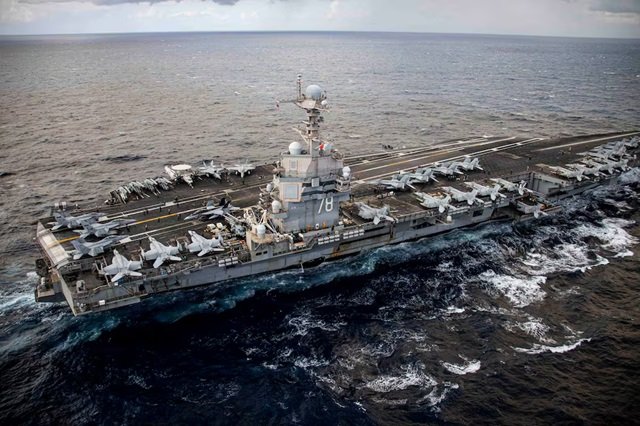
The US military deployment in the region was described as the largest since the Iraq invasion more than two decades ago. Washington deployed nearly 40% of its operational naval forces to the Middle East and positioned approximately 15,000 troops for operations related to the Strait of Hormuz.
However, the United States avoided a ground invasion of Iran. Feldstein said such an operation would have carried major political risks and could have resulted in significant American casualties without guaranteeing a decisive victory.
The conflict developed into a war of attrition involving large-scale missile, drone and guided-bomb strikes. The United States estimated it had hit 13,000 targets, while Iran launched approximately 1,300 projectiles and 4,400 attack drones against Israel, regional countries and Gulf shipping.
Iran suffered major battlefield losses, including damage to military infrastructure and the deaths of senior officials. However, the analysis notes that questions remain over the long-term impact on Iran’s missile capabilities. Reports cited in the analysis indicated that Tehran had restored access to many missile facilities after the fighting.
Iran’s remaining strength also comes from uncertainty surrounding its weapons stockpiles, launch locations and production capacity. Military experts have questioned whether US strikes fully eliminated Iran’s defensive capabilities, noting that assessments remain limited without ground forces operating inside the country.
Beyond missiles, Iran’s drone capabilities emerged as another major factor. The country maintained large-scale drone production and was reportedly capable of supplying partners abroad. Before the conflict, Iran was estimated to possess around 80,000 attack drones.
Iran also expanded the conflict beyond direct military targets by threatening maritime traffic in the Gulf and striking civilian infrastructure, including energy facilities, airports and desalination plants. These actions created economic pressure and increased concerns among US allies in the region.
The conflict demonstrated the role of psychological and economic pressure in modern warfare. Feldstein said Iran successfully exploited the broader costs of the conflict, influencing perceptions that the United States was not achieving its objectives and creating conditions for negotiations rather than an outright military defeat.