The push comes after a series of incidents involving alleged industrial espionage, technology smuggling and illicit activities that have highlighted vulnerabilities in Japan’s economic system. Cases involving suspected theft of industrial secrets, the movement of advanced artificial intelligence chips and cross-border criminal networks have increased pressure on Tokyo to strengthen protections against foreign threats.
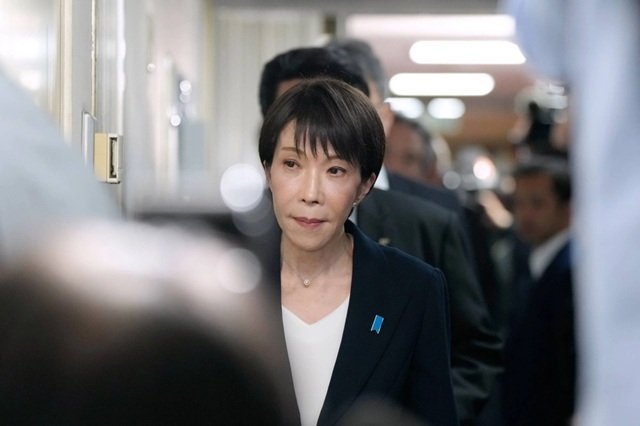
Prime Minister Sanae Takaichi’s administration is preparing to launch a Japanese equivalent of the Committee on Foreign Investment in the United States (CFIUS), a government mechanism designed to review overseas investments for potential national security risks.
The new framework will coordinate among government ministries to assess foreign investments, expanding beyond the current system in which reviews are primarily handled by the Finance Ministry and the ministry responsible for the relevant industry.
The move follows revisions to Japan’s Foreign Exchange and Foreign Trade Act (FEFTA), which expand pre-screening requirements for certain indirect ownership structures and give authorities broader powers to examine transactions involving high-risk investors, including foreign governments and state-controlled entities.
Foreign investment reviews in Japan have increased since a 2019 overhaul of the FEFTA. Before that change, foreign activist funds could acquire up to 10% of a company’s shares without government scrutiny. The threshold was later reduced to 1%, bringing more investment activity under review.
According to Bloomberg, the United States has supported Japan’s efforts to strengthen its investment-screening system. US Treasury Secretary Scott Bessent expressed support for Tokyo’s efforts after meeting Japanese officials last month.
Takaichi has long focused on economic security issues. Before becoming prime minister, she served as chief of her party’s cybersecurity headquarters and later as minister in charge of economic security from 2022 to 2024, where she worked on measures to protect supply chains, infrastructure and technology from international risks.
The new system is expected to place significant attention on China, similar to the US CFIUS approach. Takaichi has previously highlighted concerns over China’s role in global supply chains and its national intelligence law, which she said could require Chinese nationals to assist state information-gathering efforts.
Recent incidents have reinforced those concerns. Reports cited by Bloomberg include alleged cyber-related issues involving Japan’s Self-Defense Forces, Japanese links to organizations accused of illegally exporting fentanyl, and the suspected transfer of Nvidia artificial intelligence chips to China through Japan after first being exported there.
However, officials are also facing challenges from broader cyber threats. National Police Agency data shows Japan has detected suspicious digital activity linked to multiple countries, including the United States and Russia. The agency has noted that identifying the true source of cyberattacks can be difficult because attackers may use spoofed internet addresses.
Japan has already begun using expanded regulatory powers. In April, the government opposed Seoul-based MBK Partners’ bid for machine tool company Makino Milling Machine by invoking a national security law for only the second time. Other reviews, including Taiwan-based Yageo’s acquisition of Shibaura Electronics, have also faced extended scrutiny.
Despite stronger investment controls, officials say smaller companies remain particularly vulnerable. Many small and medium-sized firms form the backbone of Japan’s manufacturing supply chain but often lack the resources needed to protect sensitive technology.
Aichi-based company Make Start, which produces rubber molds for major auto parts manufacturers, has strengthened internal security measures by keeping most production in-house and providing company-issued smartphones to employees. CEO Kunihiro Sakoda said preventing leaks requires consistent small-scale protections against risks such as employees taking technical knowledge to new employers or accidentally sharing confidential information online.
Experts said government efforts have increased awareness among businesses. Yuzo Murayama, professor emeritus at Doshisha University, said government and police attention had encouraged companies to focus more on security.
The Takaichi administration is also promoting dual-use technologies with both civilian and military applications, presenting them as a way to support economic growth while strengthening domestic supply chains. Bloomberg reported that officials view these measures as part of a broader effort to protect Japan’s strategic industries in an increasingly contested global environment.