by Durga Velayudham
Sri Lanka has entered another uncertain political period where the biggest question is not who can defeat the current government, but who has the credibility, capacity, and political intelligence to replace it when the public mood eventually changes. Sri Lankan politics has repeatedly shown that no government remains permanently powerful. The same people who create political waves eventually face those waves themselves. The history of the country is full of leaders who appeared unbeatable at one moment and politically irrelevant at another. The real challenge has never been winning an election. The real challenge has been proving that power can be used differently from those who came before.
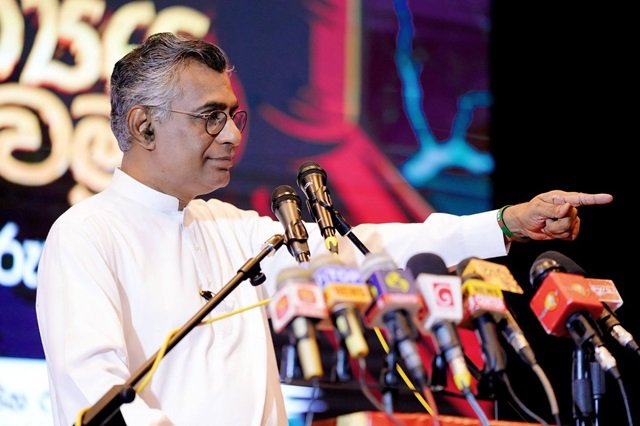
It is within this environment that Patali Champika Ranawaka has become a serious topic of discussion among people searching for a possible alternative. His political journey is unusual compared to many others in Sri Lanka. He has moved through different political periods, from nationalist political initiatives to broader national political platforms, from ideological activism to holding important government responsibilities. His supporters believe that he represents a rare combination of technical knowledge, administrative experience, and an understanding of global trends that many traditional politicians lack. They argue that Sri Lanka requires a leader who understands energy security, technology, economic transformation, and international competition rather than another politician who survives only through emotional slogans and traditional political machinery.
However, the difficult reality is that being knowledgeable is not the same as being a national leader. Sri Lanka has never lacked intelligent politicians. It has lacked politicians who can transform intelligence into public trust and public trust into effective governance. Many leaders have entered politics with impressive qualifications and strong ideas, but politics eventually exposed their weaknesses. Leadership requires more than understanding problems. It requires the ability to persuade millions of people who may not follow policy debates, who may not understand economic models, and who are often voting based on their daily experiences rather than political theory.
This is the biggest test facing Champika Ranawaka. Does he have the ability to move beyond being recognised as one of the more informed politicians in Sri Lanka and become someone who connects emotionally with ordinary citizens? This question matters because modern politics is not controlled only by facts and arguments. Around the world, political movements have grown because leaders understood public frustration. Populist leaders have succeeded because they recognised that many citizens felt ignored, disrespected, and abandoned by institutions. They understood anger, even when their solutions were often questionable or unrealistic.
The lesson from global politics is that citizens do not turn towards extreme political movements simply because they are attracted to extreme ideas. They often turn towards them because mainstream politics failed to answer their fears. When people feel that their income is declining, their children have fewer opportunities, and their sacrifices are not rewarded, they become vulnerable to anyone who promises to restore dignity and control. The responsibility of a serious alternative leader is therefore not simply to criticise populism but to understand why it exists.
Sri Lanka today faces exactly this challenge. The public anger that emerged after the economic crisis was not only about money. It was about betrayal. People felt that decades of promises had produced little improvement in their lives. They saw corruption, political privilege, economic insecurity, and institutional failure. The next successful leader will have to address this emotional wound, not simply present another economic programme.
Champika Ranawaka’s background gives him an advantage because he has experience discussing national issues beyond ordinary political arguments. His focus on technology, energy, infrastructure, and development shows an attempt to think beyond short-term politics. His use of social media to discuss books, policies, and current affairs also demonstrates an effort to engage with younger generations. However, there is a danger that he could become trapped in the image of the intellectual politician who explains everything but fails to build emotional connection. People respect knowledge, but they follow leaders who make them feel understood.
Another serious challenge is political trust. Ranawaka has changed political environments throughout his career. Political evolution is not automatically a weakness. Great politicians throughout history have changed their positions when circumstances changed. The problem arises when politicians fail to explain those changes honestly. A leader seeking national responsibility must be willing to answer difficult questions about his past, his decisions, and his political journey. Citizens do not expect perfection, but they expect honesty.
His organisational ability will also determine whether he can become a genuine national contender. Sri Lankan politics has repeatedly produced leaders with strong personalities but weak political structures. Movements built around individuals often collapse because they lack institutional depth. A future national leader cannot simply collect supporters who admire him. He needs a team capable of governing the country. That team must include people with expertise, integrity, courage, and independence of thought. A leader surrounded only by loyal followers who agree with everything will eventually lose touch with reality.
History has shown that successful leaders understand the value of disagreement. Abraham Lincoln’s ability to bring together competing personalities during America’s Civil War remains a powerful example of political maturity. Leaders who cannot tolerate criticism eventually become prisoners of their own image. If Ranawaka wants to be different from previous Sri Lankan leaders, he must create a culture where honest advice is valued more than personal loyalty.
The economic and geopolitical challenges facing the next Sri Lankan leader will be extremely difficult. The country remains economically fragile and will continue to depend on international cooperation. Relations with India, China, the United States, and other global powers will require careful balancing. The next leader will not have the luxury of making decisions based only on ideology or nationalism. Every agreement, investment, and foreign relationship will involve strategic consequences. Sri Lanka needs a leader who understands that sovereignty in the modern world comes from economic strength, institutional credibility, and intelligent diplomacy.
If Champika Ranawaka seriously believes he has the ability to lead Sri Lanka, his biggest task is not appearing everywhere and proving that he is the most knowledgeable person in the room. That argument has limited political value. The country already knows he can analyse issues. The question is whether people believe he can carry responsibility. He must allow his ideas, his team, and his grassroots network to create confidence among citizens. A leader becomes powerful when society begins discussing his vision without requiring his constant presence.
At the same time, he must avoid the mistake of becoming a shelter for rejected politicians from previous eras. Sri Lanka does not need another coalition of old political actors searching for survival. It needs renewal. If Ranawaka surrounds himself with people whose main qualification is political history rather than ability, he will lose the very credibility that makes him different.
Whether Champika Ranawaka becomes Sri Lanka’s next leader remains uncertain. Political history is unpredictable, and public opinion can change rapidly. But the opportunity before him is real because the country is once again searching for a credible alternative. His success will depend not on whether he can prove he is smarter than other politicians, but whether he can prove he understands the fears, hopes, and frustrations of ordinary people.
Sri Lanka does not need another politician who promises to rescue the nation. It needs a leader who can convince citizens that the nation can rebuild itself through honest institutions, competent governance, and a shared sense of purpose. If Champika Ranawaka can achieve that, he may become a serious force in Sri Lankan politics. If he cannot, he will remain another intelligent politician who understood the problems of the country but failed to become the leader the country was waiting for.