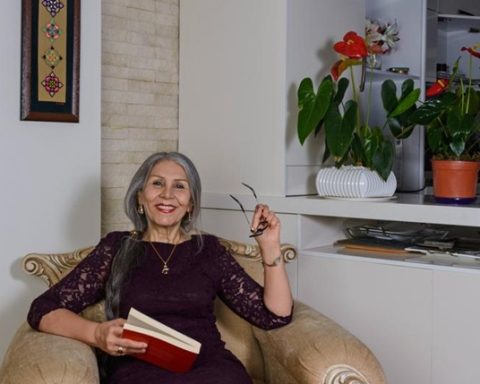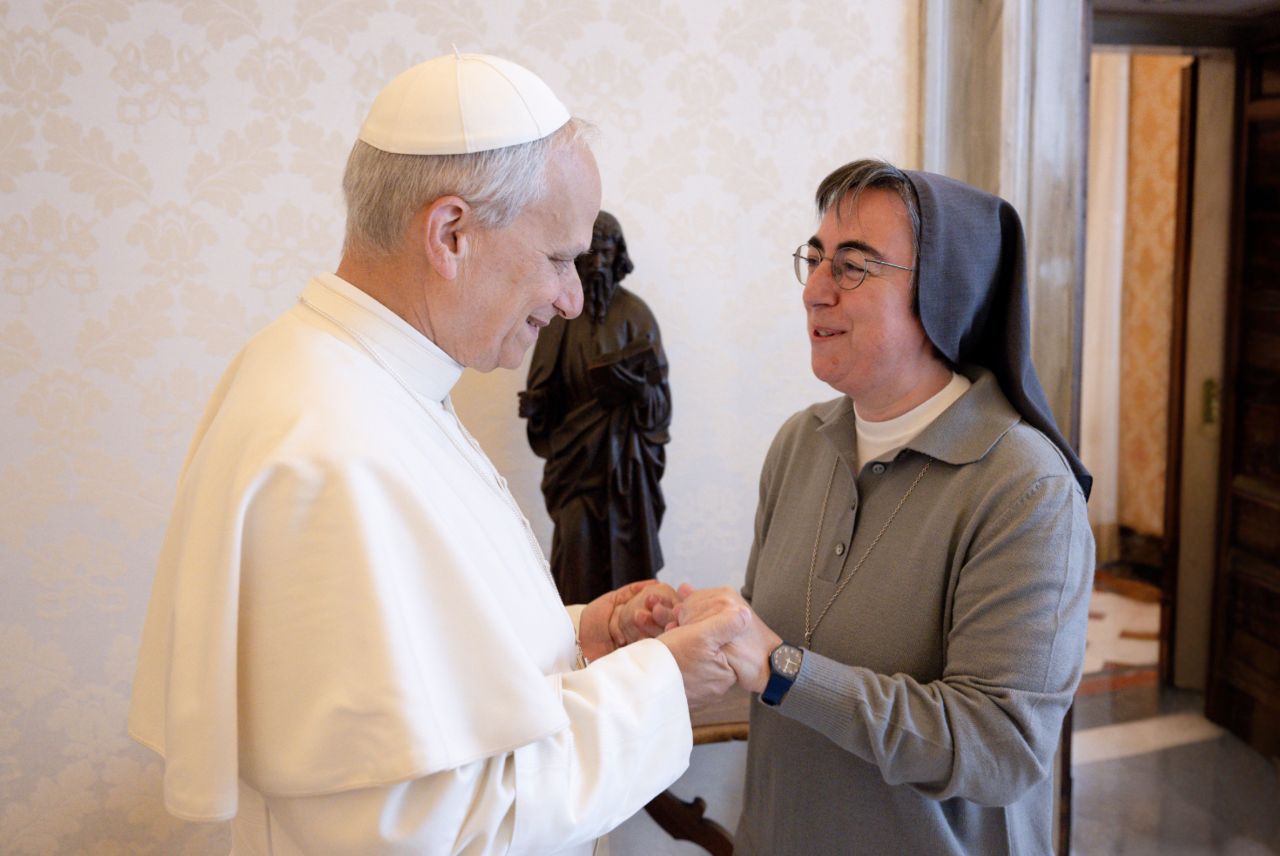
Pope Leo XIV has appointed Italian Salesian nun Alessandra Smerilli as prefect of the Dicastery for Promoting Integral Human Development, making her the third woman to lead one of the Vatican’s highest-ranking departments. The decision, reported by El País, continues a process initiated under Pope Francis to increase the number of women serving in senior leadership positions within the Roman Curia, the central governing body of the Catholic Church.
Smerilli, 51, will assume her new role on September 1, succeeding Canadian Cardinal Michael Czerny, who reaches the age of 80 in July. Her appointment places another woman at the head of one of the Vatican’s 16 dicasteries, institutions comparable to government ministries that oversee key aspects of the Holy See’s administration. Until recent years, these positions had traditionally been reserved for cardinals.
A professor of Political Economy, Smerilli has served as secretary of the Dicastery for Promoting Integral Human Development since 2021. At the time of that appointment, she became the first woman to hold such a senior position within the Vatican hierarchy. The dicastery, established by Pope Francis in 2016, is responsible for a broad range of issues including social justice, migration, climate change, peace, and humanitarian development.
Her promotion follows a series of changes that have gradually reshaped the composition of the Vatican’s leadership. Pope Francis, who led the Catholic Church from 2013 until his death in 2025, introduced reforms that expanded opportunities for laypeople, including women, to hold positions previously occupied almost exclusively by ordained clergy.
A landmark moment came in January 2025, just three months before Francis died, when he appointed Italian Consolata Missionary Sister Simona Brambilla to lead the Dicastery for Institutes of Consecrated Life and Societies of Apostolic Life. The appointment marked the first time in centuries that a woman had been placed in charge of one of the Vatican’s principal governing departments.
Brambilla, a nurse and former missionary in Mozambique, reflected Francis’ emphasis on a Church engaged with communities on the margins. Her appointment represented a significant departure from long-standing Vatican practice and prompted objections from some traditionalist circles, where theological and canonical concerns were raised over whether the head of a dicastery should be an ordained cleric.
At the same time, Francis appointed Spanish Cardinal Ángel Fernández Artime as pro-prefect of the same dicastery, a supporting leadership role that many viewed as a way of balancing the historic nature of the decision while addressing institutional sensitivities surrounding such a significant change.
The foundations for these appointments had been laid several years earlier. In 2022, Francis introduced the Apostolic Constitution Praedicate Evangelium, a sweeping reform of the Roman Curia that formally opened the possibility for lay Catholics, including women, to lead Vatican dicasteries. Although the constitutional changes created the legal framework, the first appointments of women to these positions followed only in 2025, establishing a precedent that has since continued.
In naming Smerilli, Pope Leo XIV has adopted a similar structure. Alongside her appointment, he designated Italian Cardinal Fabio Baggio as pro-prefect of the dicastery. Baggio, previously serving as undersecretary of the department, has been assigned special responsibility for directing the Laudato si’ Higher Education Centre, established in 2023 to promote sustainable economic development and named after Pope Francis’ environmental encyclical.
The appointment also reflects the Vatican’s established transition process following the death of a pope. Under Church practice, all prefects automatically leave office when a pontiff dies. The newly elected pope then temporarily confirms existing officeholders before deciding whether to retain or replace them over time.
In Brambilla’s case, Pope Leo XIV confirmed her in her existing role after assuming the papacy. He also strengthened female representation within the same dicastery by appointing Franciscan Sister Tiziana Merletti as its secretary in May.
The expansion of women’s leadership has extended beyond a single department. On June 2, Pope Leo XIV appointed another woman, Montserrat Alvarado, as prefect of the Dicastery for Communication, one of the Vatican’s most influential institutions because it oversees the Holy See’s public communications, including the Vatican press office.
Alvarado’s appointment drew particular attention because she is a laywoman rather than a member of a religious order. An American of Mexican heritage, she previously worked with the U.S.-based Catholic broadcaster EWTN, a network that had at times been openly critical of Pope Francis. She is expected to begin her new responsibilities in November.
Together, the appointments indicate continuity between the current pontificate and reforms initiated under Francis. Throughout his papacy, women steadily assumed more senior responsibilities across Vatican institutions. According to the latest figures released by the Holy See, the proportion of women working in Vatican City increased from 19.2 percent in 2013 to 23.4 percent in 2023.
Several appointments under Francis reflected that broader trend. In 2016, Barbara Jatta became director of the Vatican Museums. In 2022, Sister Raffaella Petrini was appointed secretary general of the Governorate of Vatican City State before being elevated in February 2025 to president of the governorate, a position comparable to the head of the city-state’s administration that had previously always been held by a bishop.
Women’s participation also expanded within the Church’s consultative structures. In 2021, French religious sister Nathalie Becquart became undersecretary of the Synod of Bishops, the advisory body revived under Francis and continued under Pope Leo XIV to discuss major issues affecting the Church. Two years later, women were permitted to vote in synodal assemblies for the first time, marking another significant institutional development.
With the appointment of Alessandra Smerilli, Pope Leo XIV has added another chapter to an ongoing transformation within Vatican governance. As reported by El País, the latest decision continues a sequence of reforms that has steadily increased women’s participation in the highest levels of the Holy See’s administration while maintaining the institutional framework established during the previous pontificate.