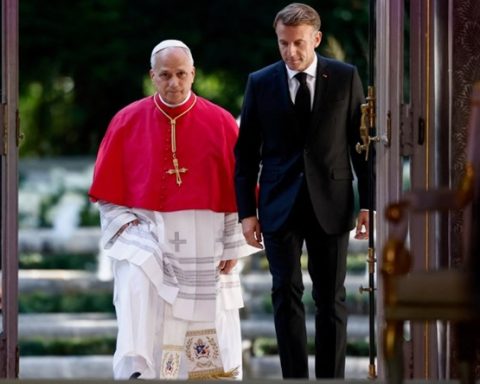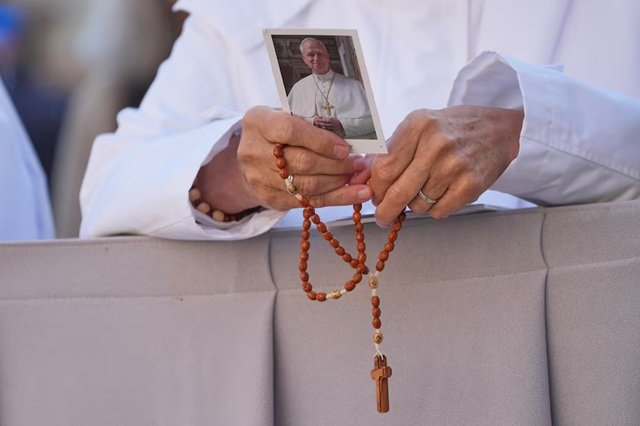
The diagnosis of a malignant lung tumour in Pope Leo XIV has abruptly altered expectations for his papacy, just 17 months after his election in May 2025. At 71, and previously regarded as being in good physical condition, the pontiff had been expected to lead the Catholic Church for many years. His illness has now introduced uncertainty over his workload, international travel and the pace of decisions within the Vatican, while bringing the question of succession into sharper focus.
“We believed we had a Pope for 20 years, and now that is no longer clear. This changes everything in the Curia, all the dynamics,” a prelate told El País. The Vatican’s internal power groups, the source added, were already adjusting to a more provisional situation. “Suddenly, the different power groups see that they have to reorganise themselves; everything starts moving.”
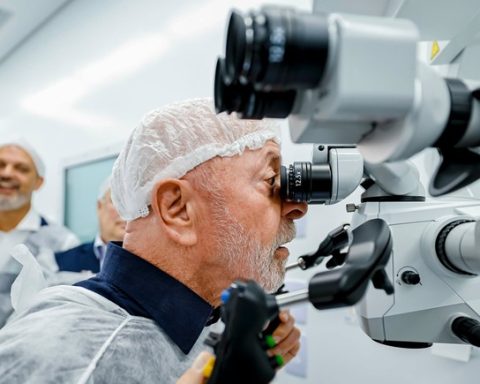
The full extent of the illness and the treatment required remain unknown. The Pope’s schedule has been suspended until Tuesday, 20 October, while doctors await further results from tests on the tumour. Those findings are expected within 10 to 14 days and could determine whether Robert Prevost, the Pope’s birth name, requires chemotherapy or radiotherapy. The period between 23 and 27 October is expected to provide a clearer indication of his medical condition and its implications for the pontificate.
The immediate uncertainty concerns a planned visit to Uruguay, Argentina and Peru from 6 to 17 November. Leo XIV indicated on Sunday, when announcing that he would undergo surgery, that the trip remained scheduled. Confirmation that the tumour was malignant has since placed the visit in doubt. The operation had initially been planned to allow at least three weeks of recovery, the recommended interval before flying safely following lung surgery. The prospect of additional treatment has complicated that timetable.
The tour would impose considerable physical demands even without medical complications. The itinerary includes 14 flights, more than 40 speeches and a visit to Cuzco, Peru, which lies at an altitude of more than 3,300 metres, where breathing difficulties can occur. On Wednesday, Daniel Sturla, the Archbishop of Montevideo, acknowledged that the Pope might be unable to travel as planned. “It is possible that the doctors will not let him come now because he has to undergo some treatment, but that he may be able to travel later,” Sturla told the television network Telemundo.
Peru’s president, Keiko Fujimori, also acknowledged that the dates could change, saying the Pope’s recovery would “last longer than expected”. The outcome of the visit is likely to provide an early indication of how his condition will affect his public commitments. Although the tour might still take place, long-distance travel is expected to become more restricted. No other major international trips had been planned for next year apart from a visit to South Korea for World Youth Day, and further travel projects are now likely to be suspended.
The illness also changes the time horizon against which Leo XIV has approached decisions. Until now, he had been described as a pontiff inclined to deliberate carefully and proceed slowly, operating on the assumption that he had years ahead to implement his plans. Depending on his diagnosis and treatment, he may have to reduce his workload, concentrate on selected priorities and leave other initiatives to a successor. A more demanding treatment regime would also increase the importance of his trusted circle, as greater delegation became necessary.
Historical precedents illustrate how a Pope’s health can influence the pace of a pontificate. John XXIII was elected in 1958 at the age of 76, with his relatively fragile health suggesting a short tenure. Yet, within three months of his election, he announced the Second Vatican Council, which he convened in an initiative that transformed the Church during his pontificate of just over four years. Whether Leo XIV will accelerate decisions in response to his diagnosis remains uncertain.
Succession planning may also acquire greater urgency. Before announcing his operation, the Pope made two significant appointments. On Friday, he unexpectedly named Cardinal Luis Antonio Tagle of the Philippines, a candidate in the most recent conclave, as dean of the College of Cardinals, a position that is particularly important during a vacant papal see. On Saturday, he appointed the Italian Franciscan archbishop Vittorio Francesco Viola as Vicar General of His Holiness for Vatican City, an office that continues after a Pope’s death. Both decisions, taken before the public announcement of the operation, have gained significance in light of the new circumstances.
The diagnosis will also test the Vatican’s approach to communicating information about papal health. Hospital treatment was once considered taboo, with the desire to preserve the pontiff’s near-sacred public image limiting disclosure. John Paul II was the first Pope to be admitted to Rome’s Gemelli Polyclinic, while the sudden death of John Paul I in 1978, after just 33 days in office, became controversial following the decision not to conduct an autopsy and changes in official accounts. During Francis’s final weeks in hospital in 2025, the Vatican issued daily, though brief, medical updates.
Leo XIV himself announced his impending operation from the window overlooking St Peter’s Square during the Angelus, a gesture of openness with few precedents. John Paul II had similarly announced one of his numerous hospital admissions in 1992. However, the Vatican had known before the operation that the tumour was malignant following preliminary tests, but disclosed the diagnosis only on Tuesday night, after the procedure had been completed. The decision on whether Leo XIV can undertake his November journey to Latin America will be the next major indication of how the illness is reshaping his papacy.