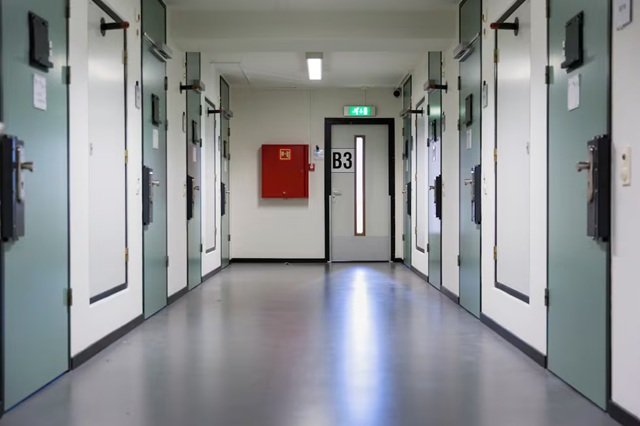
Behind layers of locked doors in the Dutch coastal district of Scheveningen, just a short distance from the beaches of The Hague, sits one of the world’s most unusual detention facilities. Unlike conventional prisons, the detention center of the International Criminal Court (ICC) is not primarily designed for convicted criminals serving sentences. Instead, it houses individuals accused of some of the gravest crimes under international law while many of them await trial, continue legal proceedings or pursue appeals.
A rare visit to the high-security complex, reported by El País, provides an inside look at a detention center where security is strict but daily life reflects the legal principle that most of its occupants have not yet been convicted. Guards carry neither firearms, electric stun devices nor batons. Instead, they rely on portable communication devices to call for assistance if necessary. One officer offers a simple observation that captures the environment: “If you don’t like doors, you can’t work here,” referring to the succession of secured entry points separating each section of the facility.
Established in 2006, the detention center operates alongside the International Criminal Court, which was created in 2002 to prosecute those considered most responsible for genocide, war crimes, crimes against humanity and the crime of aggression. Throughout its existence, the court has handled 34 cases involving one or more suspects, issued 61 arrest warrants, secured 13 convictions and four acquittals, according to the court’s official figures.
The prison currently houses seven male detainees. Six remain in different stages of judicial proceedings, either awaiting trial, participating in ongoing cases or appealing convictions. Only one inmate has exhausted all legal avenues and is waiting for the court to designate a country willing to enforce his prison sentence. Once convicted, detainees do not remain permanently in The Hague but are transferred to countries that have agreements with the ICC to carry out sentences.
For nearly two decades, every detainee held at the center came from Africa. That changed in March 2025 when former Philippine President Rodrigo Duterte arrived after being arrested in Manila. Duterte faces charges of crimes against humanity linked to anti-drug campaigns conducted in the Philippines between 2013 and 2018 that resulted in thousands of deaths. His arrival marked the first time an Asian former head of state entered the ICC detention facility.
The center could eventually receive other internationally prominent figures if existing ICC arrest warrants are executed. Among those subject to warrants are Israeli Prime Minister Benjamin Netanyahu, who is accused of crimes committed in the Gaza Strip, and Russian President Vladimir Putin, who faces allegations relating to the unlawful deportation of Ukrainian children. Should either be arrested and transferred to The Hague, they would be detained under the same system pending judicial proceedings.
Access to the detention center is tightly controlled. Journalists require special authorization to enter, and visitors undergo extensive security screening before passing through multiple secured checkpoints. During the visit described by El País, the route led through waiting areas, meeting rooms, staircases and enclosed courtyards before reaching the detainees’ section.
Facilities inside reflect the center’s distinctive role. A children’s play area is available for family visits, while specially designated rooms accommodate authorized private visits. Detainees receive 200 minutes of free telephone calls each month to communicate with relatives, although in-person family visits are limited to a single 10-day period each year.
Marc Dubuisson, the Belgian director of the detention center, says the atmosphere during family reunions often combines emotional conversations with tension. Once transferred to the ICC facility, he notes, former political leaders and armed commanders no longer exercise the authority they once held. Regardless of their previous positions, all detainees are treated equally under the institution’s rules.
Dubuisson emphasizes that the center differs fundamentally from a traditional prison because many of its occupants have yet to stand trial or receive final judgments. Rather than serving as a place of punishment, the facility functions as a secure location where suspects remain in custody while judicial proceedings continue.
Daily life includes access to a communal kitchen that detainees use themselves, a gymnasium and a sports hall equipped for basketball, badminton and indoor football. Although mobile phones are prohibited, inmates may use computers without internet access to review documents relating to their legal cases. The library contains travel books, novels, philosophy texts, the Bible, the Quran and a large collection of DVDs. Language, painting, cooking and computer courses are also available, while detainees are responsible for washing their own clothes using shared laundry facilities.
Despite these amenities, the detention center retains the characteristics of a secure prison. Cells contain a bed, sink, toilet, desk and shelving similar to those found in other correctional institutions. Windows are fitted with bars, and strict schedules regulate movement throughout the day. Cell doors remain locked overnight from 8:30 p.m. until 7:00 a.m., as well as during designated periods around midday and early evening. Detainees are entitled to one hour of outdoor exercise daily, while medical care is provided by on-site doctors and nurses, with emergencies handled at local hospitals.
According to Dubuisson, the most frequent complaints concern food rather than security or living conditions. Many detainees come from African and Asian countries where dietary habits differ from European cuisine, prompting regular requests for adjustments. Additional groceries can be purchased with a weekly allowance of 25 euros, and while occasional disagreements arise among detainees, the director says they have not escalated into incidents requiring police intervention.
The detention center also maintains procedures to prevent suicide, but Dubuisson says detainees would not be force-fed if they chose to undertake a hunger strike. Such action, he explains, would conflict with their human rights, even if ordered by a judge.
Alongside Duterte, the current detainees include Khaled Mohamed Ali El Hishri, a former senior official in Libya’s Special Deterrence Force who is accused of war crimes and crimes against humanity allegedly committed at Mitiga prison. Mahamat Said Abdel Kani, a former general of the Popular Front for the Rebirth of the Central African Republic and a commander within the Seleka alliance, is awaiting judgment on charges of war crimes and crimes against humanity.
Also detained are Alfred Yekatom and Patrice Edouard Ngaïssona, former leaders of the Christian Anti-Balaka militias in the Central African Republic. Convicted in 2025 and sentenced to 15 and 12 years respectively for crimes against the country’s Muslim population, both remain in The Hague while their appeals proceed. Malian militant Al Hassan Ag Abdoul Aziz, sentenced in 2024 to 10 years’ imprisonment, is awaiting transfer to a country designated to enforce his sentence. Ali Abd-Al-Rahman, widely known as Ali Kushayb, a former Sudanese Janjaweed leader convicted in 2025 and sentenced to 20 years for atrocities committed in Darfur, is also appealing his conviction.
The facility has capacity for 32 detainees across its two wings. Its multilingual staff reflects the backgrounds of those currently held, including Arabic and French speakers, and Dubuisson says adjustments would be made if the center were required to accommodate female detainees in the future. As visiting hours ended and the seven occupied cells prepared to open for part of the day, the routine inside one of the world’s most closely watched detention centers quietly continued under the procedures of international justice.