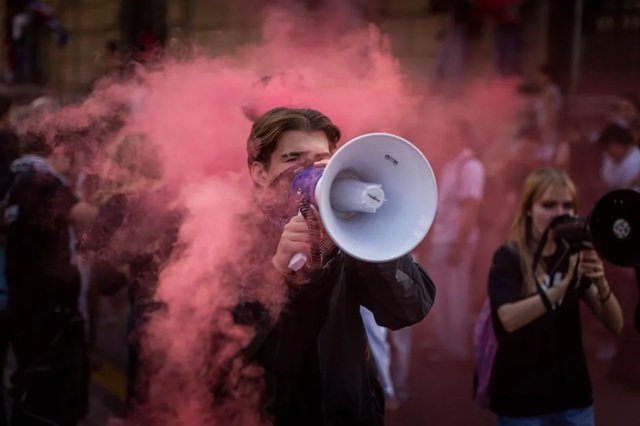
Young people across France, Spain and Italy are staging demonstrations over deteriorating living conditions, limited economic opportunities and what they see as governments failing to address the problems facing their generation. Although the immediate causes differ between countries, the protests reflect a wider frustration with political institutions and an increasingly uncertain future.
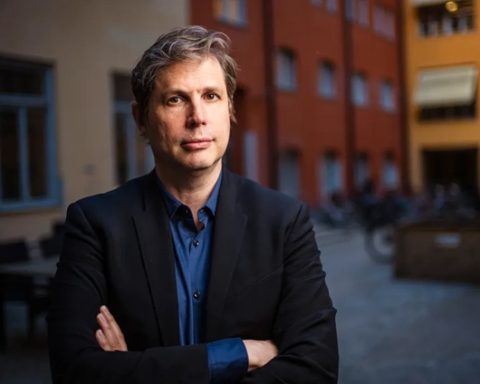
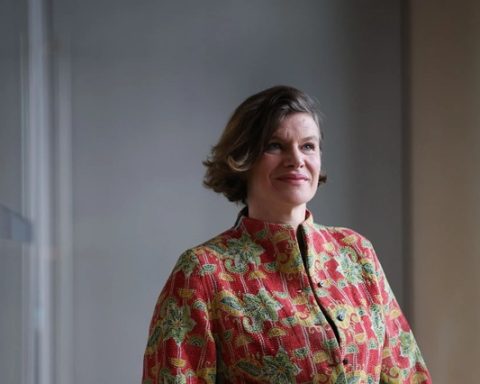
In an article featuring interviews with three young activists, Der Spiegel examines the motivations behind the demonstrations, the role of violence and the expectations of those taking part. The accounts reveal a generation increasingly unwilling to accept that poor employment prospects, unaffordable housing and inadequate public services are individual problems rather than failures requiring political action.
In France, 20-year-old Inès Belkacem de Lomas, a student at Sciences Po in Paris, says the demonstrations initially emerged from anger over conditions in public secondary schools. Buildings are in poor condition, teaching staff are insufficient and access to the baccalaureate examination remains unequal, depending partly on students’ family backgrounds.
The protests subsequently spread to universities, where students face similar difficulties. But Belkacem de Lomas believes the movement has developed into a broader challenge to President Emmanuel Macron and the political system he represents.
Macron has been in office for nearly a decade and is the only president many current school and university students have consciously experienced. She describes him as a symbol of an excessively hierarchical political system in which public participation is treated as legitimate primarily through presidential elections held every five years.
Economic insecurity has intensified that resentment. Belkacem de Lomas says graduates with master’s degrees are struggling to secure permanent employment, with some spending a year searching for work and finding only temporary internships in non-governmental organisations or media outlets. She also criticises what she sees as a generational imbalance: older people who entered a considerably more favourable employment market now expect younger workers to accept lower wages and greater competition.
She acknowledges that violence has occurred during demonstrations but says she regrets incidents in which individuals have been injured. She distances herself from the black bloc, while criticising the French police response as excessively militarised. In her view, French political leaders have repeatedly responded to public grievances only after demonstrations have escalated into disorder, as happened during the Yellow Vest movement.
In Spain, the central issue is housing affordability and the growing difficulty of securing a stable home despite having a job. Pablo Pérez, 32, spokesperson for Madrid’s tenants’ association, says the eviction of an 87-year-old woman, Maricarmen, became a turning point in the campaign.
Maricarmen had lived in the same central Madrid apartment for seven decades and had consistently paid her rent. However, after a property company acquired the building, the new owners sought higher returns and pursued her eviction.
Pérez was present when police arrived to enforce the eviction. Activists attempted to prevent it but failed. Large demonstrations followed, driven by grief and anger. On 7 October, they learned that Maricarmen had died in hospital, one day before she was due to sign a new rental agreement that campaigners had helped secure.
Her experience became a symbol of the housing crisis, although Pérez stresses that she was not simply a political emblem but a person who deserved to remain in her home and neighbourhood.
The protest camp established at Madrid’s Puerta del Sol sought to turn individual frustration into collective action. Pérez says nearly half his salary goes towards rent, yet he still shares an apartment with two other people. He knows people approaching 40 who remain in similar arrangements.
He rejects the suggestion that younger people are struggling because they have chosen the wrong education or failed to work hard enough. When millions experience the same difficulties, he argues, the problem is systemic. Housing has become an investment asset, benefiting property funds, real estate companies and landlords while leaving tenants increasingly vulnerable.
The tenants’ movement is demanding restrictions on speculation, an end to temporary rental contracts and evictions, and tighter controls on private holiday rentals. Pérez also wants a substantial expansion of publicly owned affordable housing. He says public housing currently accounts for only about two per cent of the housing stock in the area.
He believes the protests across Europe share a common economic grievance: working hard no longer guarantees a decent standard of living, while wealth is becoming increasingly concentrated among a small section of society. Since property investment funds operate internationally, he argues, movements seeking housing reform should also cooperate across national borders.
Pérez says Spain has already achieved some progress. Prime Minister Pedro Sánchez has brought forward the election date to the end of November and introduced decrees addressing some of the campaign’s demands. Nevertheless, the movement intends to continue mobilising and is preparing a general strike, regardless of which political party holds office.
In Italy, 17-year-old Giulia Conti Borbone, a student and president of her school’s student representative body in Ascoli Piceno, says the demonstrations began because young people were tired of remaining silent and feeling ignored.
She identifies inadequate school facilities, expensive textbooks and unreliable public transport as major concerns. In her town, with a population of about 45,000, buses frequently arrive late, early or fail to appear. Services are also limited in the evenings, while trains and buses operate too infrequently.
Rising living costs affect students, workers and other sections of society. Conti Borbone points to protests by truck drivers in southern Italy over high fuel prices as evidence that economic pressure extends well beyond the education system.
She is critical of the public debate surrounding the demonstrations, arguing that attention has increasingly shifted towards violence and vandalism in cities such as Milan and Bologna, obscuring the grievances that initially brought people onto the streets. Although she does not endorse every protest tactic, she fears the demonstrations might otherwise have received little attention.
She also argues that young people involved in vandalism, including children of migrants facing serious social and economic difficulties, should be heard rather than simply condemned. At the same time, she accuses police officers of using violence against demonstrators, citing videos circulating on social media.
Conti Borbone says both Prime Minister Giorgia Meloni’s right-wing government and the opposition have disappointed her in their response. She believes the government has concentrated on disorder while neglecting its underlying causes, while left-wing parties have encouraged demonstrations but condemned violent incidents without sufficiently engaging with protesters’ circumstances.
Despite uncertainty about whether she will remain in Italy, she says the demonstrations in France and Serbia have encouraged young people to believe that broader mobilisation can produce change.
These three accounts presented by Der Spiegel point to grievances that extend beyond individual national disputes. Employment insecurity, housing costs, deteriorating public services and a sense of political exclusion are shaping the protests, even as disagreements persist over the use of violence and the strategies needed to achieve reform.