Editorial
Alas… now they read. Now they study. Now they discover history.
For years, political movements built entire narratives around symbols, slogans, and emotional promises. They presented simple answers to complex problems. They transformed historical stories into political weapons and turned the frustrations of ordinary people into fuel for ideological campaigns. But power has a strange effect. Once the responsibility of governing arrives, slogans must confront documents, emotions must confront facts, and revolutionary dreams must confront reality.
The recent discussion surrounding Robert Knox’s famous observation about the farmer and the king is a perfect example.
Minister Nalinda Jayatissa was correct when he said that Knox’s statement must be understood within its historical context. Knox was not describing a society where every farmer, regardless of background, could suddenly become a king. His account referred specifically to people from Udunuwara and Yatinuwara, whose status was connected to “quality and descent.” The famous saying was not a declaration of modern equality; it reflected the social structure of its time.
The important question is not whether this interpretation is correct. It is. The important question is why such honesty arrives only after power has been obtained.
For decades, political movements presented these stories through a convenient ideological lens. Historical complexity was removed because simplicity was more useful. The past was reshaped into a romantic image that supported a political message: that ancient society itself proved their vision of equality.
But history does not exist to serve political campaigns.
Robert Knox wrote his account centuries ago. His words remained unchanged. What changed was the way politicians chose to present them.
This is not only about one quotation. It represents a larger problem that has affected Sri Lankan politics for generations: the gap between revolutionary promises and governing reality.
The history of the Janatha Vimukthi Peramuna cannot be discussed without acknowledging the immense damage caused by armed uprisings and political violence. The insurrections of 1971 and 1987–89 left deep scars on Sri Lankan society. Thousands of young lives were lost. Families were destroyed. Communities were divided. Fear became part of everyday life. A generation of youth was consumed by a political struggle that promised transformation but delivered tragedy.
The consequences were not only measured in deaths. Institutions were weakened. Trust between citizens and the state was damaged. Economic development was delayed. A country already facing enormous challenges was pushed further backwards.
Many of those young people who joined revolutionary movements were driven by genuine frustration—unemployment, inequality, and lack of opportunity. Those problems were real. But history also demands that we examine the methods used and the consequences produced. A noble grievance does not automatically justify destructive action.
That is the lesson Sri Lanka has repeatedly failed to learn: promises are easy; responsibility is difficult.
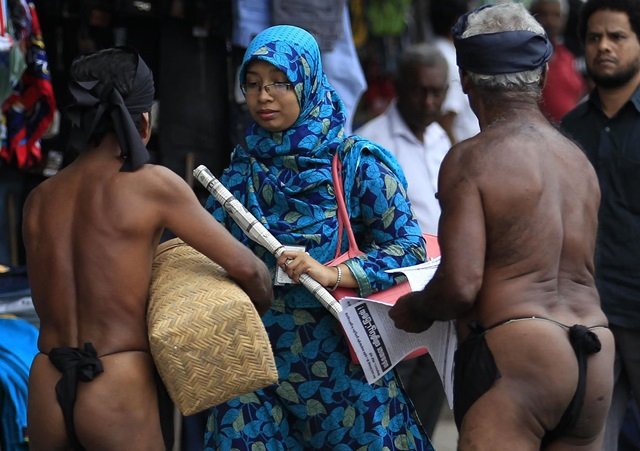
The farmer has been one of the greatest victims of this cycle of political promises. For decades, every major political movement has claimed to represent the farmer. The farmer has been described as the backbone of the nation, the guardian of tradition, and even a symbol of sovereignty.
But when farmers ask for practical solutions, symbolism cannot feed them.
They do not ask for crowns. They ask for fair prices. They ask for protection from unfair markets. They ask for policies that allow them to live with dignity. They ask governments to solve problems that have existed for generations.
Yet political debates often move toward mythology instead of solutions. Instead of discussing the price of paddy, attention shifts toward historical slogans. Instead of addressing agricultural failures, politicians debate symbols.
The farmer does not live in a political speech. The farmer lives in a field.
This is where every ideology eventually faces its greatest test. A movement can criticize from outside power. It can promise a new world. It can explain every failure as the fault of others. But governing requires something different. It requires admitting complexity, accepting inconvenient facts, and delivering practical results.
The tragedy is that Sri Lanka has spent too much of its history fighting over narratives while ordinary people paid the price. Young people sacrificed their lives for political dreams. Farmers sacrificed their livelihoods waiting for solutions. Citizens sacrificed stability while competing ideologies fought for dominance.
The real measure of a political movement is not the beauty of its slogans before power. It is the quality of its actions after power.
History cannot be rewritten every time political circumstances change. Knox’s book cannot become one thing when seeking support and another thing when explaining reality. The suffering caused by political violence cannot simply disappear because the same movements later enter democratic politics.
A mature society must remember both sides of the story: the injustices that created anger and the destruction caused by the responses to that anger.
Sri Lanka does not need more myths. It needs honesty. The farmer does not need to be told he is a king. He needs policies that allow him to live like a respected citizen. And political movements do not need to promise paradise. They need to prove they can govern in reality.