
What happens when a country wins a war but fails to resolve the reasons that produced the war in the first place? Can a military victory over an armed movement create lasting peace if questions of identity, justice, political representation and historical memory remain unsettled? And after nearly two decades since the defeat of the Liberation Tigers of Tamil Eelam (LTTE), should Sri Lanka be understood as a post-conflict success story, or as a country that has postponed some of the most difficult questions that shaped its modern history?
For professor Georg Frerks, one of Europe’s most experienced scholars of conflict, peacebuilding and international intervention, the answer lies not only in how wars are fought, but also in how societies confront the consequences after the fighting ends.
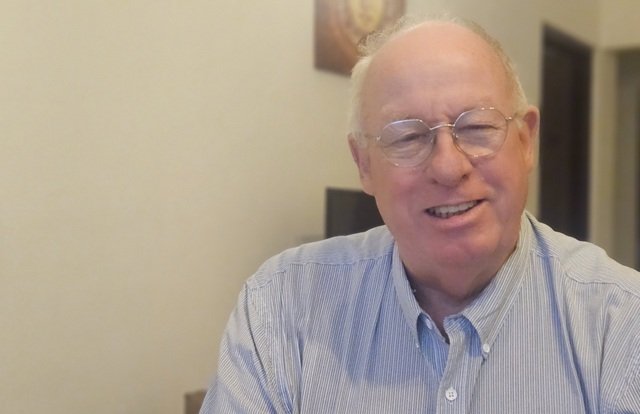
Recently, Frerks was in Colombo as part of his regular visits to Sri Lanka, including a special visit to see his house in Trincomalee, a place that reflects his unusually long personal and academic connection with the island. Sitting down with him in Colombo to trace his journey through Sri Lanka offered an opportunity to revisit the experiences of a scholar who has observed the country since the early 1980s, witnessing its political transformations, ethnic tensions, periods of violence, moments of hope and repeated crises. His relationship with Sri Lanka extends beyond academic research; it has developed through decades of engagement with its people, landscapes, conflicts and unresolved questions.
Having followed Sri Lanka’s trajectory across some of its most turbulent periods, Frerks has examined the country through multiple dimensions: the emergence of Tamil militancy, the political evolution and governance structures of the LTTE, humanitarian crises during war, the role of international actors, the impact of disasters such as the 2004 tsunami, and the continuing challenges of reconciliation after military victory. His work has contributed to a broader understanding of Sri Lanka not simply as a battlefield between the state and a separatist movement, but as a complex political struggle shaped by competing narratives, institutional failures, external interventions and missed opportunities. His long engagement with the island has allowed him to analyse not only the causes and consequences of conflict, but also the difficult realities of rebuilding trust and creating a sustainable peace after violence.
Frerks explains that his interest in Sri Lanka emerged from his wider academic engagement with internal armed conflicts across the world. “Being a professor in conflict studies, worldwide we have seen a lot of movements, separatist movements or rebellions, fighting against, in a way, their own governments,” he says. These conflicts, often described as intrastate wars, involve “organised armed groups, armed non-state actors who are fighting their governments.” Sri Lanka became an important case because it reflected many of these wider patterns while also containing distinctive historical and political features.
“Because I was very familiar with Sri Lanka, it was quite natural for me to study the emergence of different militant groups in the beginning, during the 70s and 80s against the Sri Lankan government,” Frerks explains. Although several Tamil militant organisations emerged during this period, the LTTE gradually became the dominant force. His research moved beyond the question of military confrontation and focused on the broader political and social structures surrounding the movement.
“I followed to study how this whole situation emerged, both at a political and military level,” he says. “But I also looked at the issue of governance, how the LTTE governed its own areas. And what that meant for the legitimacy of the movement among the population, but also towards the outside world.”
This emphasis on governance is central to understanding Frerks’ approach. The LTTE was not merely a military organisation seeking separation; it attempted to establish systems of administration and authority in areas under its control. Questions about legitimacy, public acceptance and governance became as important as battlefield strength. Frerks argues that understanding the LTTE requires examining both its ability to mobilise support and the limitations of its political project.
His research into the LTTE’s female wing demonstrates this complexity. Frerks does not present women’s participation in the movement through a single interpretation. Instead, he identifies competing explanations: military necessity, ideological transformation and individual experiences of empowerment.
“I think there are two ways of looking at it,” he says. “The LTTE started to mobilise and to recruit women, more sadly also children, when they needed the manpower to fight against the government. That is one thing.”
However, he adds that there was also another dimension. “There is an element of emancipation, one could say. At least according to certain sources, they also promoted a better position of women and equality in the whole traditional, very conservative Tamil society.”
For Frerks, the participation of women in the LTTE reflected both the practical needs of warfare and a social transformation promoted by the organisation. “They were against the dowry system and the caste system. So, several traditional elements of Tamil society, they wanted to reform.”
This reformist message appealed to some young women who saw participation in the LTTE as a means of challenging traditional restrictions and sometimes fleeing domestic violence as well. “Some of these young girls also felt that they were empowered,” Frerks says. “They were allowed to go on a bicycle, they were seen driving tractors, which was in the Jaffna society completely unheard of. Even going in trousers was something very new and shocking to many observers.”
At the same time, Frerks avoids presenting this empowerment narrative without acknowledging coercion and the realities of war. He points out that recruitment also involved pressure and, in some cases, forced participation. “Some were recruited by force, but many of them also joined voluntarily, because they wanted to take revenge. They had seen that their brothers were killed, maybe they were raped, they really felt an anger and wanted to join the LTTE.”
The LTTE’s eventual defeat, according to Frerks, was the result of several interconnected factors rather than a single military development. He identifies the transformation of the Sri Lankan state’s military capacity as one of the most important reasons.
“First, I think important was that the government, through long years of trying and fighting, finally got its military act together,” he says. “They got the weaponry, they got the intelligence, that they could in the end defeat the LTTE militarily.”
This transformation, however, took decades. Frerks argues that the Sri Lankan military of the early years of the conflict was not capable of defeating a highly organised insurgent movement. “The Sri Lankan army in the early 70s and 80s was not really a very serious matter still,” he explains. The state had to acquire military expertise and hardware, arrange international assistance and improved intelligence capabilities before it could challenge the LTTE effectively.
He describes the LTTE as an exceptionally well organised rebel movement. “It was a very innovative, disciplined fighting force. Some people say, among the rebel movements in the world, one of the best organised ones, disciplined ones.”
The government’s military improvement was only one factor. Frerks also highlights the internal split within the LTTE, particularly the defection of Vinayagamoorthy Muralitharan, known as Colonel Karuna. “Karuna defected, and with him some four or five thousand cadres, and provided also very crucial intelligence to the government.”
The loss of Indian support was another major turning point. Frerks notes that India had initially played a significant role in the development of Tamil militant groups. “In the beginning they got a lot of support from India, training camps, weapons, you name it. Which has been very crucial for the LTTE and even some of the others to grow into a formidable fighting force.”
However, relations changed dramatically after the assassination of former Indian Prime Minister Rajiv Gandhi by an LTTE suicide bomber in 1991. According to Frerks, this significantly weakened the organisation’s international position.
The LTTE’s international strategy was initially highly effective. Frerks explains that the organisation developed a sophisticated communication and political network abroad. “The LTTE in the beginning was very clever in mobilising international support. They had, in a way, a good propaganda system, or if you want to call it public relations machinery.”
Through international media, diaspora networks and political engagement, the LTTE successfully presented its narrative of Tamil grievances. “The idea that the Tamils were a suppressed minority was credibly transmitted to the outside world. And the Tamil cause in that way got a lot of support diplomatically in international fora, in the UN, national parliaments, etc.”
However, this international sympathy gradually declined as greater attention was given to LTTE abuses. “After time, people realised that the LTTE also committed serious crimes against humanity,” Frerks says. “So that support gradually dissolved to a certain degree.”
For Frerks, the LTTE’s downfall was also connected to strategic and political decisions taken by its leadership. He questions whether the organisation’s internal decision-making structure allowed enough room for alternative perspectives.
“We don’t know very much about the internal workings of the LTTE,” he says. “Whether Prabhakaran was always well advised, whether he did take the proper decisions, you know. Not very much could happen without his consent, even to the largest detail.”
He adds that the concentration of authority around Velupillai Prabhakaran may have limited the organisation’s ability to adapt. “He was isolated and hidden. So whether he had enough exposure to the outside world to make always the best decisions, I don’t know.”
One of Frerks’ strongest criticisms concerns the political opportunities that the LTTE rejected during negotiations. He argues that the organisation missed several possibilities for a political settlement that could have delivered meaningful autonomy and rights to Tamil communities.
“I think they missed out several times,” he says. “There were serious issues and negotiations going on. These concerned a devolved system, where there would be considerable rights to the provincial level, or to a merged or non-merged north-eastern entity, which in the end they rejected.”
According to Frerks, the LTTE’s pursuit of maximal demands prevented compromise. “Prabhakaran probably would have been better advised to come to a particular compromise, in which there were tangible results for his Tamil constituency.”
“But he was, in that sense, quite stubborn,” Frerks says. “He wanted to have everything. And then, of course, it becomes difficult to come to a compromise.”
The consequence, he argues, was that ordinary Tamil civilians gained far less than they might have achieved through political negotiation. “In the end, I think the Tamil constituents were left empty-handed. Well, at least they could have had one hand filled.”
The second part of this interview will be published in tomorrow’s edition.