
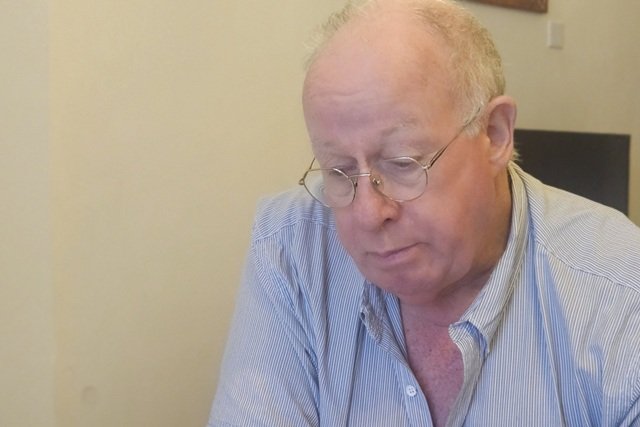
This is the second and final part of this interview, the first part of which was published in yesterday’s edition.
Seventeen years after the military defeat of the LTTE, Frerks sees Sri Lanka as a country that has not fully addressed the unresolved issues created by the conflict. While acknowledging that the end of the war removed a major source of violence, he argues that military victory alone did not automatically produce reconciliation or political settlement.
“I feel, and I’m sorry to say that, there is an impasse,” he says. “There is no tangible progress on any of the issues which were there at the start of the conflict, they are still lingering on.”
For Frerks, one of the central failures after the war was the inability of the victorious state to adopt a magnanimous approach towards the defeated and affected communities. “If you win a war, you have to be magnanimous,” he says. “You have to give something to the defeated, otherwise they will develop feelings of revenge and grief.”
When asked whether Sri Lanka had failed to do this, his answer is direct: “I’m afraid that the government failed here.”
He argues that several issues could have been addressed without threatening the stability of the state. “Issues like compensation, land issues could have been dealt with more quickly,” he says. Similarly, he believes greater transparency regarding missing persons could have helped rebuild trust. “Irrespective of whether you want to put the people who were responsible before courts or in jail, at least you could give information. The affected people are desparate to know what happened.”
For Frerks, transitional justice remains one of the major unfinished tasks of post-war Sri Lanka. “Transitional justice is not there,” he says, linking this failure with broader questions of reconciliation and accountability. He also highlights the continuing presence of the military in the North and East as a factor affecting confidence among communities that experienced the war directly.
“The rather strong militarisation of the North after so many years,” he says, remains problematic. Although he acknowledges that military presence has reduced compared with earlier years, he believes “it’s still too blown up.”
His assessment of Sri Lanka’s wider political history is also deeply critical. He describes the country as one characterised by repeated missed opportunities.
“The whole history of Sri Lanka gradually reads as a history of missed opportunities,” Frerks says. “It missed the opportunity to become a wealthy country economically . In the early 50s Sri Lanka was seen as the economically most promising country in Asia. Now it’s nowhere.”
For him, the country’s decline cannot be explained by one single event or external factor. Rather, it resulted from a combination of political decisions, institutional weaknesses and unresolved conflicts. “Some of these things could have been prevented by better policy, by taking opportunities when they were there.”
However, Frerks does not present Sri Lanka as a country without possibilities. He emphasises that the country still possesses significant strengths. “It is a very beautiful country. I think people are very resourceful. There are a lot of opportunities. But if the politics is not right, you can’t use that.”
One of the recurring themes in Frerks’ analysis is the importance of avoiding simplistic explanations, particularly arguments that place responsibility entirely on foreign actors. He acknowledges international influence but argues that the primary causes of Sri Lanka’s conflict were internal.
“There is something like blame the outsider thing,” he says. “The root causes, I think, of the problems are basically internal.”
At the same time, he recognises that foreign involvement has played different roles. “It is true there has been foreign intervention. Also intervention to the good.”
He points to international development assistance as an example. “If you see how much development aid Sri Lanka has got over the three, four decades, it is not only blame the foreigners. They also have really tried to help the government with economic development.”
Regarding India, the United States and other international actors, Frerks argues that external influence existed, but it should not become an excuse for avoiding domestic responsibility. “There is certainly influence by different groups, governments. But I would not say that that can be seen as the most responsible factor for what happened in Sri Lanka. I think that’s really internal.”
His explanation for Sri Lanka’s economic difficulties similarly combines domestic and international factors. He argues that inconsistent economic policies, weak taxation and unequal wealth distribution have contributed significantly.
“I’m not sure whether Sri Lanka has followed a consistent economic development policy,” he says. “Between the governments there were many changes all the time.”
He criticises excessive state expenditure and political patronage. “If you have 100 ministers with their cars, their secretaries and their buildings and their pensions and so on, there should be much more frugality and limitations.”
A major structural problem, according to Frerks, is taxation. “Sri Lanka has a very weak tax base and generation of tax is very, very limited. I think the rich hardly pay any tax here.”
Economic inequality also remains a serious concern. “The wealth is very unequally divided,” he says. “The poor have hardly any opportunity to accumulate something, to start a small business or whatever.”
Nevertheless, he also recognises the unequal nature of the international economic system. “There is an international system which is very unfair to the global South,” he says. “So also on the world scale, there is a lot of inequity and unfairness.”
Another important area of Frerks’ analysis concerns the relationship between religion and the state. Coming from a European academic tradition shaped by secular governance, he argues strongly for separating religious institutions from government.
“I was brought up in a tradition and in a country where we believe in secularism,” he says. “Which means there should be a division between religion and state.”
He acknowledges the importance of Buddhism in Sri Lankan society but rejects the idea that this should translate into state preference.
“Buddhism is important in Sri Lanka, nobody denies that. But it doesn’t mean that the government of the country and the state needs to be Buddhist.”
For Frerks, the role of the state should be to protect religious freedom rather than promote one religion. “The government should guarantee the freedom of every religion to be practised,” he says. “But I would say no special place for Muslims or for Buddhists or for Hindus. Let the government govern and let the religions practise religion.”
He believes this separation benefits both the state and religious communities. “I cannot imagine why a religion should be happy that the government is close to them. They can be on their own. It’s a separate sphere of societal organisation.”
***
Frerks’ broader theoretical work also focuses on human security, vulnerability and agency in conflict situations. He explains that the concept of human security emerged because traditional security thinking focused too narrowly on states and military threats.
“Human security is basically a concept which was introduced by the UNDP, the United Nations Development Programme, in 1994,” he says. Traditional security focused on “the state against another state, against armies,” but human security shifted attention towards ordinary people’s daily lives.
“For normal people, security is something else,” he explains. “They need work, they need food, they need hospitals, they need a clean environment.”
For Frerks, this concept is particularly relevant for societies affected by conflict because insecurity is not only created by armed violence. “People are very often vulnerable. Not because India is the enemy or the Russians are the enemy, but daily life is so difficult.”
His discussion of civilian agency during war is similarly nuanced. He rejects romantic ideas that ordinary people in conflict zones always possess meaningful freedom of choice.
“Agency means the opportunity to act, to do what you want to do, and to be able to exercise choices,” he explains. “Now, nobody has 100% agency. There are always constraints, but in a war these constraints are much more serious.”
During conflict, people may not be able to speak freely, move freely or challenge powerful actors. “You may not even be able to go out on the streets. You may not be able to talk openly because you don’t know who is listening.”
This understanding informs his analysis of post-war societies. He distinguishes between the wounds created directly by war and the problems created by how societies respond after war.
“A war in itself creates already a lot of wounds,” he says. “People have lost relatives and possessions, they have made sacrifices. But there are also second-order problems, namely how you deal with the war after the war.”
Sri Lanka, he argues, illustrates this problem clearly. “The post-war situation was not handled very deftly,” he says. “And that creates new tensions, that creates new grievances and new resentment.”
For reconciliation to succeed, Frerks believes political courage and institutional capacity are essential. “You need political courage to do that. And you need also institutions that can deliver, not only talking shops, but really results.”
He rejects the idea that societies can simply forget difficult histories. “It doesn’t happen like that,” he says. “History is always present. And you have to deal with it, it doesn’t go away.”
Sri Lanka, he argues, is particularly shaped by competing historical narratives. “Everybody can tell the stories of the Mahavamsa and the Kings Dutthagamini and Elara. Everybody knows what happened in 1952, 1956 and 1958, etc.. People don’t forget.”
At the same time, he warns that historical memory can be manipulated politically. Different communities often develop their own versions of history, but this should not prevent dialogue. “Different groups will have their own storylines. But that doesn’t mean you cannot talk about it. They are not mutually exclusive.”
On international peacebuilding, Frerks is equally cautious. He argues that outside actors can assist but cannot create peace from outside.
“You cannot resolve a conflict or achieve stability from outside only,” he says. “Outsiders can help. You can have mediators. You can even have some financial support to do certain things, to set up certain institutions or help to do certain investigations.”
But ultimately, peace must come from within society. “Peace is not something you can drop from a helicopter,” he says. “That has to be felt by people, that they want peace. And that they feel the peace is needed now. And that peace is also just and fair, not imposed.”
For this reason, Frerks rejects the idea of importing a ready-made reconciliation model from another country. “I would not promote the idea that you have a supermarket of peace models and you choose one,” he says.
Countries can learn from each other, but Sri Lanka must develop its own approach. “They have to make their own stew, so to say,” he explains. “There can be good ingredients that you can think about. And you may even adopt them. But I don’t think that you can simply take a model from the shelf and then say this will work for Sri Lanka.”
Looking ahead, Frerks believes Sri Lanka’s future depends largely on political decisions. “That depends very much on the wisdom, first of all, of your leaders and your politicians and also of the population.”
He warns that many of the country’s problems are self-created. “Most of the problems in the world are man-made. They can only be resolved by man, by people.”
For him, Sri Lanka still has opportunities, but they cannot be postponed indefinitely. “If you never take the opportunity, it will only get worse.”
His message is ultimately one of urgency but also possibility. Sri Lanka’s challenges are serious, but they are not unavoidable. The country’s future depends on whether its leaders and citizens are willing to confront unresolved issues, build institutions based on fairness, and move beyond the politics of grievance.
“I believe that you need political courage, some wisdom,” Frerks says. “Sri Lanka can get support from elsewhere to do this. But something needs to be done. If nothing happens, there will not be much progress, I am afraid.”
For a scholar who has spent decades studying Sri Lanka’s conflict, this remains the central lesson: wars end through military means, but peace requires political imagination, institutional responsibility and the willingness to confront difficult histories rather than allowing them to continue shaping the future.