


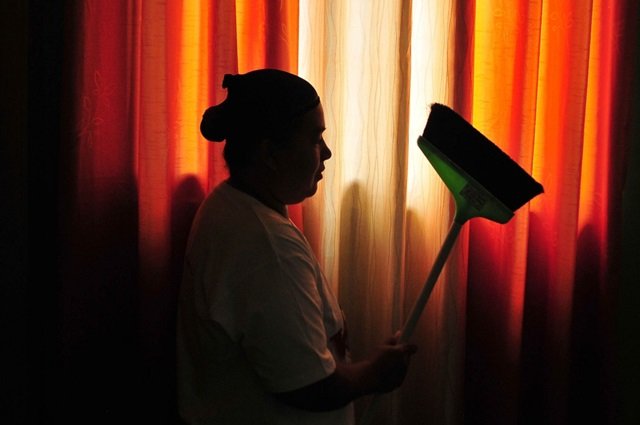
For many Filipino women who travelled to Saudi Arabia seeking financial security for their families, the promise of overseas employment became an experience marked by exhaustion, isolation and fear, according to a new report by Amnesty International. The organization’s latest investigation documents allegations of widespread abuse among Filipino domestic workers, including excessive working hours, restrictions on movement, degrading treatment and sexual violence.
The report, titled “Once we step in their homes, we are no longer human”: Testimonies of Filipino women domestic workers in Saudi Arabia, is based on interviews with 19 women who had worked as domestic workers in Saudi Arabia and later returned to the Philippines, mostly between 2023 and 2026. Amnesty International said their experiences closely reflected patterns previously documented among Kenyan domestic workers in Saudi Arabia, including deception during recruitment, severe working conditions and limited access to protection.
The organization said the testimonies reveal a broader system in which domestic workers can become highly dependent on their employers, with their daily lives shaped less by employment contracts or legal protections and more by the authority of the people who control their workplaces and living environments.
Cristine, one of the women interviewed, described the feeling of entering an employer’s home as a complete loss of independence. “We are not robots… but once we step in their homes, we are no longer human,” she said.
Amnesty International said the experiences documented in the report indicate that, in the most serious cases, the treatment of domestic workers may amount to forced labour and may also constitute human trafficking for labour exploitation.
Saudi Arabia has more than four million domestic workers, all of whom are foreign nationals, according to the report. Domestic workers play a central role in household care and daily life across the country, but they remain excluded from Saudi Arabia’s labour law and are instead governed by the 2023 Regulations for Domestic Workers.
The regulations introduced some protections, including requirements related to wage payments, working hours, rest periods and employer responsibilities. However, Amnesty International said the rules provide weaker protections than those available to other workers and that enforcement mechanisms remain extremely limited.
The report said that, in practice, many women found that written agreements were ignored once they entered private homes. Several described working days far beyond the legal limit of 10 hours, with some reporting schedules lasting up to 21 hours a day.
Joy, a former domestic worker interviewed by Amnesty International, said 20-hour workdays became normal. She described waking around 6 a.m., working throughout the day and being repeatedly awakened at night by household members needing assistance.
“My employer used to tell me: ‘you cannot say you’re tired, or I will be angry at you,’” Joy said.
Other women described similar conditions. Adelina said she worked for two years without a single day off. Gemma said her employer questioned why she needed rest, telling her, “My house is not that big.”
Some workers said they were assigned responsibilities far beyond what they had agreed to before travelling. Women recruited as caregivers said they were required to perform cleaning, cooking and other household duties. Others reported being sent to work in multiple homes belonging to employers’ relatives.
Hana said she was required to work across five different households, including her employer’s home and those of relatives. She said she moved between houses every day of the week.
The report also details how control over movement and communication contributed to workers’ vulnerability. Nearly all women interviewed said employers took possession of their passports shortly after arrival. Many also described restrictions on phone use, limited internet access and being prevented from leaving employers’ homes.
For some women, escaping abuse became difficult because returning home required employer cooperation or official processes they struggled to navigate.
Cleo, who arrived in Saudi Arabia in late 2023, said she was prevented from leaving the house for months and later had food restricted by her employer. When she attempted to return home, she described undergoing an invasive search before being allowed to leave.
“It was so easy to leave the Philippines, but it was so difficult to go back,” Cleo said.
The report also includes allegations of sexual harassment and assault inside employers’ homes, which served as both workplaces and living spaces for the women.
Isabel described being subjected to sexual harassment by her employer’s husband. She said she feared entering certain rooms when he was present and eventually escaped with help from other Filipinos before seeking assistance from the Philippine Embassy.
Another woman, Marielle, described repeated sexual assault allegations involving her employer’s son, saying the incidents occurred when she was working alone in the household.
Amnesty International said isolation, limited communication and fear of retaliation prevented many survivors from reporting abuse or seeking legal action.
The organization linked many of the reported abuses to continued elements of the kafala sponsorship system, under which migrant workers remain tied to employers who control aspects of their legal status, employment and ability to leave the country.
Saudi Arabia introduced reforms to the system beginning in 2021, but Amnesty International said domestic workers have not benefited fully from those changes. The organization said restrictions on changing jobs or leaving the country remain difficult to overcome in practice.
The Saudi government, responding to Amnesty International’s findings, said allegations of abuse are taken seriously and investigated. It pointed to measures including standardized employment contracts, wage protection systems, insurance schemes and complaint mechanisms designed to strengthen worker protections.
The government did not provide data requested by Amnesty International regarding implementation and enforcement of those measures.
Amnesty International called on Saudi Arabia to bring domestic workers fully under labour law, strengthen inspections, investigate allegations of abuse and remove remaining restrictions that allow employers to control workers’ ability to change jobs or leave the country.
The organization said the testimonies of Filipino and Kenyan women point to a continuing pattern affecting migrant domestic workers across nationalities. For the women interviewed, the central issue was not only the abuse they experienced but the power imbalance that allowed it to continue behind closed doors.










