History is never neutral. It can inspire, unite, justify, divide, or even become a weapon in the hands of political leaders. Few historians have explored this relationship between history and power as deeply as Stefan Ihrig. From Nazi Germany’s fascination with Atatürk’s Turkey to the long shadows of the Armenian Genocide, from the rise of Recep Tayyip Erdoğan to the growing global struggle over democracy, nationalism, and historical memory, Ihrig’s work examines how narratives about the past continue to influence the world’s most pressing political challenges.
In this exclusive interview, he discusses why authoritarian leaders thrive during crises, why democracies often compromise their own values for strategic interests, how conspiracy theories become politically powerful, why societies struggle to confront historical crimes, and why historians may be more essential than ever in an age of artificial intelligence and misinformation.
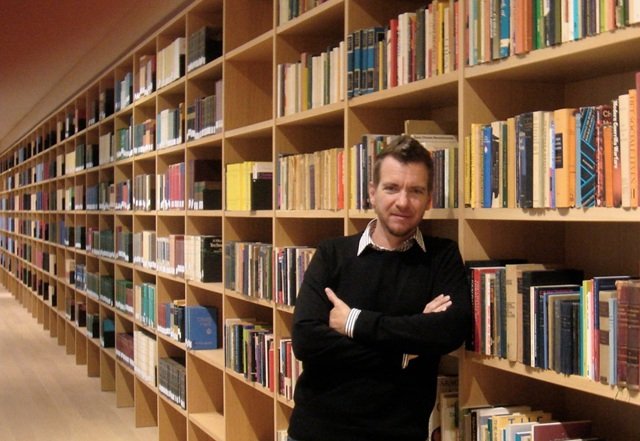
Stefan Ihrig is Professor of History at the University of Haifa, where he also serves as Head of the Haifa Center for German and European Studies. A leading scholar of modern German, Turkish, and transnational twentieth-century history, his research focuses on nationalism, genocide, political violence, historical memory, and the global circulation of political ideas.
He is the author of the internationally acclaimed Atatürk in the Nazi Imagination (2014), translated into five languages, and Justifying Genocide: Germany and the Armenians from Bismarck to Hitler (2016), recipient of the 2017 Sonia Aronian Book Prize for Excellence in Armenian Studies. His earlier work also examined post-Soviet memory politics in Moldova.
His latest book, Germans and Turks—A Forgotten History of Europe, explores centuries of interconnected German-Turkish history and their lasting influence on Europe. His forthcoming political biography of Turkish President Recep Tayyip Erdoğan is scheduled for publication by Polity Press in early 2027.
Excerpts of the interview:
Question (Q): Your research has often examined how political movements use historical narratives, myths, and grievances to shape national identity. Looking at today’s world — from Turkey’s “Century of Türkiye” narrative to Russia’s historical claims and rising nationalism in Europe — are we witnessing a new era where history is increasingly being used as a political weapon rather than a source of understanding?
Answer (A): I don’t think there is a lot that’s truly new here. The instrumentalization of history is as old as history writing and history telling itself. What we are seeing today, however, is a much more pronounced use of histories centered on national grievances, coupled with a sharp uptick in anti-Western discourse—and notably, this also includes revisionist and far-right movements within Europe itself.
Rather than a new era, perhaps, we are entering a phase where a multi-polar world will simply have to get accustomed to highly conflicting and sometimes weaponized views of the past.
Q: In your analysis of Erdoğan, you describe him as a leader who has mastered the ability to transform crises into political opportunities. After two decades in power, is Erdoğan’s success mainly a result of his political skill, Turkey’s geopolitical importance, weaknesses within opposition movements, or a combination of all three?
A: It is certainly a mix of many factors. One dynamic that drew me to look more closely at Erdoğan’s story is how the former ruling political classes—the old, often centrist-left elites—profoundly neglected the broader population, even on the most basic and symbolic levels. We see this phenomenon in many places, including, for example, Israel, the US, and Germany: a certain aloofness, an ineptitude, and often a genuine unwillingness to engage with the masses.
But beyond that, yes, Erdoğan is very skillful, and that continues to pose a problem for his opponents. Furthermore, he has successively extended his reach within Turkish society and institutions. And still, he has never really received much more than 50% of the vote in national elections. In the last national elections, his party received only about 35% of the vote. Only in an alliance with extreme nationalists is Erdoğan able to govern.
Q: Your NATO analysis argues that Turkey has gained extraordinary leverage because Europe and the United States need its geography, defence capabilities, and diplomatic role. At what point does strategic necessity become a dangerous dependency, where democratic concerns are repeatedly sacrificed for geopolitical interests?
A: I believe we crossed that threshold some time ago, and there are many, too many examples we could give here. We saw it perhaps most clearly a decade ago during the 2015 refugee crisis: when Erdoğan leveraged Turkey’s unique geographic position to regulate migrant flows to Europe, European leaders essentially chose to look the other way as he initiated a severe crackdown on civil society in exchange for his cooperation.
It is frankly inconceivable that Europe cannot do more and has not done more to support Turkish civil society in the last decades and today. It is also unacceptable that Europe is not doing more to advocate for the immediate release of political prisoners like philanthropist Osman Kavala and former mayor of Istanbul Ekrem İmamoğlu—along with the countless others who have been systematically targeted before and since their arrests.
Q: Your work on Germany and the rise of Nazism examines how societies can gradually normalise extreme political ideas. Are there warning signs today — in Europe, the Middle East, or elsewhere — that resemble earlier patterns where democratic institutions weaken slowly rather than collapse suddenly?
A: There are such warning signs almost everywhere today. As I see it, democracy is constantly under threat; it is basically a systemic feature of that combination: humans and open, plural societies. There are, and probably always will be, forces working against its foundational pillars—the rule of law, the separation of powers, freedom of speech. These forces can emerge from inside institutions; they can be parties, movements, and individuals.
We could mention a very recent example from Israel: When a leader like Benjamin Netanyahu and his cabinet openly declare—as they did just this week—that they will officially defy a ruling from Israel’s Supreme Court, then that is not just a political dispute. That is already an advanced form of dismantling of democratic guardrails from within.
Q: In your book “Justifying Genocide,” you examined how ideas and arguments surrounding the Armenian genocide became part of broader discussions about violence and state power. Why do societies struggle so deeply to confront uncomfortable historical truths, and what happens when nations build identity around denying or avoiding past crimes?
A: The German case that I investigated was about how the Armenian Genocide was debated after World War I in Germany and how the right-to-far-right spectrum positioned itself on that question. Eventually they—and this included the Nazis— justified genocide in that case and even propagated genocide in general being justifiable. And it wasn’t only about what the Ottoman Empire did to the Armenians; it was also about German responsibility for that genocide. It was quite a bad precedent and directly on the path towards the Holocaust.
There is no clear one-size-fits-all rule about what happens when violent pasts are undigested and unacknowledged, but what we do seem to know is that this may very well pave the way to more violence. Societies can become more and more accustomed to violence and will usually become more exposed to justifications for such violence. It is a sort of moral poison.
It also has broader international dimensions: it feeds into a wrong sort of precedent. From colonial crimes and colonial genocides to what happened all across the 20th century with so many atrocities, especially involving civilians, we, the world, have been building up a long track record or a living archive of “accepted violence”—“accepted” often only in the form that usually no punishment for the perpetrators followed and that we, as the world, have constantly been conveying the idea that it is either acceptable or you can get away with such things. This in turn makes it easier to commit atrocities. It has all become a tad too normal.
The societies that have, in the distant or closer past, committed atrocities are the ones who should and eventually must work through what happened. They have not only a moral duty but, if they do it right, the authority also vis-à-vis the world to do so—and since world history is populated by a huge assembly of mass atrocities and genocide, we, the world, desperately need all the various perpetrator societies to start digesting and acknowledging their violent pasts (and in some cases, violent presents).
Q: You have written about the use of conspiracy narratives in modern Turkish politics, including the idea of a hidden foreign “game” against Turkey. Why are conspiracy theories so politically effective, and why do they often become more powerful during periods of economic hardship or national uncertainty?
A: It is all too natural for people to seek explanations that provide a clear, unambiguous sense of what is happening, rather than complex answers filled with an abundance of nuance. But in Turkey, this is also heavily driven by “grievance politics” and grievance mongering. The collective West has often acted with palpable arrogance toward Turkey, generating real grievances with tangible economic, social, and legal consequences for Turkish citizens—one only has to look at the endless EU-accession debates or restrictive visa regulations. In Turkey, politicians can easily frame these contemporary issues as part of a continuous narrative stretching back centuries.
There is also a very specific, structural dimension to conspiracy theories in Turkey: the reality of the so-called “deep state.” When the massive, illicit networks operating during the state’s war against the PKK were spectacularly exposed decades ago, it fundamentally altered public trust. The phenomenon was so massive that it made people logically conclude: if a conspiracy of that magnitude could operate right under everyone’s noses, what else might be going on in the shadows?
However, we must be careful not to overstate the effectiveness of this rhetoric. As I mentioned earlier, despite constantly invoking the “game,” Erdoğan still struggles to convince (at least) more than half of the electorate. Caution is warranted when assessing how successful this conspiratorial framing actually is on the ground. It serves us well here to remember French philosopher Jean Baudrillard’s concept of the power of the silent masses. Ultimately, despite what polls and elections seem to tell us, we know very little about what the citizens of any given society actually think about most, if not all, topics.
Q: Many analysts describe Turkey today through terms such as “illiberal democracy” or “electoral authoritarianism.” Looking beyond Erdoğan personally, do you believe Turkey’s democratic institutions can recover after years of centralised power, or has the political system itself fundamentally changed?
A: When it comes to Turkey, I am an eternal optimist. Turkish society has resisted becoming an electorally majoritarian Erdoğan-country and various kinds of opposition and civil society continue to protest and resist even after it had become quite dangerous to do so. I think the Turks deserve a lot of respect when it comes to upholding democracy as a people. I am not sure most other societies I am familiar with would display such courage for such a long time.
When it comes to Turkey, I am an eternal optimist. Turkish society has stubbornly resisted becoming an electorally majoritarian “Erdoğan-state.” Civil society and various kinds of opposition continue to protest and resist, even long after it became profoundly dangerous to do so.
The Turkish people deserve immense respect for their commitment to upholding democratic ideals from the ground up. Frankly, I am not sure that most other societies I am familiar with would display such sustained political courage over such a long period of time.
Q: Your book “Atatürk in the Nazi Imagination” explored how modern Turkey became an important reference point in twentieth-century political thinking. How should we understand the transformation from Atatürk’s secular republican vision to Erdoğan’s more religious-nationalist model? Is this a continuation of Turkish political traditions or a fundamental departure?
A: Erdoğan has adeptly positioned himself at the forefront of various, often competing, Turkish traditions and discourses. Rather than a complete rupture, we can actually view his tenure as the latest—albeit radical—attempt to adjust and re-engineer the initial Kemalist project.
Q: Western governments often criticise authoritarian tendencies while continuing strategic partnerships with countries led by strongmen. Historically, what are the risks when democratic states cooperate with authoritarian governments for short-term strategic goals?
A: First and foremost, these strategic partnerships provide a massive boost to the domestic credibility and international standing of strongmen. Secondly, the material and economic benefits derived from such cooperation directly subsidize the further institutional entrenchment of the regime.
But the most profound risk is the dangerous global precedent this creates. We are essentially reaffirming something we simply shouldn’t. By continuing business as usual, democratic states signal that authoritarian regimes can count on normal international cooperation entirely decoupled from their domestic policies. We are effectively teaching strongmen how to calculate the exact margins within which they can suppress civil society at home while facing zero geopolitical penalties abroad.
Q: Your work demonstrates that history is not simply about the past; it shapes current political struggles. In an age of misinformation, artificial intelligence, and competing historical narratives, what responsibility do historians have when societies are fighting over memory, identity, and truth itself?
A: I believe historians possess a specific set of analytical skills that equip us exceptionally well for this exact moment. We understand intrinsically that “the past is a foreign country”—a space we can only ever approximate and critically reconstruct.
Our discipline is also at least partially rooted in studying narratives and discursive logic—something that will become ever more important. Furthermore, we have an extensive arsenal of historical examples to draw from when analyzing the mechanics of fake news, the manipulation of history, propaganda, and identity politics. Ultimately, the critical methodology historians use to interrogate sources and deconstruct historical myths is the exact toolkit society desperately needs to navigate an era defined by artificial intelligence and manufactured truth. People should really flock to history degrees at universities.